Why three blacks and two greys
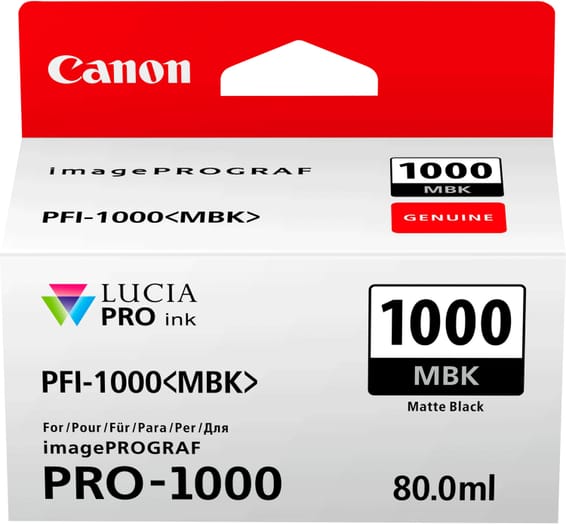
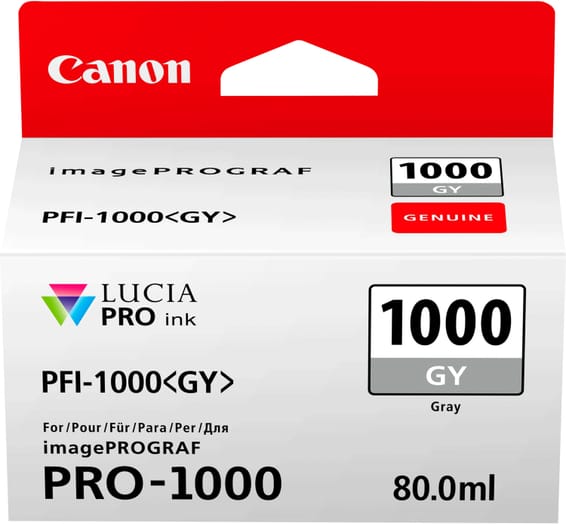
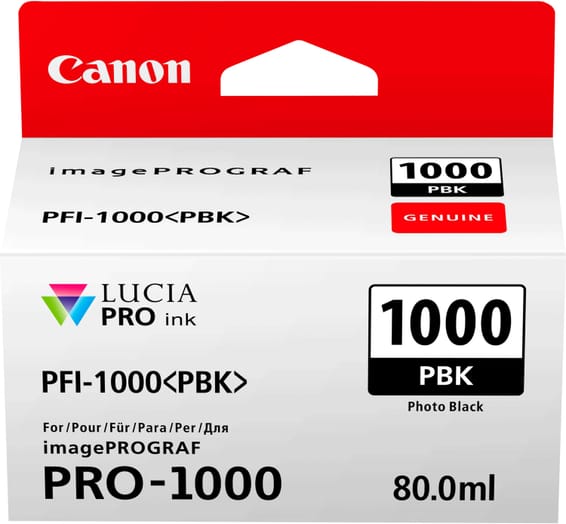
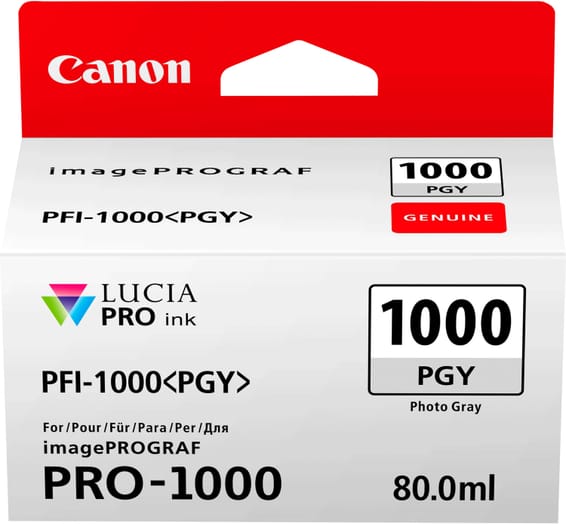
A quality black and white print cannot be had from a single black. Photo black (PBK) is made for glossy papers, matte black (MBK) for matte and fine-art papers — their formulations differ because ink does not settle the same way on different surfaces. The grey and photo grey fill in the half-tones that black alone would render with visible dithering.
In practice: a monochrome print on this machine drifts neither towards green nor towards magenta, the classic fault of printers that build their greys out of colours.
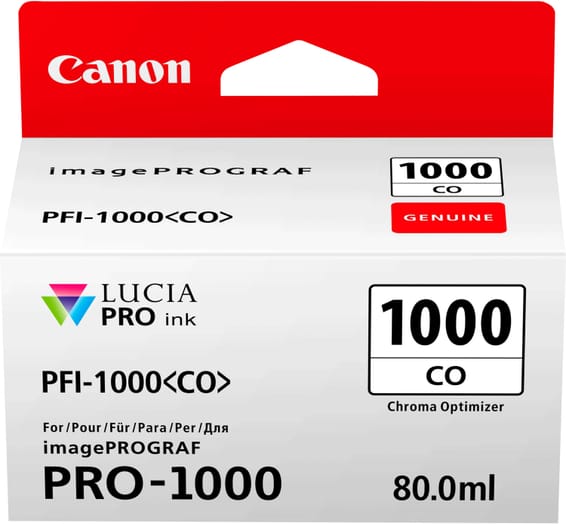
The chroma optimiser, the cartridge nobody understands
The CO holds no coloured pigment. It is a transparent coating the printer lays down where the ink is sparse, in order to even out the surface of the print. Without it, dark and light areas do not reflect light in the same way — the print looks patchily glossy, particularly on glossy paper.
So it is used mostly on high-contrast images, and not at all on a text document. It is perfectly normal for it to go down at a pace unrelated to the others.
What that means for your stock
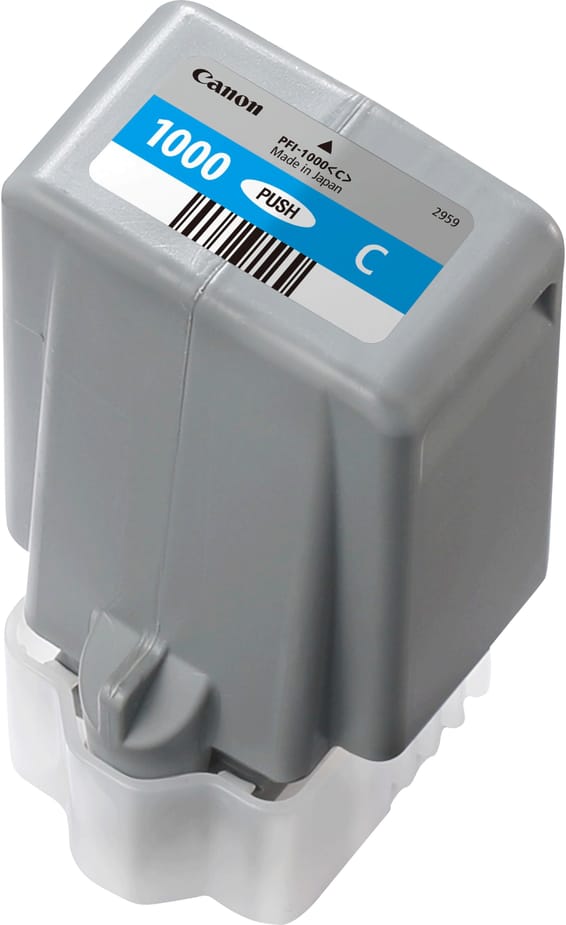
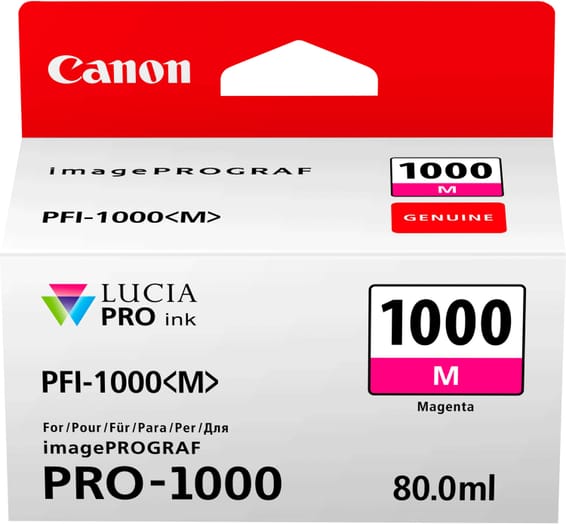
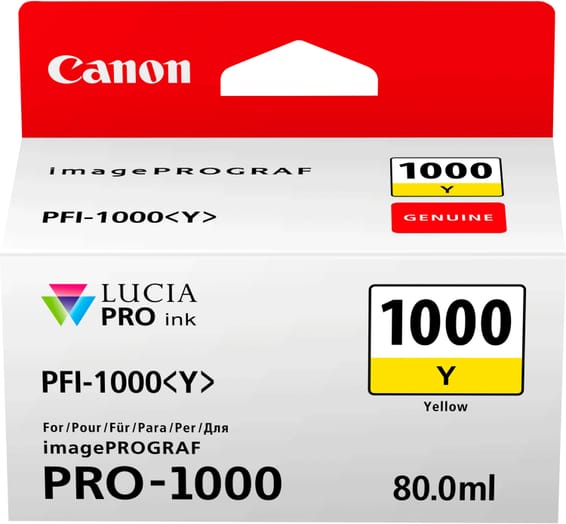
Twelve part numbers means twelve possible shortages — and on this machine, one missing cartridge stops printing, even for an image that does not use that colour. The 80 ml format is the only one, so there is no capacity to choose: the only decision is which ones to keep in reserve.
Our advice, for regular use: the two blacks and the optimiser. They are the ones consumed on every print, whatever the subject.
A step below, the Epson EcoTank L805 applies the same logic with six inks — including a light cyan and a light magenta — and refillable bottles rather than cartridges.
A fleet of printers to keep supplied?
We draw up the list of consumables for your whole fleet and a single grouped quote. Invoice in your company's name with its ICE number, delivery anywhere in Morocco.