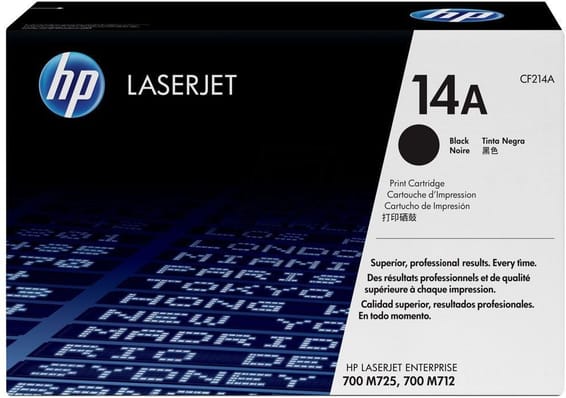
One A3 is worth two A4
Toner yield is measured to a standard that describes a low-coverage A4 page. An A3 sheet is exactly twice the area of an A4 one: at equal ink density, it therefore uses twice as much powder.
In concrete terms, on a job entirely in A3:
- a 14A stated at 10,000 pages produces about 5,000;
- a 14X stated at 17,500 produces about 8,750.
This is not underperformance by the cartridge: it is the same amount of powder spread over twice as much paper. If your output mixes the two formats — which is the usual case, trays 1 and 2 being in A4 and tray 3 in A3 — count in proportion.
Count in area, not in sheets
The right habit on a large-format machine is to think in A4 equivalents. One A3 counts as two, one A5 as half. The machine's counter, meanwhile, adds up pages without distinguishing formats: so it does not predict the end of a toner in a fleet that prints many A3 drawings or tables.
That is also what makes the 14X almost compulsory here. At 41 pages per minute and a cycle of 100,000 pages a month, the M712dn is no standby machine: the 14A becomes a logistical constraint long before it becomes a saving.
What paper the machine accepts
Tray 1 goes up to 199 gsm, tray 2 stops at 120 gsm. Heavy paper uses as much toner as ordinary paper, but it calls for slower fusing: declare the weight in the driver, or the print will flake at the fold.
The catalogue's other A3 machine, the LaserJet M436dn, adds copying and scanning, with a separate drum — a quite different balance of costs.
A fleet of printers to keep supplied?
We draw up the list of consumables for your whole fleet and a single grouped quote. Invoice in your company's name with its ICE number, delivery anywhere in Morocco.