The rear tray, source of faults blamed on the ink
The G3411 is loaded through a vertical rear tray holding 100 sheets, open at the top. That is handy and compact, but the stack of paper stays exposed there: it gathers dust and, depending on the season, the damp of the room.
The consequences show up in printing and are mistaken for an ink problem: streaks, isolated dots, slightly blurred text, sheets that stick together and feed in pairs. The reflex is to run a nozzle cleaning — which uses ink for nothing. Before that, take the stack out, discard the top few sheets, fan the pack and reload. In a damp room, do not leave more than about twenty sheets sitting in the tray.
A black that does not behave like the colours
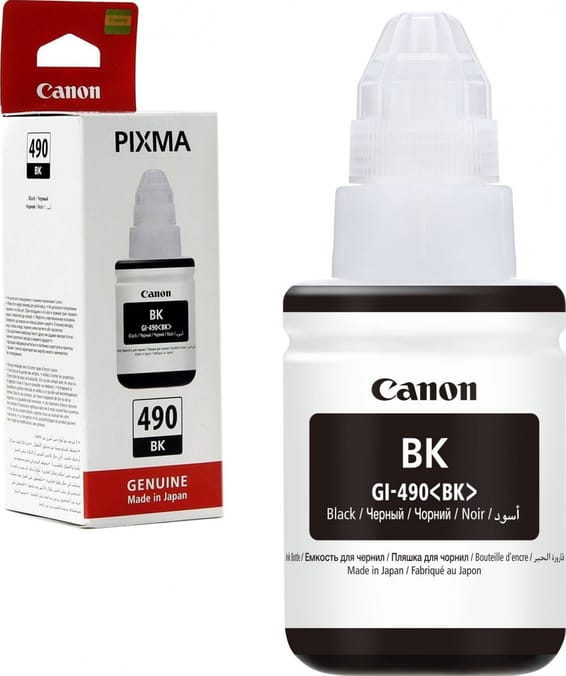
The GI-490 black is a pigment ink: solid particles laid on the sheet, for crisp text that does not bleed. The three colours are dye inks, dissolved. That difference explains why the black holds a precise number of pages — about 6,000 — while the colours are better expressed in thousands of pages depending on what you print.
It also explains why a colour must never be poured into the black tank: mixing a dye ink with a pigment gives a washed-out black for a long time, and a tank cannot be drained.
Does it need to be used regularly?
Yes. Several weeks idle and the nozzles dry, which triggers a cleaning cycle drawing on all four tanks. One colour page a week is enough to avoid it — the most profitable habit anyone can adopt with a tank machine, and it holds for the whole G series.
A fleet of printers to keep supplied?
We draw up the list of consumables for your whole fleet and a single grouped quote. Invoice in your company's name with its ICE number, delivery anywhere in Morocco.