A colour copy costs four times a black one
This machine has neither fax nor Wi-Fi: it is a departmental colour copier, connected to the network by cable. Its dominant use is therefore copying, and that is where most of the spending is decided.
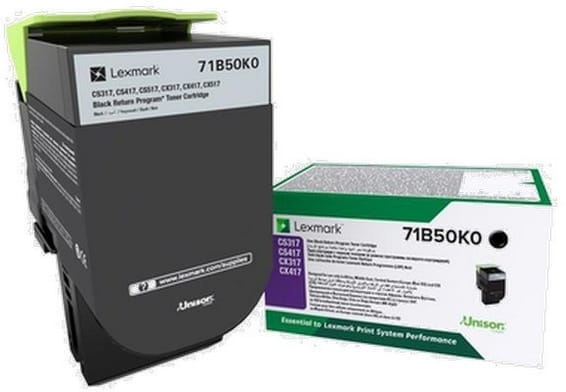
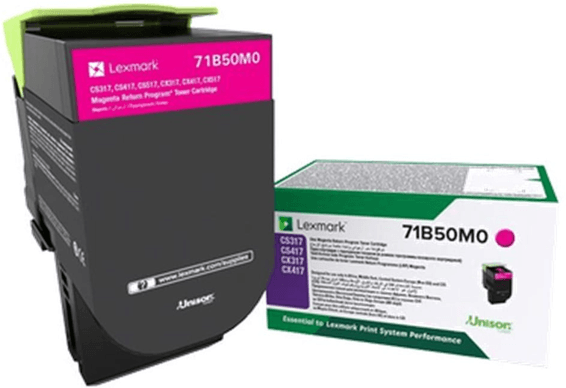
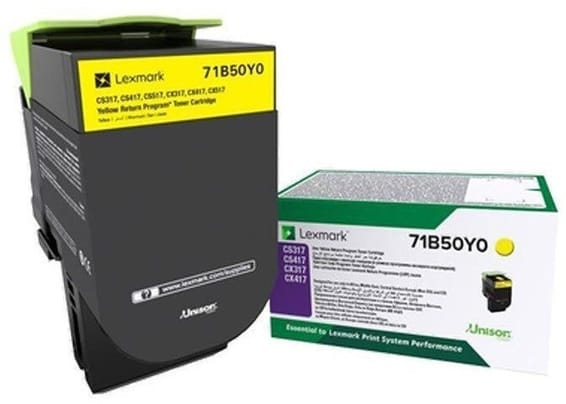
The reasoning is simple and yet rarely followed through. A black and white copy draws on one toner. A colour copy draws on four: the shades in a colour document are composed — a green mixes cyan and yellow, a grey may call on all three — and the black is added for the text. At equal volume, copying in colour therefore empties four cartridges instead of one.
The practical consequence comes down to one setting: on a shared machine, make black and white the default on the copy panel. Those who need colour will ask for it; the others will stop copying in colour documents that contain none — which is the vast majority.
A wide volume, to be pinned down
Lexmark recommends 500 to 5,000 pages a month, for a maximum cycle of 60,000. At the floor, a 71B black covers six months; at the ceiling, it empties in three weeks. That is a factor of ten, and only your counter reading tells you where you actually stand.
It prints at 23 pages per minute, with built-in duplex, a 250-sheet cassette, a 150-sheet output bin and a manual single-sheet feed for isolated media.
The black runs out twice as fast
Despite its 3,000 pages against the colours' 2,300, it is the one you will replace most often: it works alone on every ordinary document, while the three colours only go together. Keep a spare black permanently, and a full set of colours rather than an isolated cartridge — they reach the end of their life within days of each other.
A fleet of printers to keep supplied?
We draw up the list of consumables for your whole fleet and a single grouped quote. Invoice in your company's name with its ICE number, delivery anywhere in Morocco.