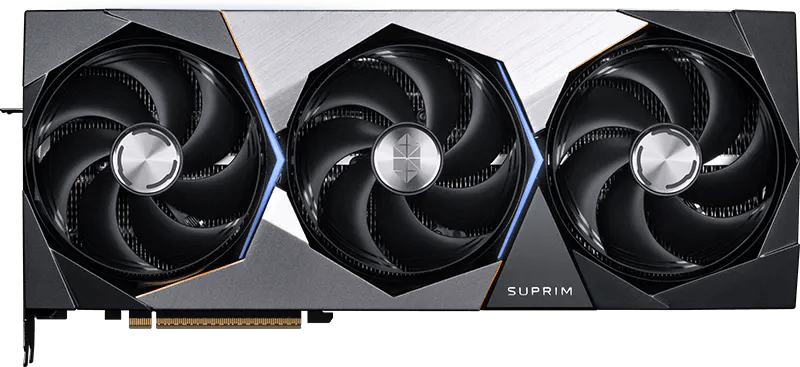
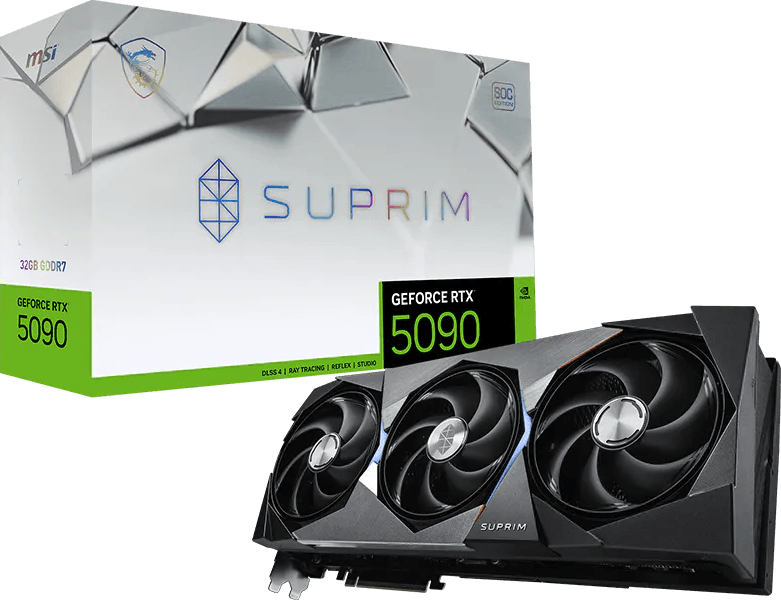
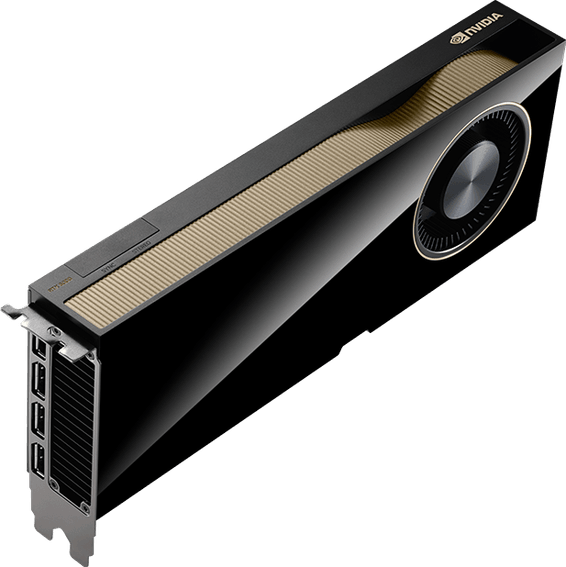
The MSI GeForce RTX 5090 32G SUPRIM SOC graphics card is the brand's flagship, with 21,760 CUDA cores and 32 GB of GDDR7 memory on a 512-bit bus at 28 Gbps. The Gaming/Silent dual BIOS lets you adjust clock speeds and noise level, while premium triple-fan cooling with a large heatsink keeps the card stable under heavy load. DisplayPort 2.1b and HDMI 2.1b outputs, PCIe Gen 5 compatible, built for 4K/8K gaming and the heaviest creative workloads.
Be the first to review this product and help other customers.
Write a review
Frequently asked questions about this product
Does the dual BIOS on the RTX 5090 SUPRIM SOC change performance?
Yes, and it is spelled out in black and white: in Gaming mode, the boost reaches 2,565 MHz (2,580 MHz in “Extreme Performance” via MSI Center); in Silent mode, it drops to 2,512 MHz (2,527 MHz). So you decide for yourself between the last few percent of performance and the noise level.
What power supply does an RTX 5090 32G SUPRIM SOC need?
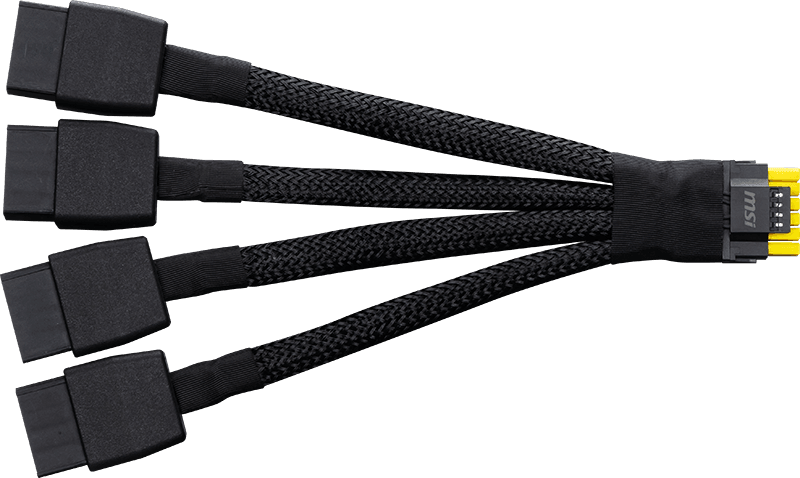
A 1,000 W power supply is recommended, and the card connects via a 16-pin connector — not the usual 8-pin ones. Check that your power supply offers this cable or the matching adapter: it is the first thing to check before considering this card.
How much room does this RTX 5090 take up in a case?
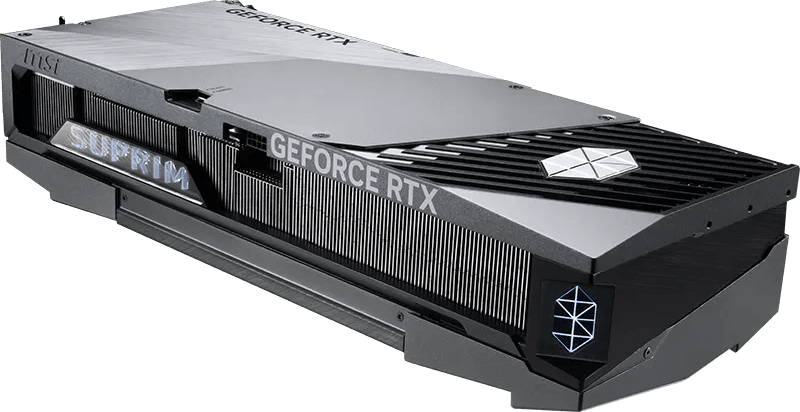
A lot: 359 mm long, 150 mm high and 76 mm thick. This thickness exceeds the usual dual-slot format, and the length calls for a full tower. Be sure to measure the available depth and the number of free slots below the card before ordering.
32 GB of GDDR7 on a 512-bit bus: what is it for?
For handling what other cards cannot: the 512-bit bus, four times wider than that of an entry-level card, feeds 21,760 CUDA cores with GDDR7 at 28 Gbps. 4K and 8K gaming, 3D rendering, high-definition video editing and local AI workloads all take advantage of this capacity.
How does MSI cool a card this powerful?
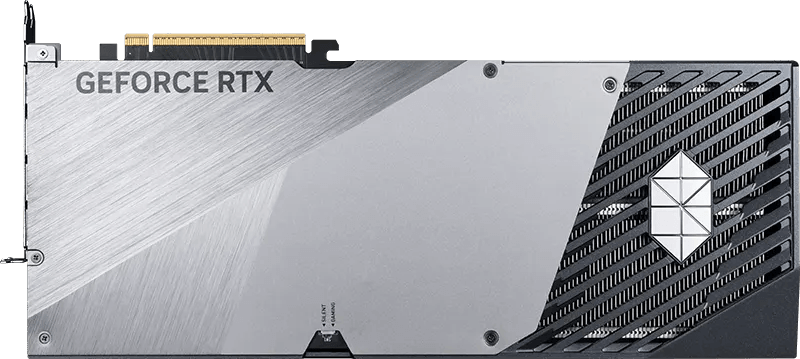
With the Hyper Frozr design: a vapour chamber transfers heat from the graphics processor and memory to square heat pipes, fins with wave-shaped edges and V-shaped cut-outs channel the airflow while limiting turbulence, and the seven-blade Stormforce fans are designed for reduced noise. The metal backplate is vented.
How many monitors, and on which outputs?
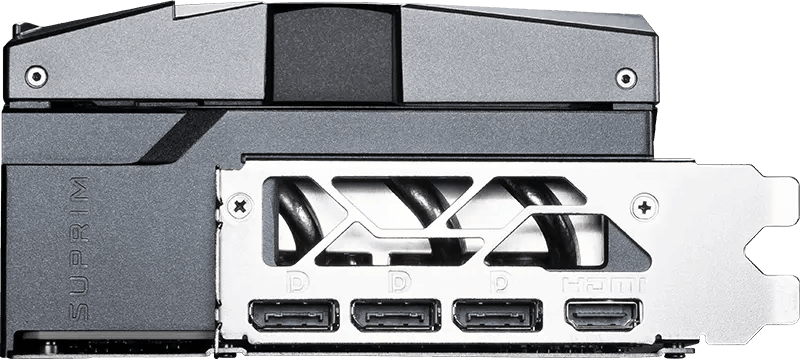
Four monitors at most, via three DisplayPort 2.1b outputs and one HDMI 2.1b output, with a maximum resolution of 7680 × 4320. HDMI 2.1b supports 4K at 480 Hz or 8K at 120 Hz with DSC compression, as well as variable refresh rate and HDR. G-SYNC technology is supported.
Is this card a good fit for creative work and local AI?
Yes. The 5th-generation Tensor cores support FP4 precision, the 9th-generation NVIDIA encoder speeds up video exports, and the 32 GB of memory can load projects and models that more modest cards cannot hold. The Studio drivers are aimed at stability in creative applications.
Is the card new and under warranty?
Yes, new and covered for 1 year, with your invoice serving as the warranty document. The exact model is the MSI GeForce RTX 5090 32G SUPRIM SOC, with OpenGL 4.6 and HDCP support, and it can be controlled from MSI Center and MSI Afterburner.
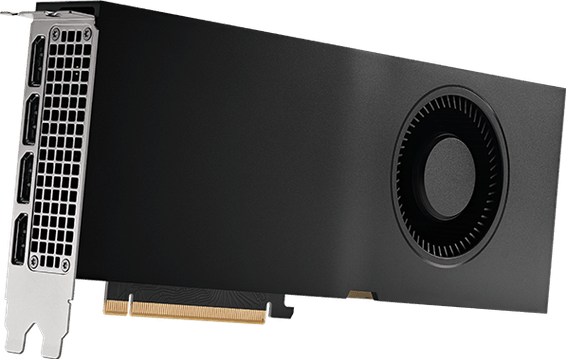
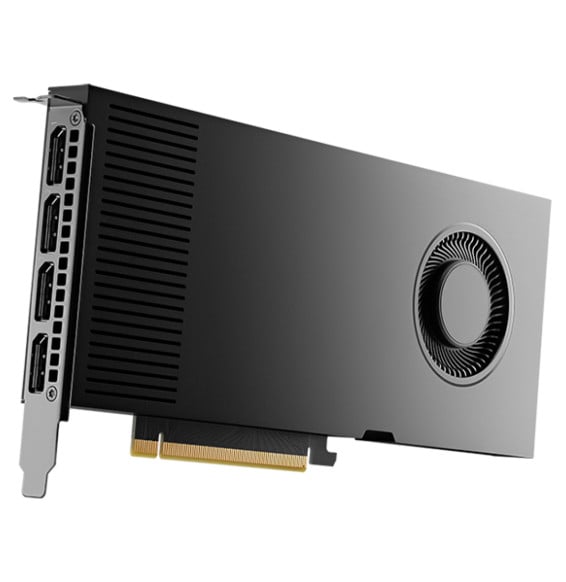
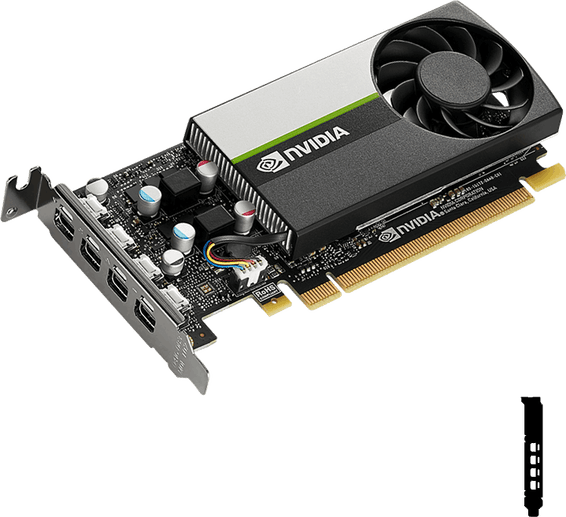
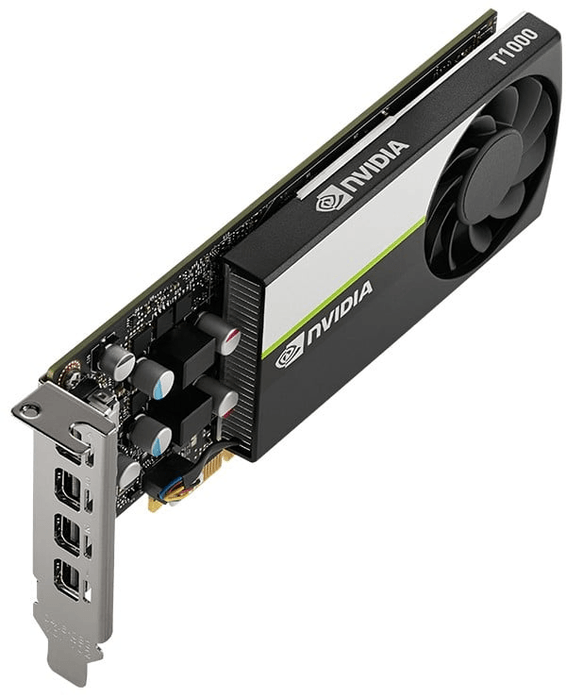
One slot and 130 W: it slips into most workstations and accelerates CAD, ray-traced rendering, simulation and AI. It drives up to four 4K displays at 120 Hz.
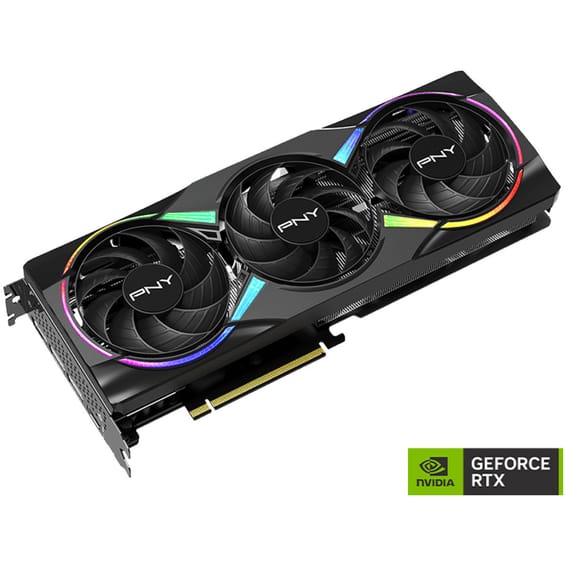
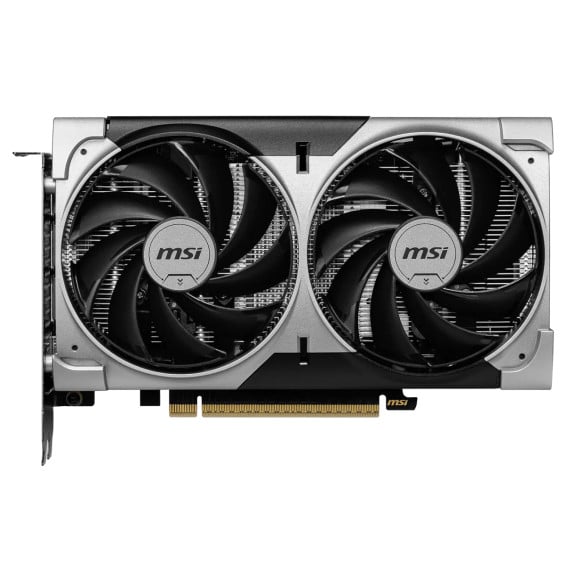
Compact and frugal: 24.5 cm long and two slots wide for smooth 1080p and 1440p gaming, with ray tracing and DLSS 4. A 600 W power supply and a single 8-pin connector are all it needs.
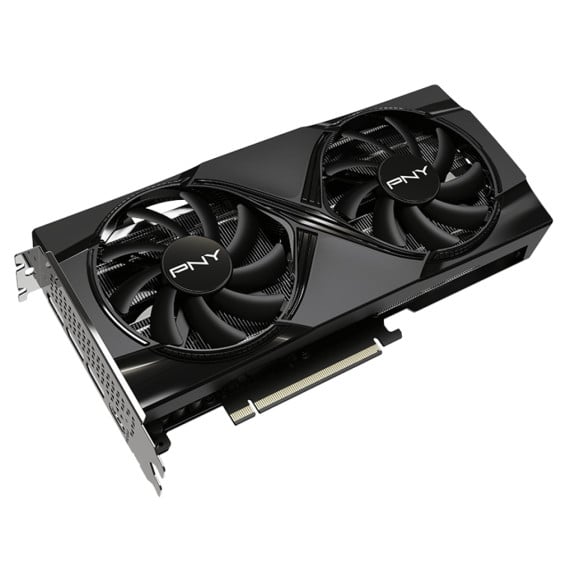
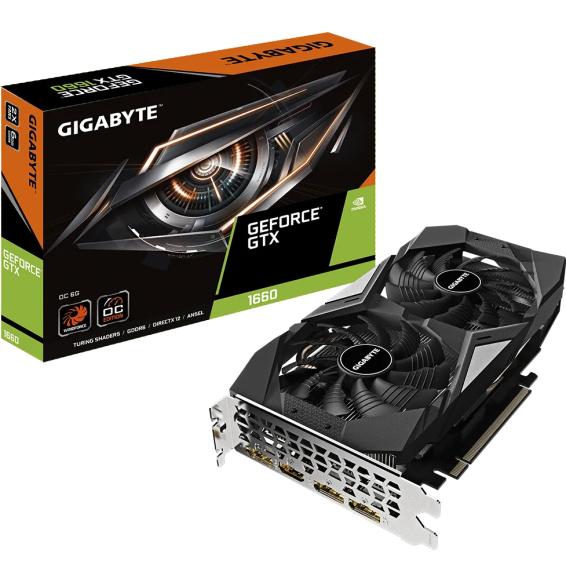
Turing and GDDR5 memory on a 192-bit bus for Full HD gaming, with a boost clock of 1830 MHz. The two 90 mm fans spin in opposite directions and stop under light load.
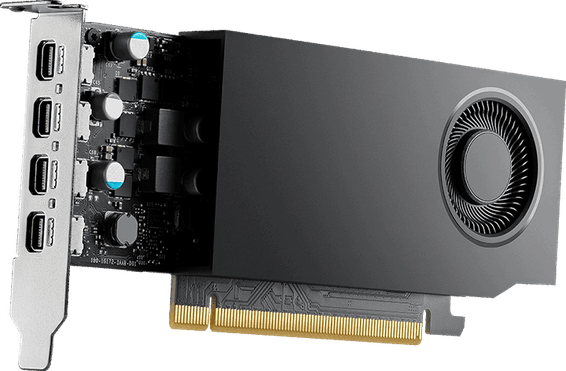
One slot and 130 W: it slips into most workstations and accelerates CAD, ray-traced rendering, simulation and AI. It drives up to four 4K displays at 120 Hz.