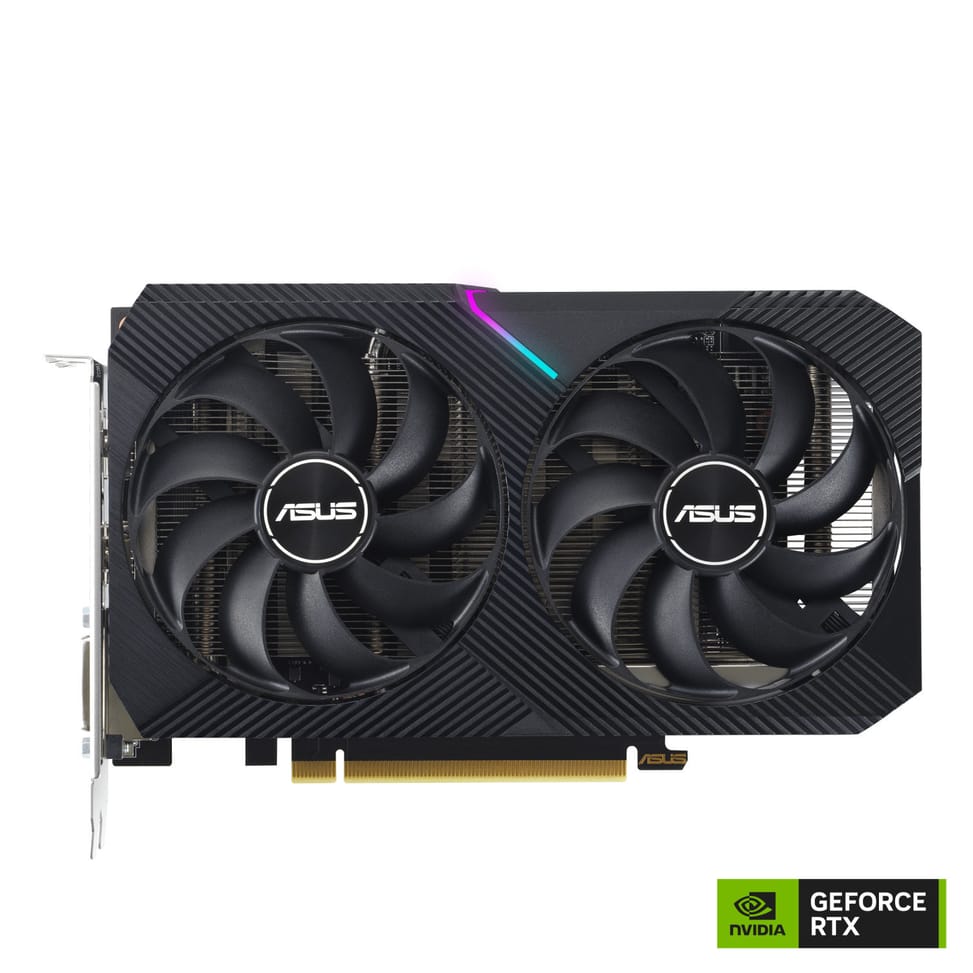
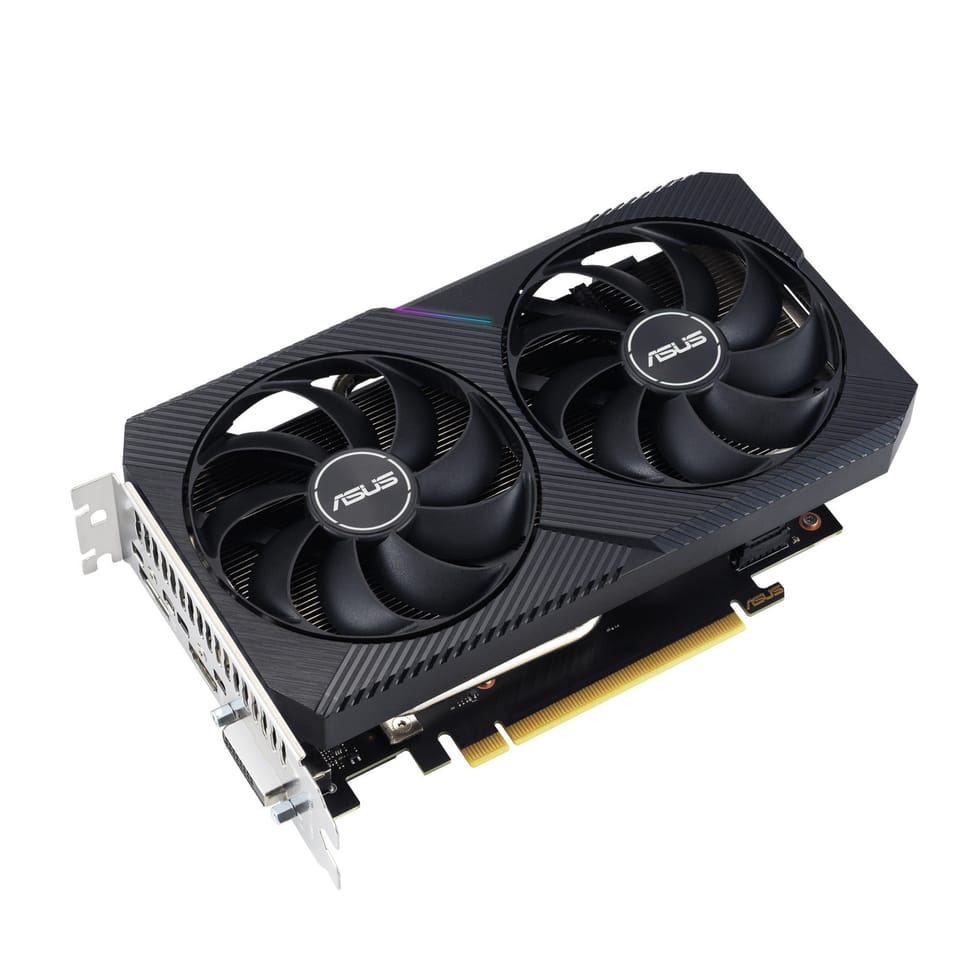
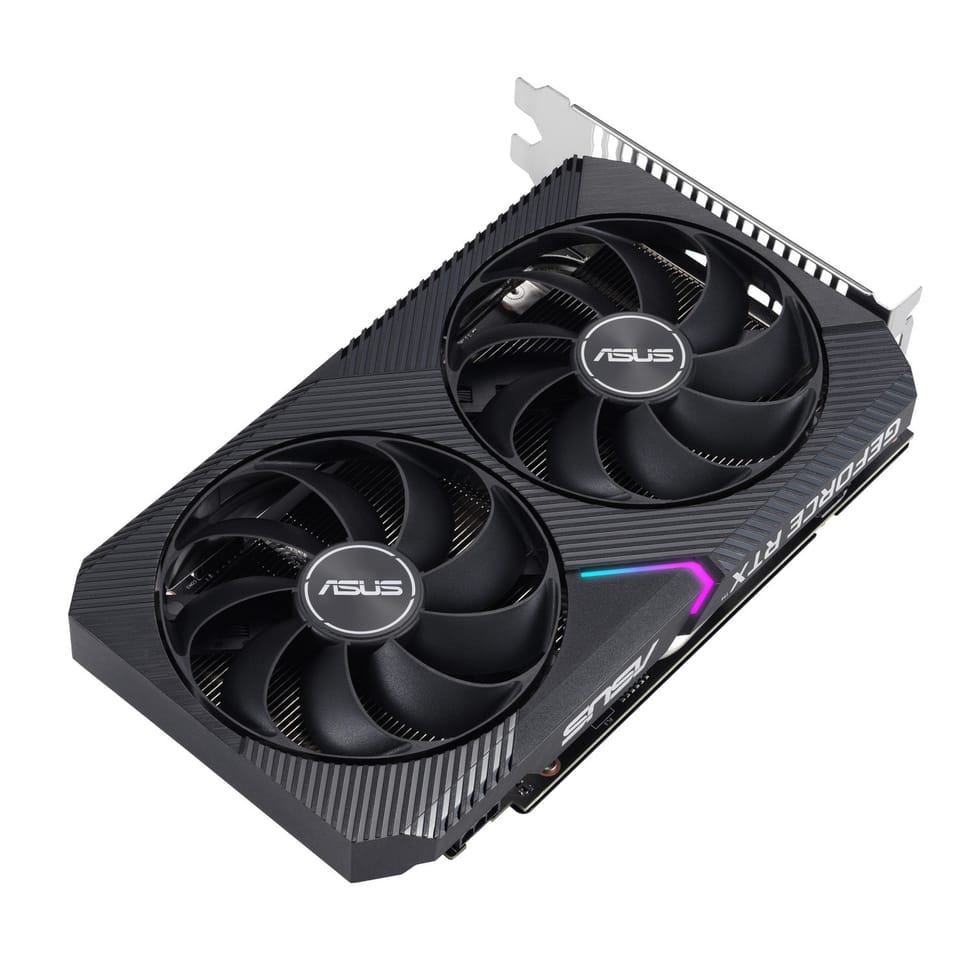
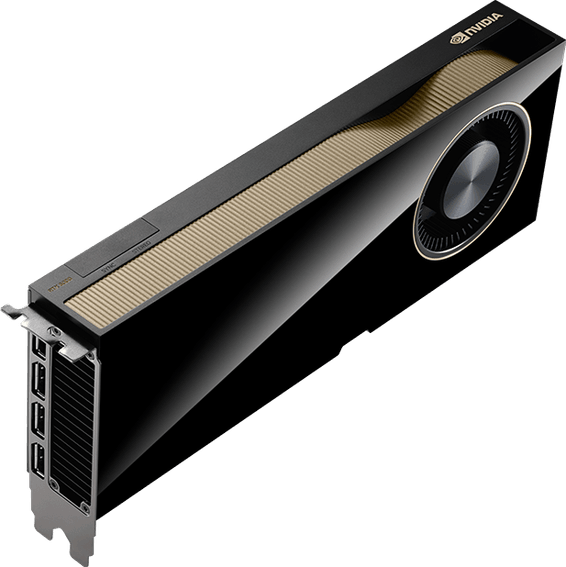
NVIDIA Ampere architecture and GDDR6 memory, for smooth gaming at 1080p with ray tracing and DLSS.
GDDR6 memory
NVIDIA Ampere architecture
Ray tracing and DLSS at 1080p
Dual Axial-tech cooling
Ref.: 4711081772453
New
Out of stock
1/3
3 599,00 DHincl. VAT
Out of stock
Product overview
The ASUS Dual GeForce RTX 3050 OC V2 graphics card pairs the NVIDIA Ampere architecture with 8 GB of GDDR6 memory for smooth 1080p gaming. Compact and efficient, it features two Axial-tech fans for discreet cooling and long service life. With support for ray tracing and DLSS, it is a well-balanced solution for gamers and for creators getting started with editing and 3D.
Boost: 1852 MHz in OC mode, 1822 MHz in default mode
Memory speed
14 Gbps
Memory size
8 GB
Graphics processor
NVIDIA GeForce RTX 3050
Power connectors
1 x 6-pin
Graphics card range
GeForce RTX 30
Video memory
8 GB
Recommended gaming resolution
Full HD (1080p)
Technical specifications (continued)
Graphics card use
Gaming
GPU brand
NVIDIA
Video memory type
GDDR6
Number of fans
2 fans
GPU architecture
NVIDIA Ampere
GPU compute cores
2560 CUDA cores
Memory interface
128-bit
Number of simultaneous displays
3 displays
Maximum digital resolution
7,680 x 4,320
Recommended power supply
450 W
Multi-GPU support
None
OpenGL version
OpenGL 4.6
Slots occupied
2 slots
Warranty
1 year
Specific references
EAN
4711081772453
Customer reviews
No reviews yet
Be the first to review this product and help other customers.
Write a review
Frequently asked questions about this product
Does this Asus Dual RTX 3050 fit in an ordinary case?
Yes, its dual-slot form factor fits in most cases, including standard desktop towers. The two Axial-tech fans provide quiet cooling without requiring an oversized heatsink.
At what resolution is the RTX 3050 8 GB comfortable?
At 1080p, the resolution for which this model is recommended. Its 8 GB of GDDR6 and the Ampere architecture ensure smooth everyday gaming at this resolution, with ray tracing and DLSS available depending on the title.
Does an Ampere-generation card handle ray tracing?
Yes: the Ampere architecture includes RT cores dedicated to ray tracing and Tensor cores for DLSS. The former calculates lighting and reflections in real time, the latter reconstructs the image using AI to recover the frame rate that ray tracing consumes.
Is it suitable for getting started in video editing and 3D?
Yes, ASUS explicitly positions it there: from 1080p gaming to beginner content creation, editing and 3D included. The 8 GB of memory gives you enough to work on modestly sized projects without immediately running up against graphics capacity.
What video outputs does this Asus Dual RTX 3050 have?
DisplayPort and HDMI outputs, the combination that covers most monitors and TVs on the market. Check which input your display has so you can plan the matching cable, DisplayPort being the one to favour on a monitor that accepts it.
Do the Axial-tech fans last over time?
ASUS highlights them for their optimised airflow and the longevity of the assembly. The cooling is designed to be quiet: on a 1080p card, the heat to be removed remains modest, which lets the two fans run at reduced speed most of the time.
Is the card new and under warranty?
Yes, new and covered for 1 year, with your invoice serving as the warranty document. The exact model is the Asus Dual GeForce RTX 3050 OC 8G V2, a factory-overclocked version of the RTX 3050 based on the NVIDIA Ampere architecture.
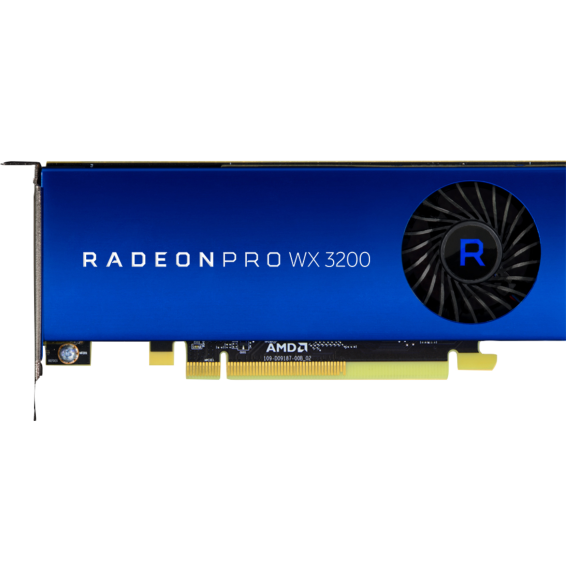
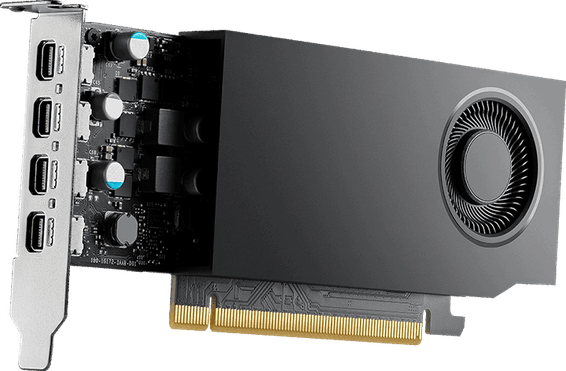
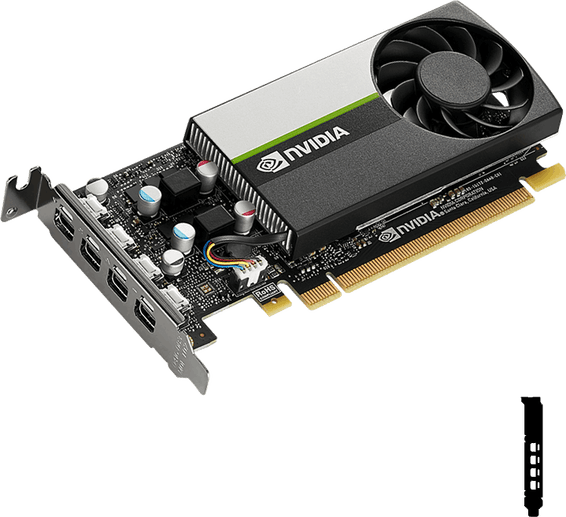
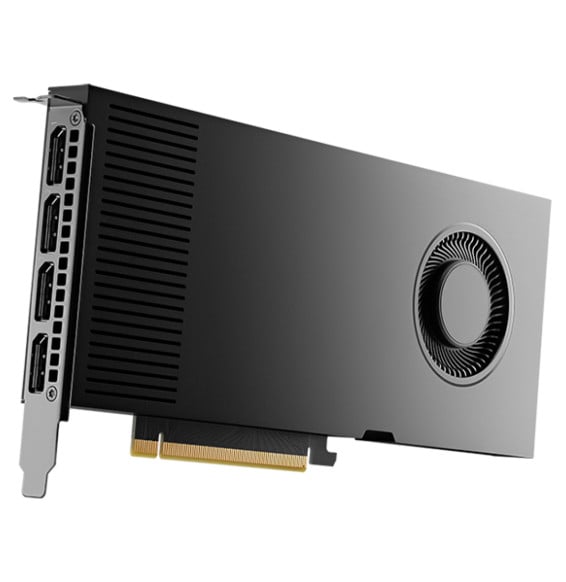
Four mini DisplayPort 1.4 outputs to drive as many screens in design, manufacturing or architecture. 640 stream processors and GDDR4 memory, calibrated for small to medium assemblies.
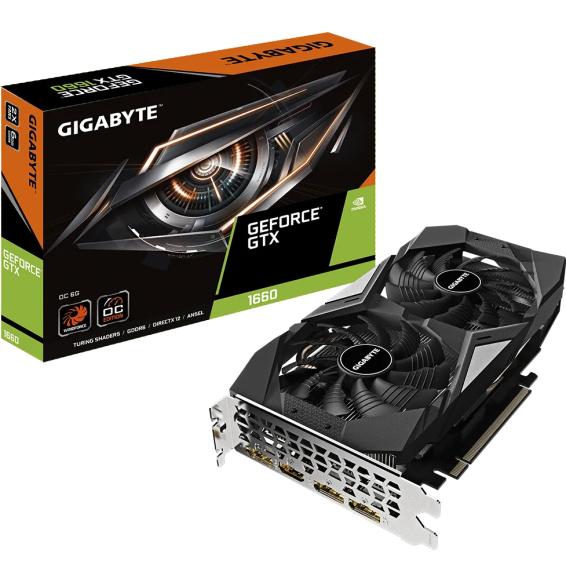
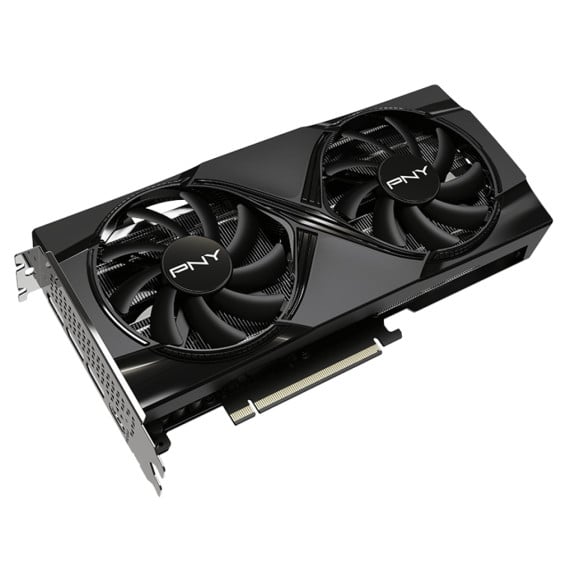
Turing and GDDR5 memory on a 192-bit bus for Full HD gaming, with a boost clock of 1830 MHz. The two 90 mm fans spin in opposite directions and stop under light load.
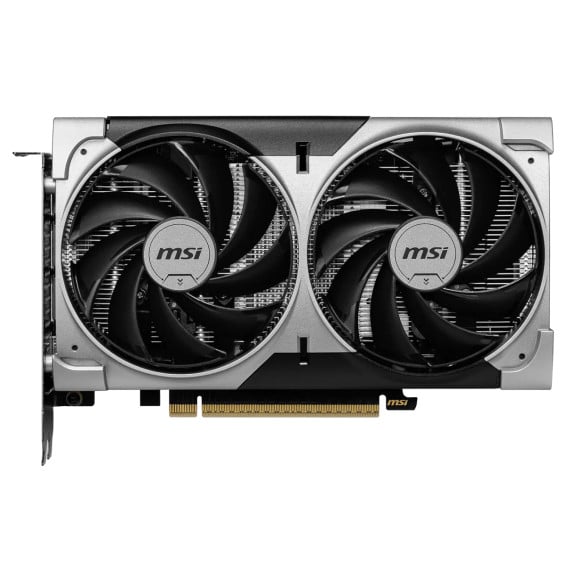
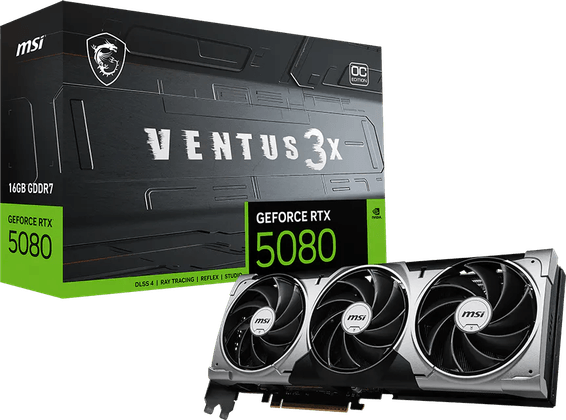
Compact and frugal: 24.5 cm long and two slots wide for smooth 1080p and 1440p gaming, with ray tracing and DLSS 4. A 600 W power supply and a single 8-pin connector are all it needs.
Compact and frugal: 24.5 cm long and two slots wide for smooth 1080p and 1440p gaming, with ray tracing and DLSS 4. A 600 W power supply and a single 8-pin connector are all it needs.
Turing and GDDR5 memory on a 192-bit bus for Full HD gaming, with a boost clock of 1830 MHz. The two 90 mm fans spin in opposite directions and stop under light load.
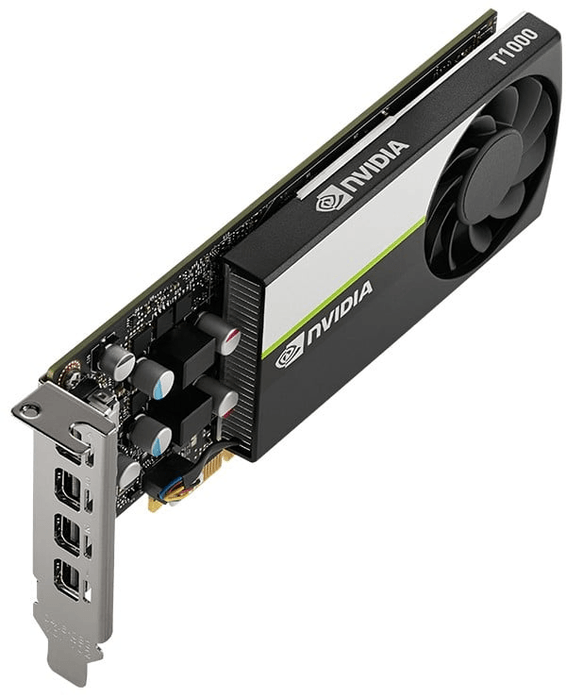
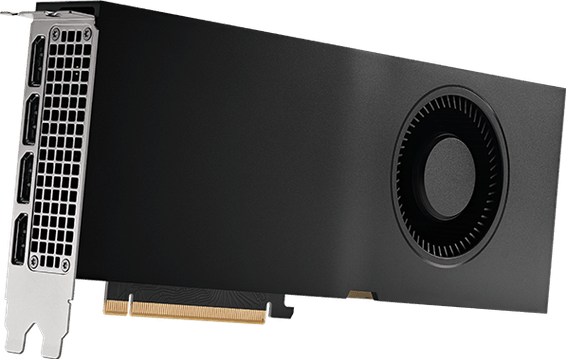
One slot and 130 W: it slips into most workstations and accelerates CAD, ray-traced rendering, simulation and AI. It drives up to four 4K displays at 120 Hz.