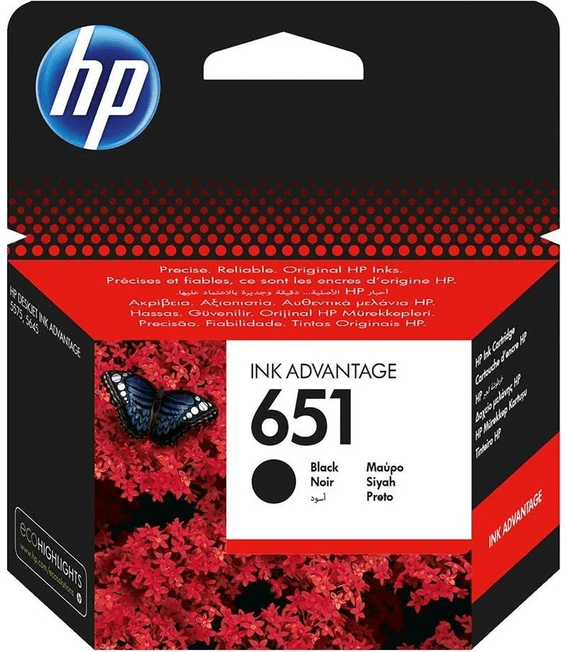
A black that resists water
The black in the 651 is a pigment ink: solid particles laid on the sheet, which do not dissolve. A document printed with it stays legible in the rain, in a damp bag or after being handled with wet hands.
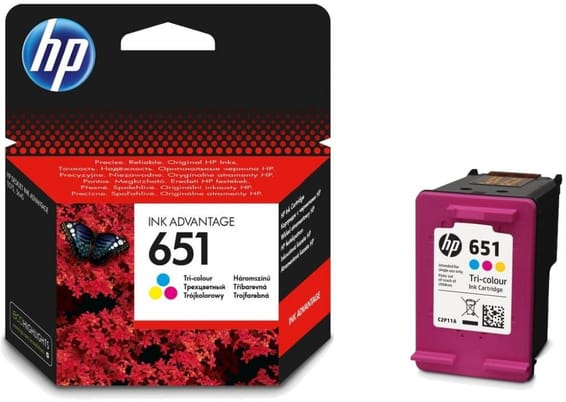
On an office printer that is a comfort. On a machine that works outdoors — a delivery note signed on a doorstep, a service report, a quotation handed over on a building site — it is the reason the product exists. The tri-colour, by contrast, is a dye ink: brighter, but far more sensitive to damp. Keep colour for what will stay under cover.
300 pages in colour: the real ceiling
The gap between the two cartridges is two to one — 600 pages in black, 300 in tri-colour — and to that must be added the flaw common to every three-in-one cartridge: when a single one of the three shades runs out, the whole cartridge becomes unusable, even with magenta and yellow left. On a mobile machine, where colour is only used occasionally, that often happens to the most-used shade.
HP recommends a volume of 100 to 300 pages a month and a maximum cycle of 500. In other words, a 651 black covers between two and six months of normal use.
What mobile use imposes
A printer you carry around is used in bursts: a few pages, then several weeks in a car boot. That is the harshest regime for a cartridge with a built-in head — the nozzles dry, the machine runs a cleaning on waking, and the ink goes without a single page coming out.
Two habits are enough: print a page every ten to fifteen days even without needing to, and do not leave the machine in full sun in a vehicle. It prints 20 pages per minute on mains power and 9 on battery, with a 50-sheet tray, over Wi-Fi. It is the same rule as on office inkjets such as the OfficeJet Pro 8710, but it matters more here: a mobile machine stands idle far more often.
A fleet of printers to keep supplied?
We draw up the list of consumables for your whole fleet and a single grouped quote. Invoice in your company's name with its ICE number, delivery anywhere in Morocco.