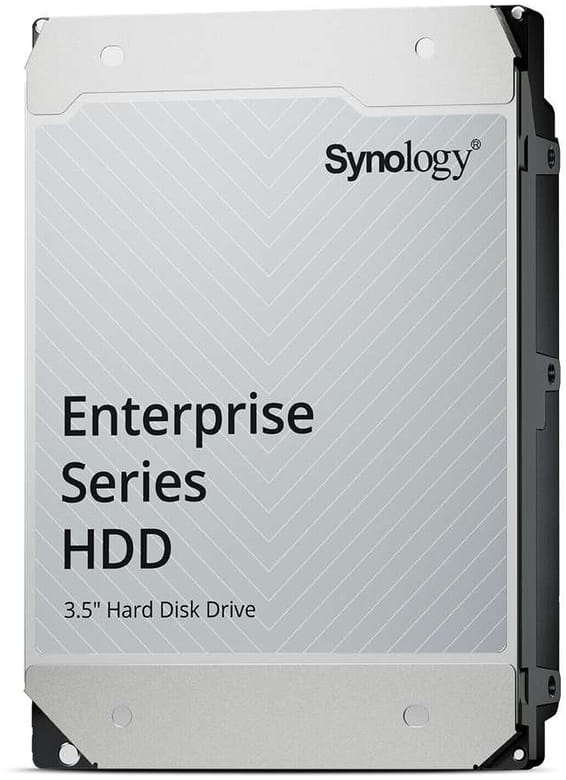
Does this Synology drive use CMR or SMR technology?
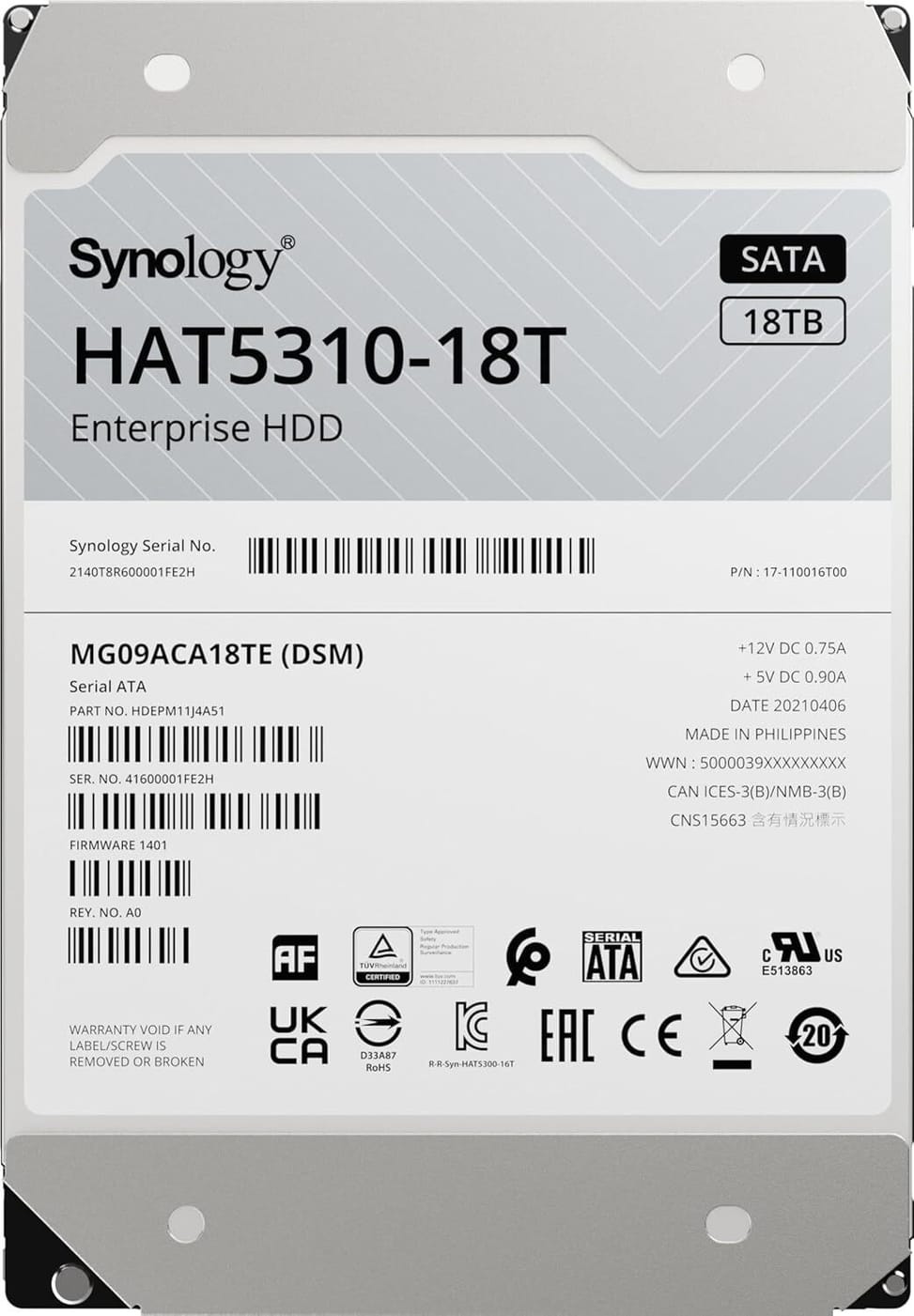
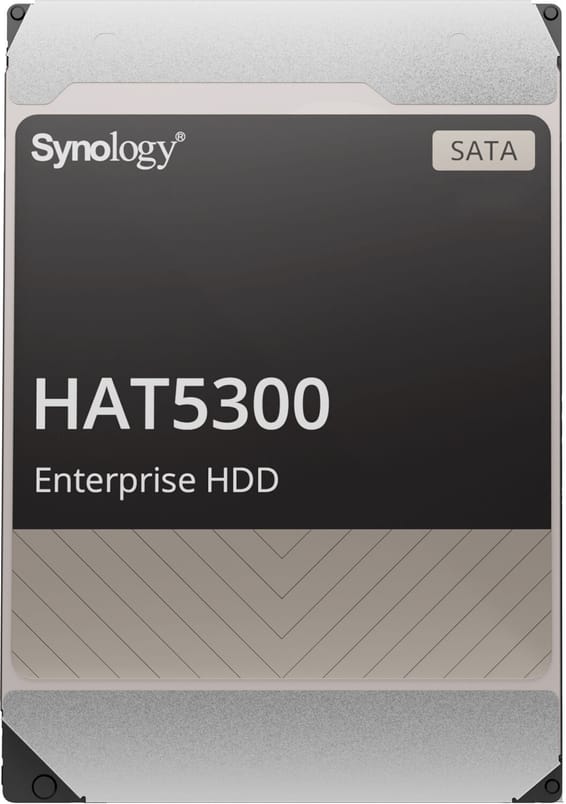
CMR. The HAT5300 series drives are CMR drives, designed for multi-user workloads and high-capacity storage systems. They spin at 7,200 rpm on a 6 Gb/s SATA interface (backward compatible with 3.0 and 1.5 Gb/s), with 512e format sectors.
Why won't my NAS show 18 TB once the drive is installed?
Because capacity is expressed in decimal terabytes: 1 TB = 1,000,000,000,000 bytes, whereas operating systems count in powers of 2 (1 GB = 1,073,741,824 bytes). The displayed capacity will therefore be lower, and further reduced by formatting and the chosen RAID configuration. Allow for this difference when sizing your volume.
What real-world transfer rate can you expect from this 18 TB HAT5310?
Up to 274 MB/s sustained transfer. In a Synology NAS, multi-user sequential reads are stated to be up to 23% faster than those of comparable Enterprise-class drives, thanks to firmware and DSM optimisations.
Under what conditions was the stated 23% gain measured?
With 12 drives installed in an SA3600 configured in RAID 5, compared with similar Enterprise-class drives, using IOMeter with 64 KB blocks. Actual performance varies depending on workload, test method and configuration: it is an order of magnitude, not a commitment. The same protocol on an SA3610 gives RAID repairs up to 27% faster.
Can this drive handle continuous 24/7 operation with large volumes written?
Yes: the series is rated for a workload of 550 TB per year of writes/reads and an MTBF of up to 2.5 million hours, in 24/7 operation. The workload corresponds to the volume of data written, read or verified by commands from the host system. Synology explicitly targets large-scale video surveillance, post-production and enterprise file servers.
What exactly is the reliability claimed by Synology based on?
On quantified tests: more than 500,000 cumulative hours of validation and more than 1,000 stress test cycles on Synology equipment before release. In operation, the drive tolerates vibration of 7.35 m/s² between 5 and 300 Hz — which matters in a storage system where several drives spin side by side.
What happens to a write in progress if the power is cut suddenly?
The drive has persistent write cache technology, designed to reduce the risk of data corruption in the event of a sudden power loss. It is protection designed for servers running 24/7, where a power cut always happens sooner or later.
Is updating the drive's firmware complicated?
No: it is done in one click from DSM, with automatic notification as soon as a version is available, which reduces oversights. Synology quantifies the gain — maintenance time drops from more than 50 minutes to a few minutes per system — and no Linux commands are needed. Pairing Synology drives and systems also means you have a single point of contact for support.
Does an 18 TB drive push up the NAS's power consumption?
Only slightly. Across the series, average power consumption is between 4.0 and 5.6 W at idle and between 7.6 and 9.3 W in operation, depending on capacity. The expected power supply is 12 V (±10%) and 5 V, provided by the NAS bays: count this value per drive, multiplied by the number of occupied bays.
Are there any precautions to take when installing the drive?
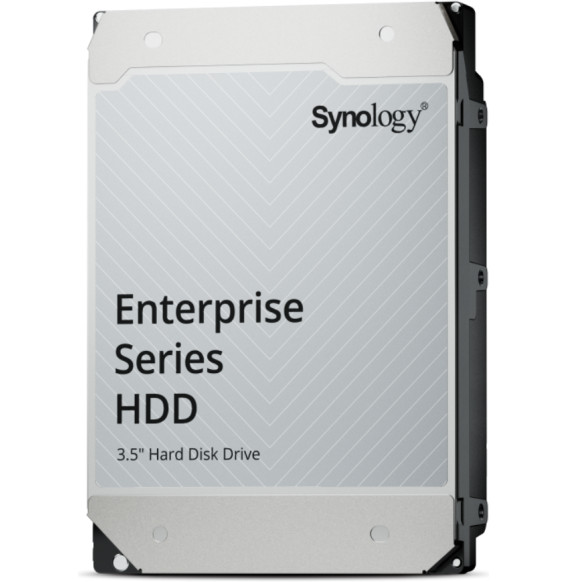
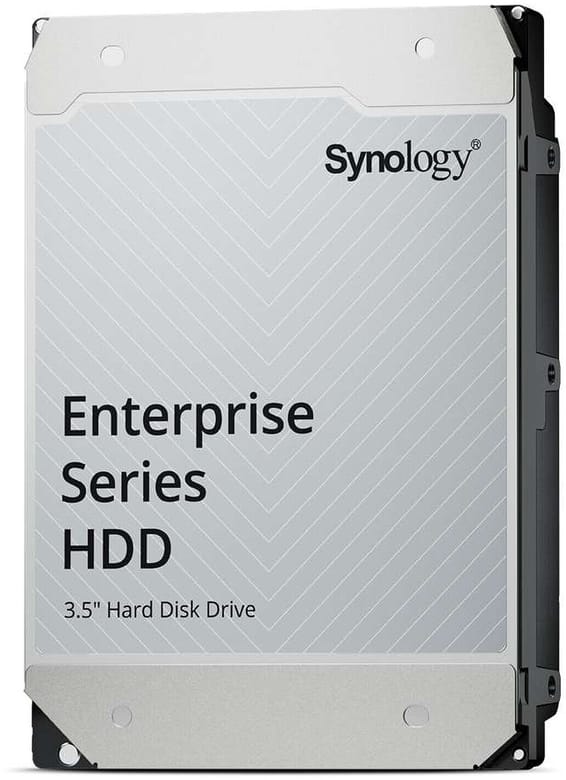
Just one, but it matters: drives are sensitive to electrostatic discharge. Ground yourself — an antistatic wrist strap is enough — and do not touch the connectors or the circuit board. The drive fits the standard 3.5" form factor, 26.1 × 101.85 × 147 mm.
Is this drive approved for the Moroccan market?
Yes, it bears the Morocco Mark, alongside CE, UL, TUV, RCM, BSMI, KC, EAC, ICES, UKCA and RoHS certifications. Moroccan regulatory compliance is therefore covered in the same way as the European and American markings.
Is the drive new, and how long is the warranty?
Yes: the drive is
new and sealed in its original packaging, supplied with its invoice, which serves as the warranty document for
3 years. All the specifications are in the
Synology datasheet (PDF).