M-Audio Forty Sixty Studio Monitor (Single) - 6.5" Kevlar Woofer, 100 W, Bluetooth 5.3
M-Audio Forty Sixty active studio monitor, sold individually: 6.5-inch Kevlar woofer, 100 W bi-amplified in class AB, XLR and jack inputs, Flat, Hype and Custom modes, and Bluetooth 5.3 that links two speakers in stereo without a cable.
Studio monitor for mixing, production and content creation: 6.5" Kevlar woofer, 100 W bi-amplified and Bluetooth 5.3 that links two speakers in stereo. Sound: 39 Hz – 22 kHz (-10 dB), 113 dB SPL maximum, Burr-Brown conversion and DSP crossover Amplification: 60 W + 40 W in class AB Inputs: XLR and 6.35 mm TRS jack, up to +18 dBu Listening: Flat, Hype and Custom modes on the front, 5-band EQ in the app Packaging: sold individually (two for stereo), 7.2 kg, isolation pad included A 6.5-inch monitor for the home studio, tuned to the room from the front panel or the phone.
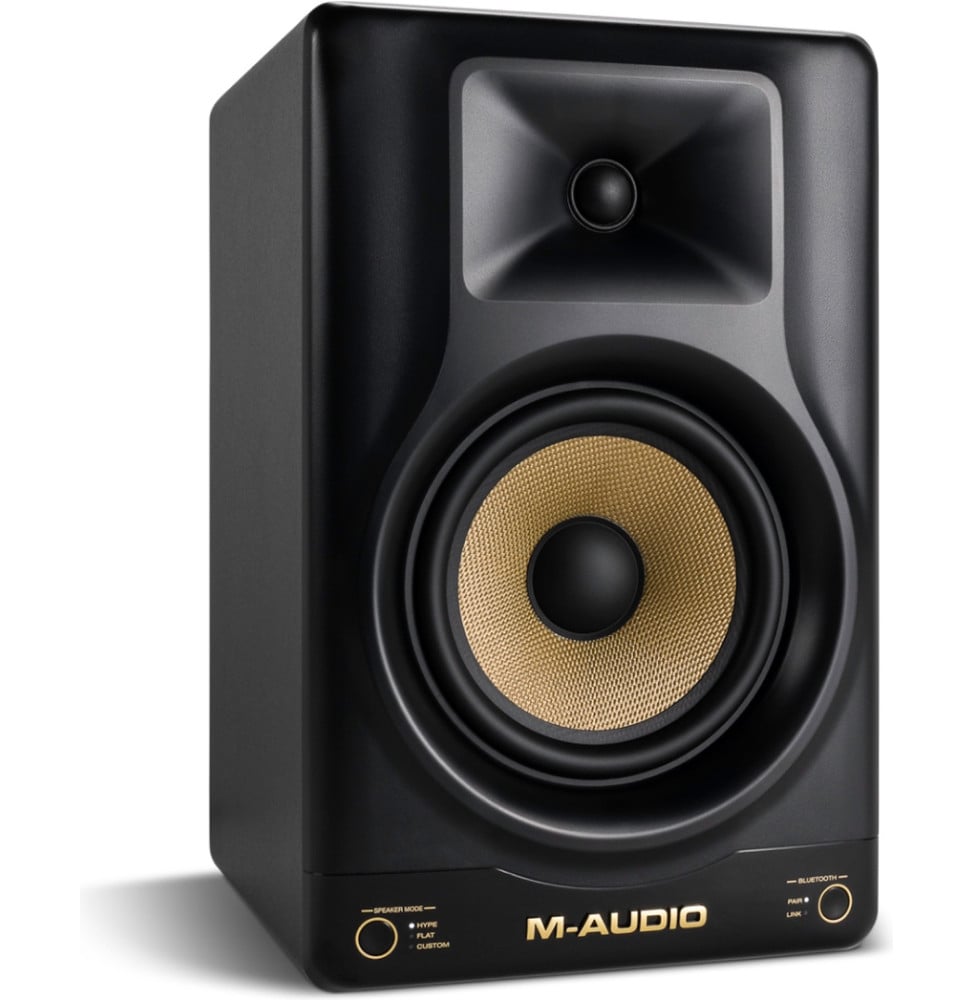
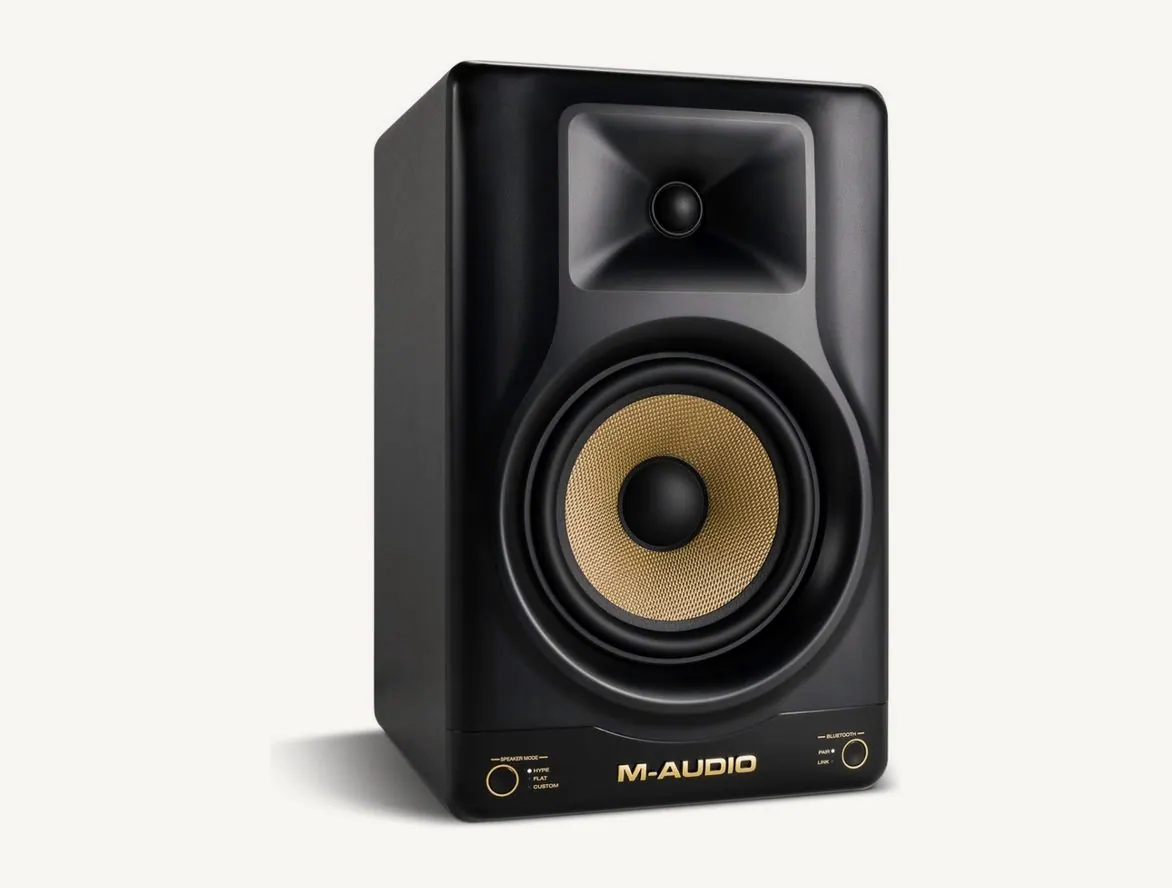
The Forty Sixty is an active studio monitor, sold individually: a 6.5-inch Kevlar woofer, a tweeter on a waveguide, two amplifiers and digital processing that switches from neutral to flattering listening with a single button.
100 W60 W lows, 40 W highs
39 Hzto 22 kHz, at -10 dB
113 dBmaximum level
5.3Bluetooth, wireless stereo
One amplifier per driver
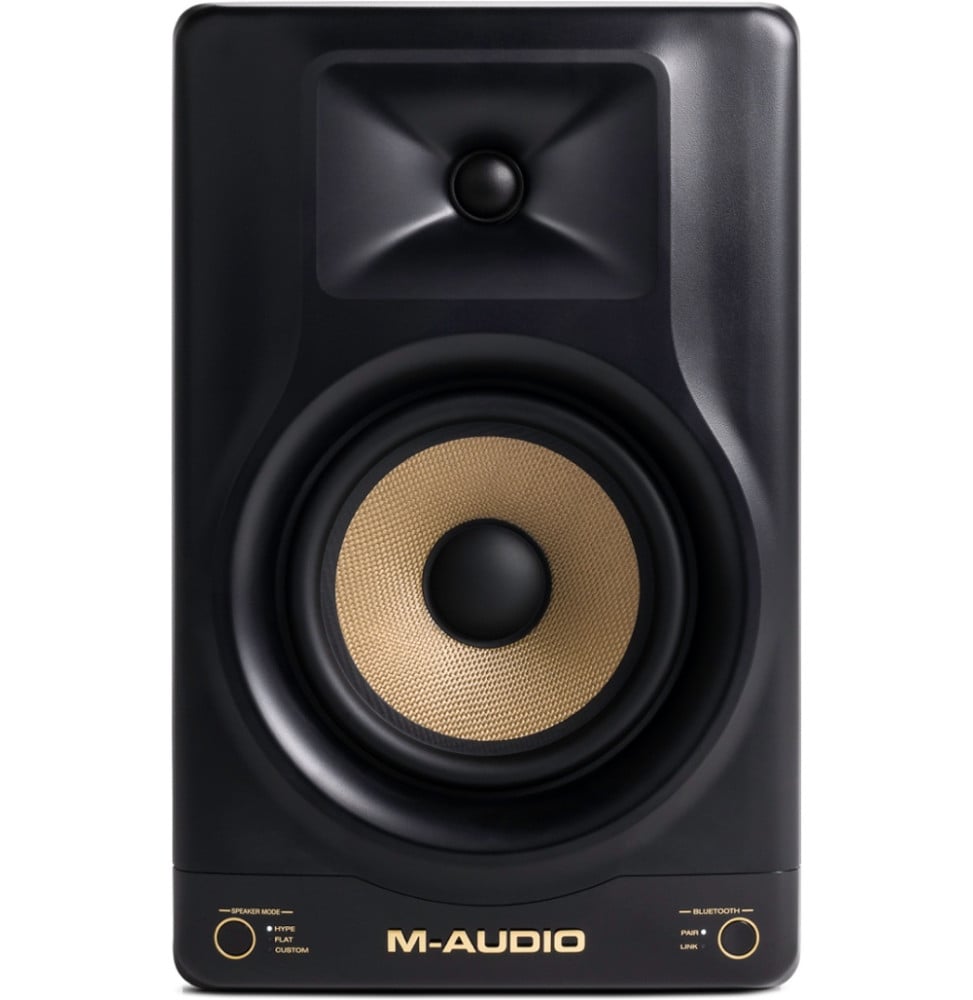
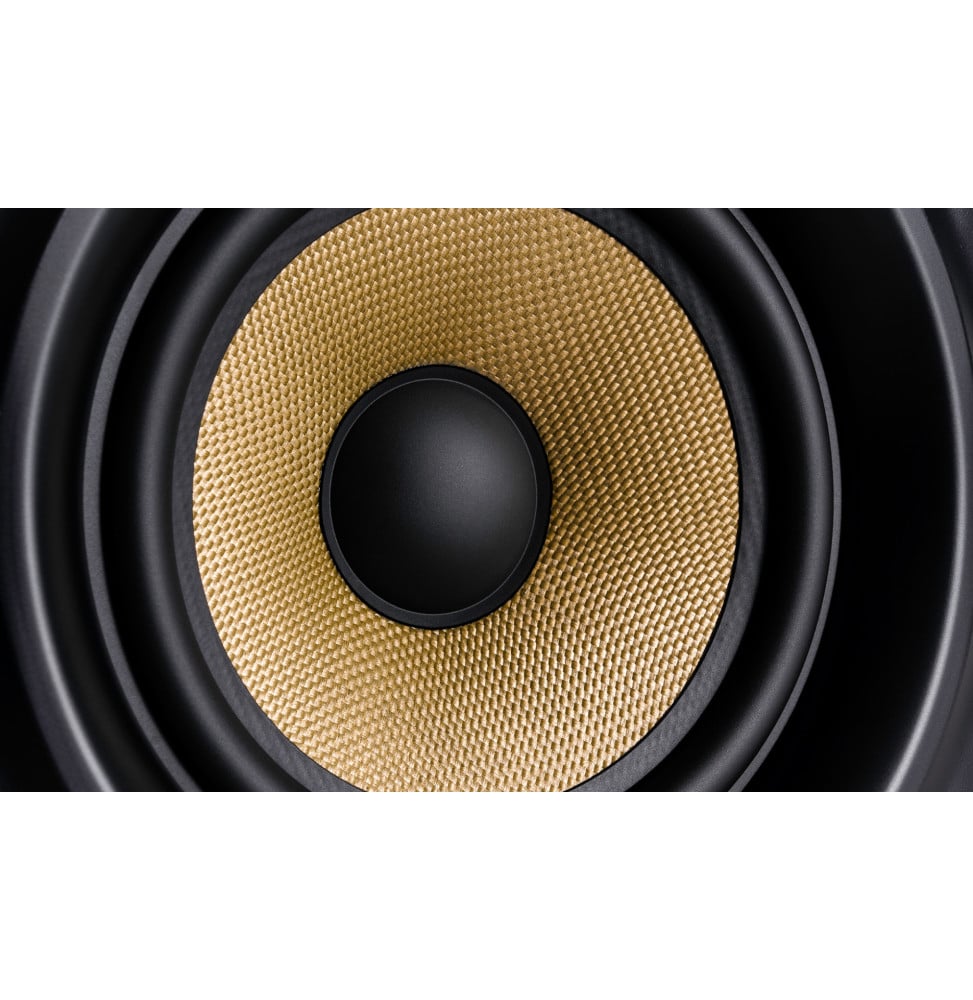
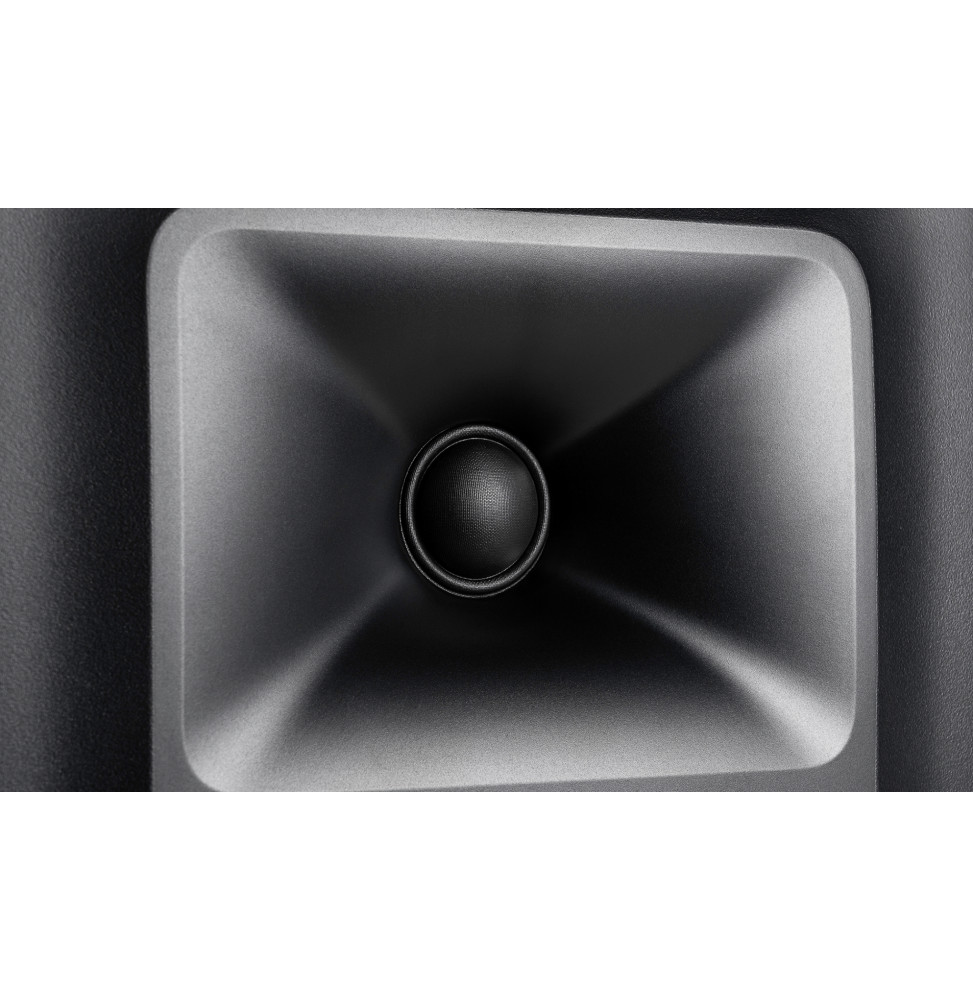
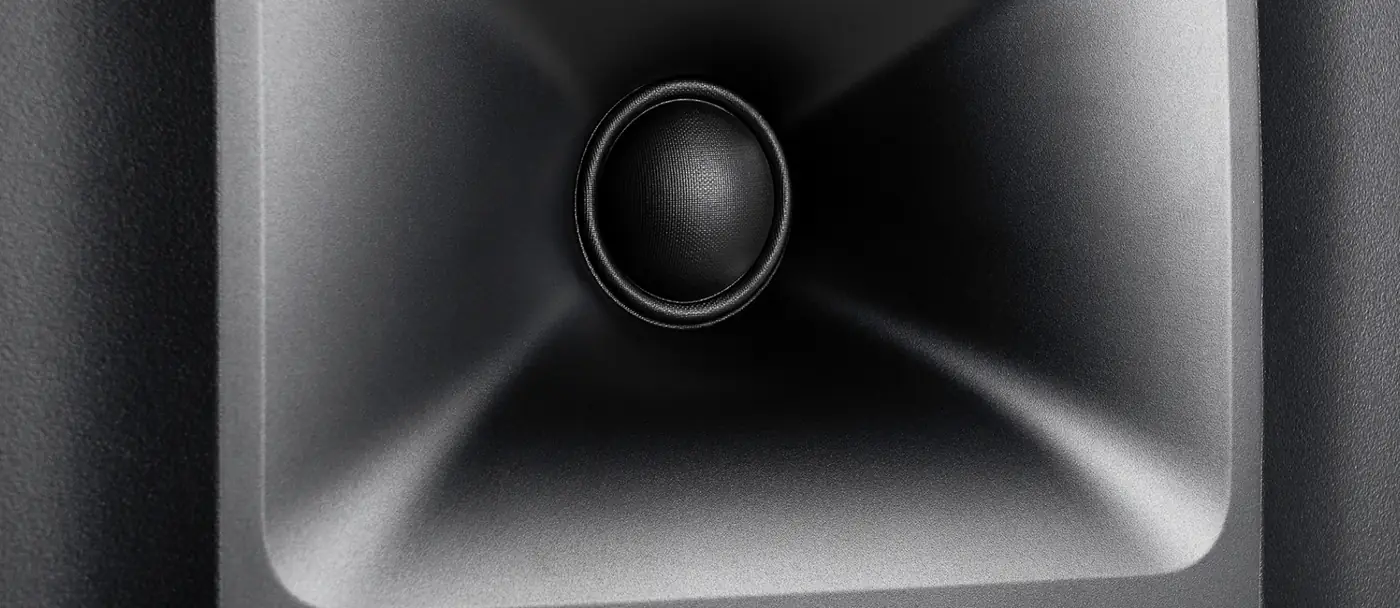
The woofer gets 60 W, the tweeter 40 W, each from its own class AB amplifier. The crossover between them is handled by the DSP, behind a Burr-Brown converter with a signal-to-noise ratio above 120 dB. The 1-inch soft dome tweeter is mounted on a waveguide, for a 120° × 90° coverage angle.
The 1-inch tweeter at the bottom of its waveguide.
Flat to mix, Hype to check
The Speaker Mode button on the front cycles through three listening modes. Flat stays linear for mixing decisions. Hype pushes the lows and highs, like earbuds or a car stereo, to hear how the track will sound elsewhere. Custom is set in the free M-Audio Studio Control app: 5-band EQ, presets and correction for the speaker's position in the room. A long press mutes the sound.
The second speaker, without a cable
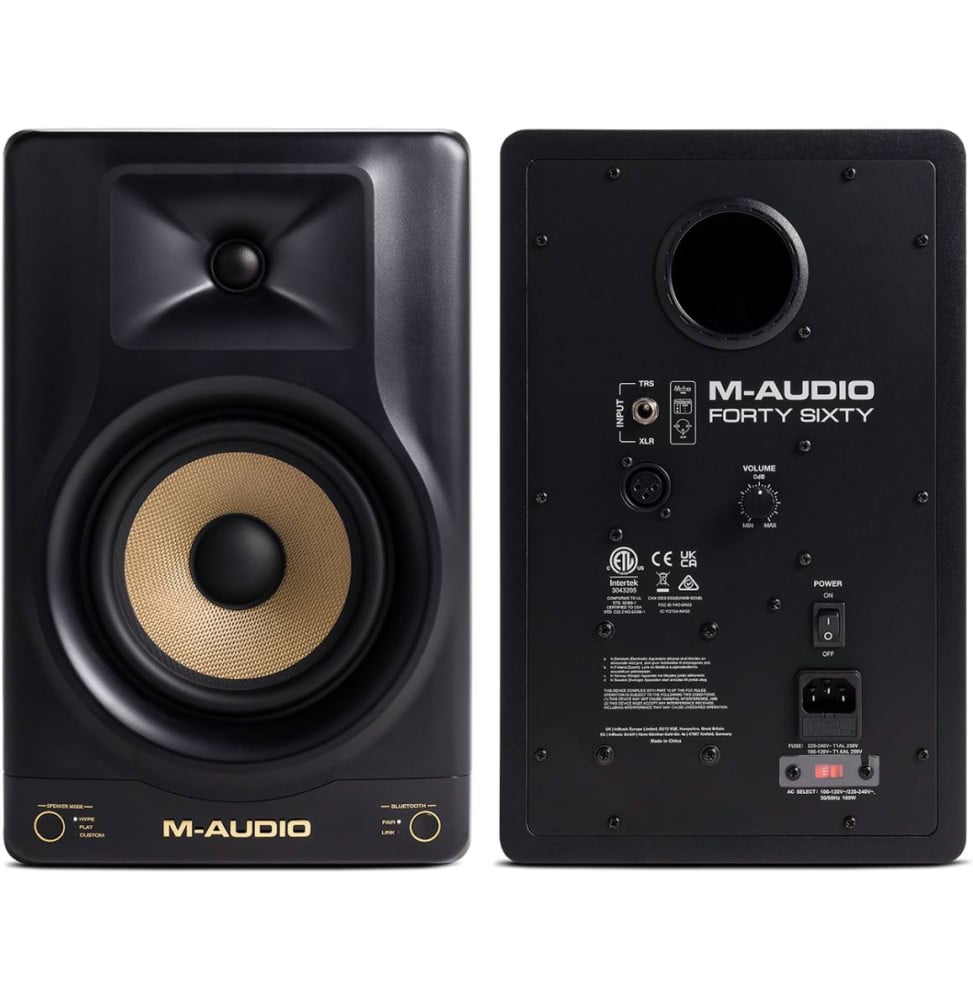
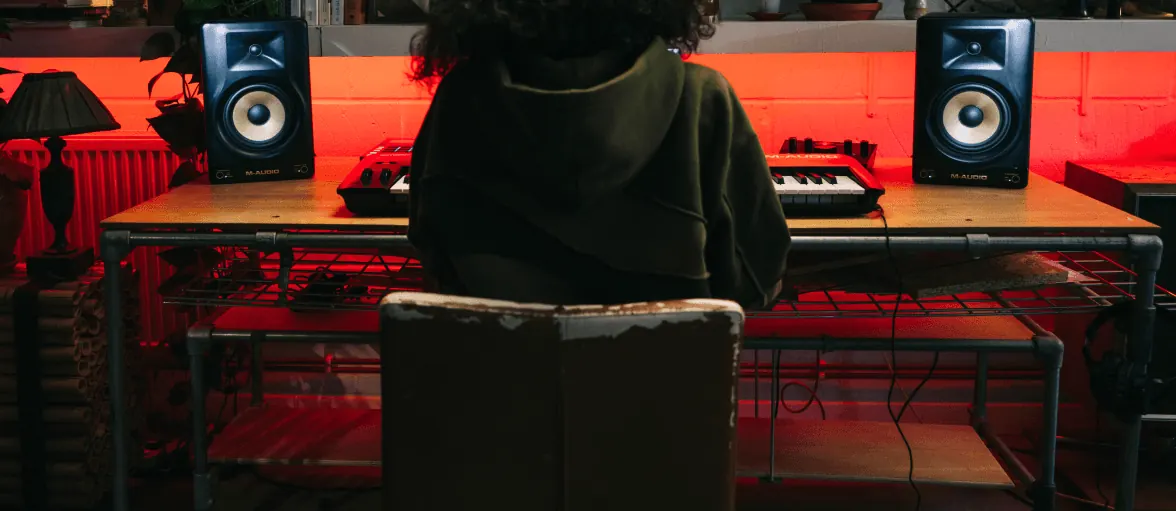
Two Forty Sixty link in stereo with the Stereo-Link function: a double press on each one's Bluetooth button, and the LEDs go from flashing to solid white. The speaker connected to the phone becomes the left channel, a short press swaps the sides, and the pair re-forms on its own at the next power-up. Muting, set on one, applies to both.
Two Forty Sixty on either side of the workstation.
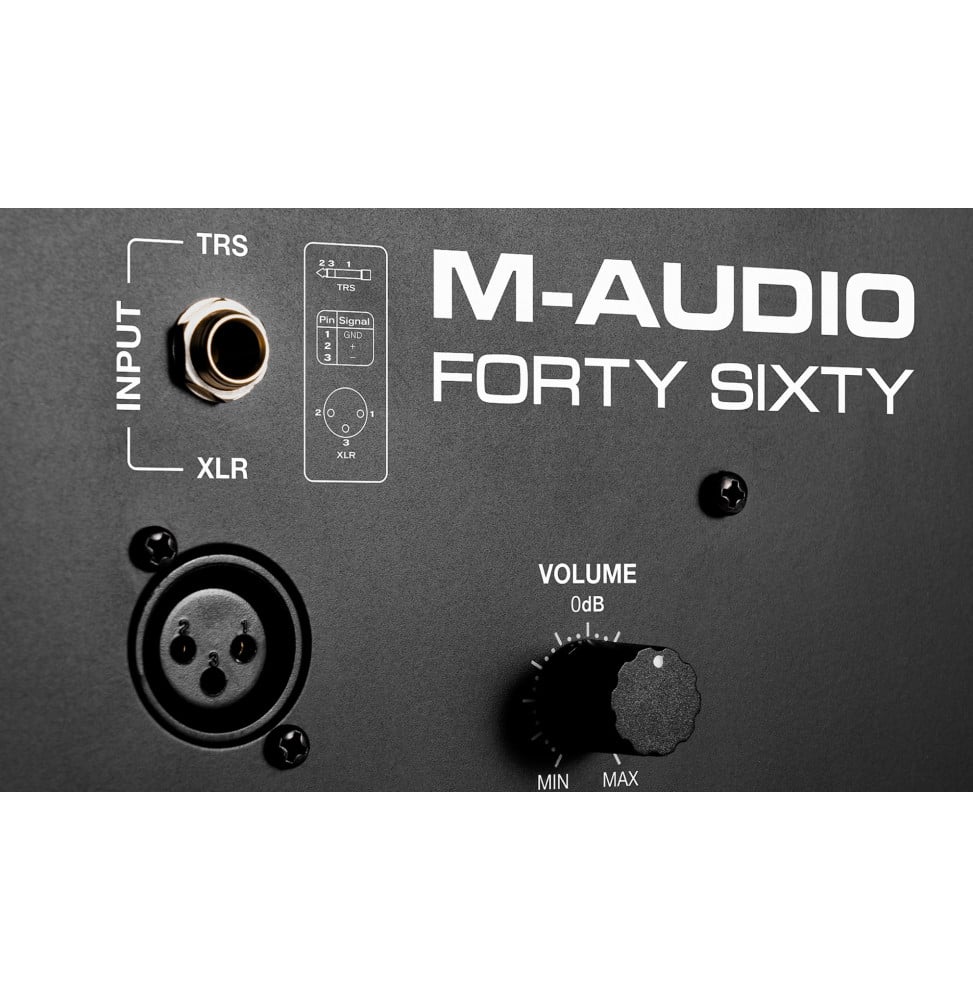
XLR or jack, up to +18 dBu
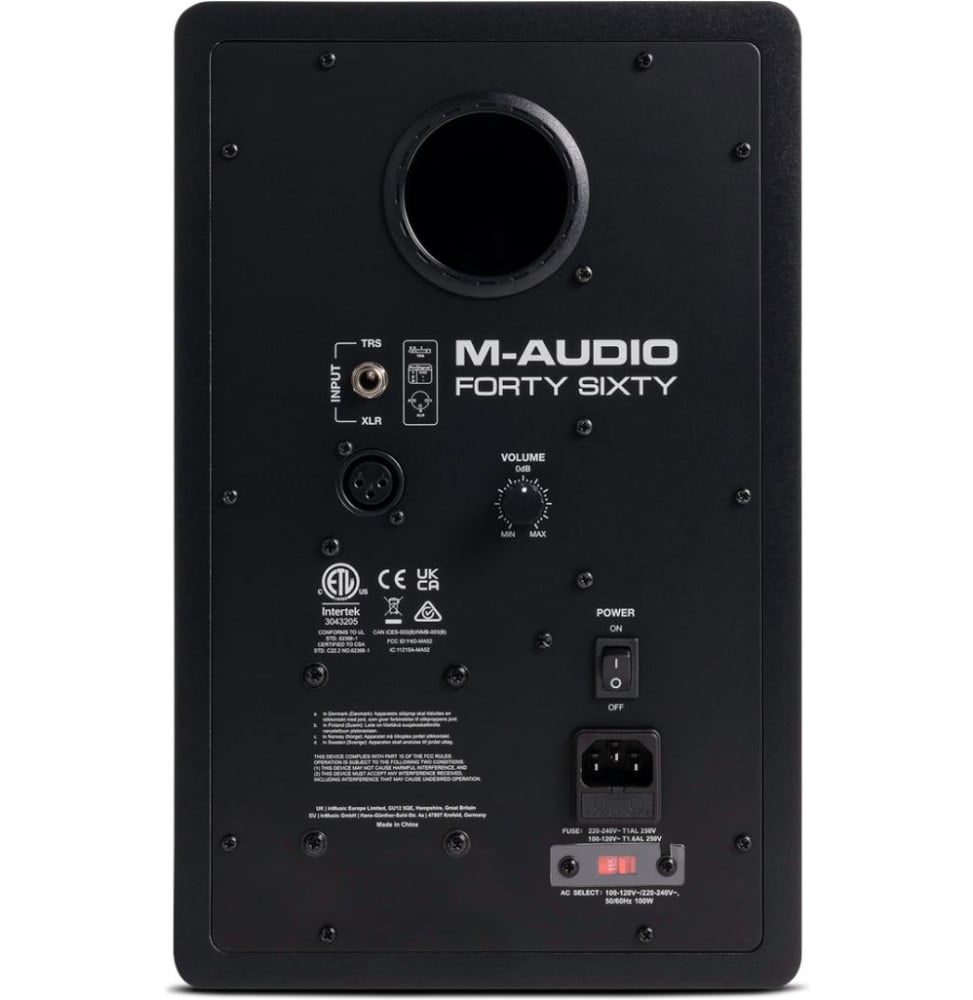
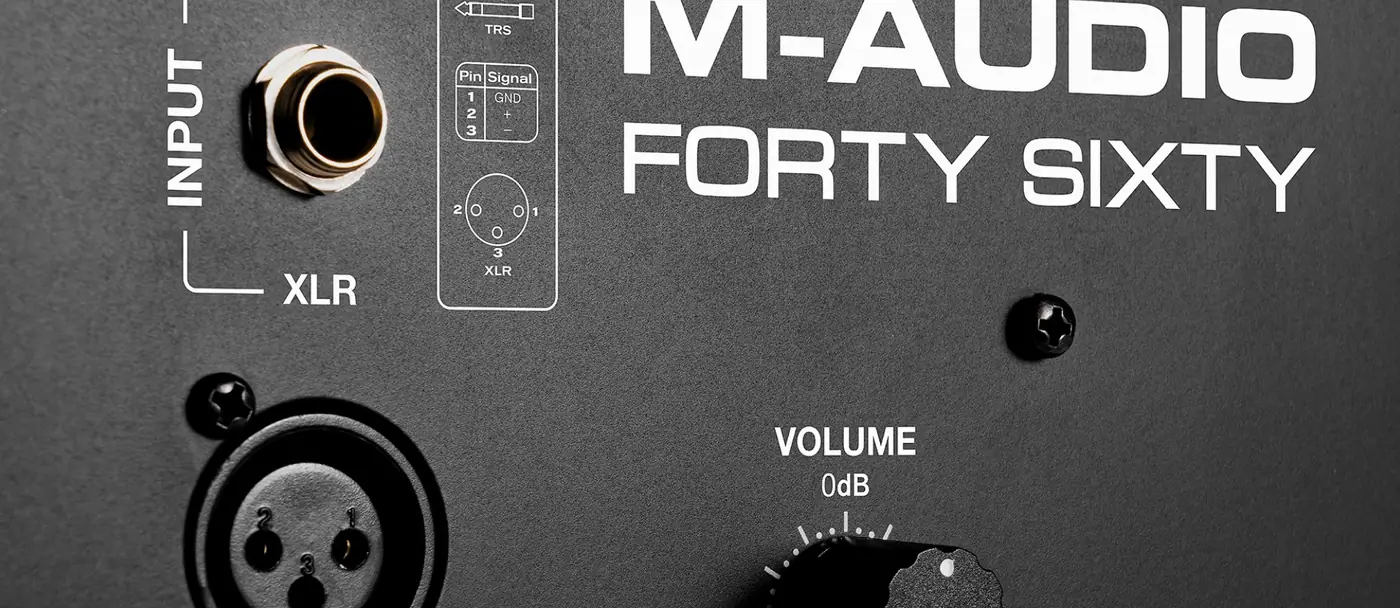
On the rear, an XLR input and a 6.35 mm TRS jack input accept a balanced or unbalanced cable from an audio interface, a mixer or a computer. A balanced cable limits hum. The volume is set on the back, and the Bluetooth sound adds to that of the wired inputs, without switching.
The jack and XLR inputs, and the volume, on the back of the speaker.
Accurate bass, away from the wall
The rear port releases frequencies below 60 Hz and cools the electronics: leave at least 2 inches, i.e. 5 cm, between the speaker and the wall, and avoid corners, which boost the bass. The supplied isolation pad decouples the cabinet from the desk and keeps it stable.
M-Audio reference
FORTYSIXTY
Cabinet
Vinyl-wrapped MDF
Voltage selector
120 V or 240 V
Standby mode
None
Bluetooth profile
A2DP
Height
335 mm
Before the first connection, look at the voltage selector on the back: it is set to 120 V or 240 V, and the 240 V position is the one for European grids. A wrong position can damage the speaker.
Be the first to review this product and help other customers.
Write a review
Frequently asked questions about this product
Is the Forty Sixty sold as a pair?
No, it is sold individually: the box contains one speaker, an isolation pad and the power cable. For stereo listening you need two; they then link wirelessly with the Stereo-Link function, by pressing the Bluetooth button on each one twice.
How do I link two Forty Sixty in stereo?
Switch both speakers on, then press the Bluetooth button on each one twice: the LEDs flash white, then stay solid once the link is established. The pair re-forms on its own at the next power-up, and muting or switching off the LEDs on one speaker applies to both.
What are the Flat, Hype and Custom modes for?
Flat gives a linear response for mixing without flattering the sound. Hype boosts the lows and highs, like earbuds or a car stereo, to check a mix in those conditions. Custom is linear by default and is adjusted in the M-Audio Studio Control app, with a 5-band EQ and presets.
Which sources can be connected?
On the rear, an XLR input and a 6.35 mm TRS jack input accept a balanced or unbalanced cable from an audio interface, a mixer, a computer or a game console, up to +18 dBu. Bluetooth 5.3 comes on top, and both sources are heard at the same time.
Is the app essential?
No: the Speaker Mode button on the front switches between Flat, Hype and Custom, and the volume is set on the rear. The free M-Audio Studio Control app, for iOS and Android, is used to create a custom EQ and to compensate for the speaker's position in the room, over Bluetooth.
Where should the speaker go for good bass?
The rear port releases frequencies below 60 Hz: leave at least 5 cm (2 inches) between the speaker and the wall, and avoid corners, which boost the bass. Set it on the supplied isolation pad or on a stand, tweeter at ear height, with the two speakers and the listener forming an equilateral triangle.
Does the voltage need to be set before plugging it in?
Yes, check it before the first connection: a selector on the rear offers 120 V or 240 V, and the 240 V position is the one for European grids. A wrong position can damage the speaker. Note also that it has no standby mode: it is switched off with its rear switch.
What are its dimensions and weight?
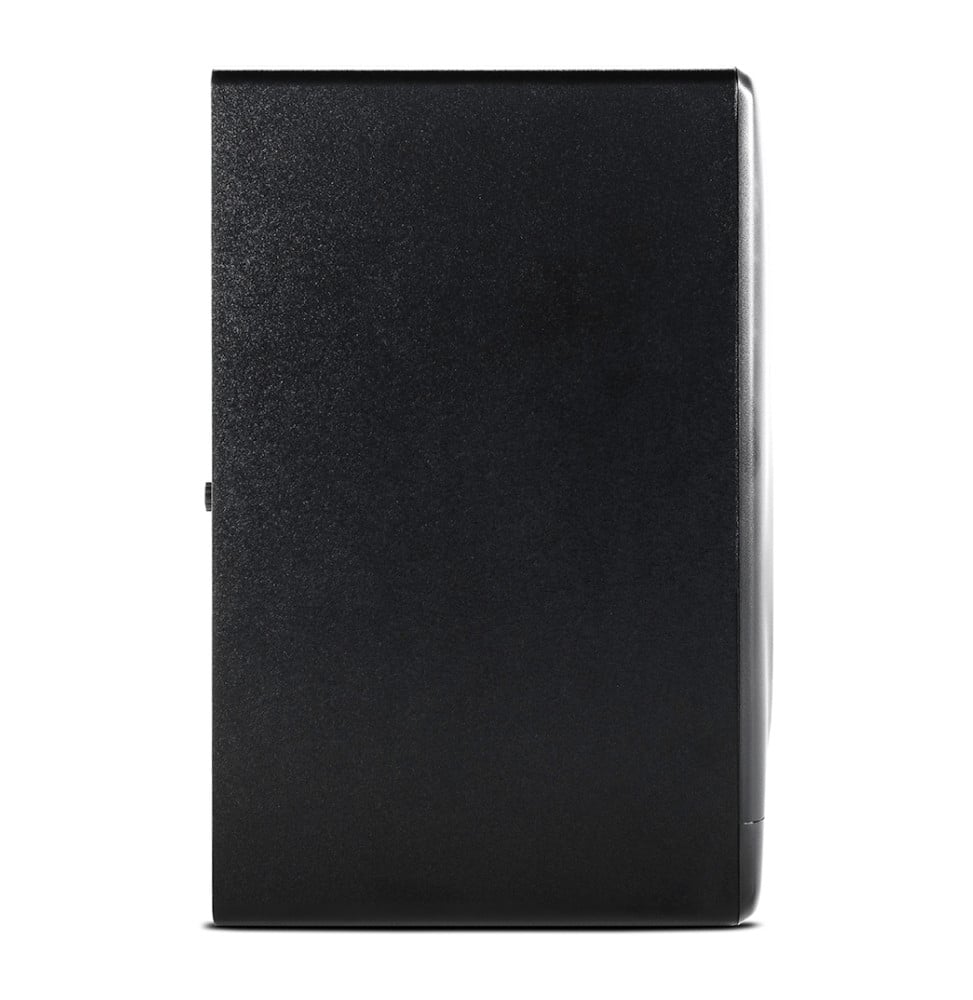
The speaker measures 335 mm high, 216 mm wide and 218 mm deep, and weighs 7.2 kg. Its vinyl-wrapped MDF cabinet houses a 6.5-inch Kevlar woofer and a 1-inch tweeter mounted on a waveguide, with a 120° × 90° coverage angle.
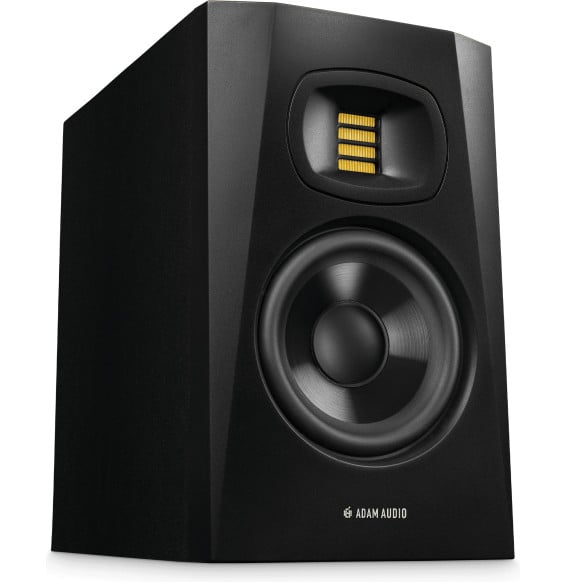
ADAM Audio T5V active studio monitor, sold individually: 5-inch polypropylene woofer and U-ART folded ribbon tweeter, 70 W class D, 45 Hz to 25 kHz, XLR and RCA inputs, bass and treble controls. The smallest monitor in the T Series, for small control rooms.
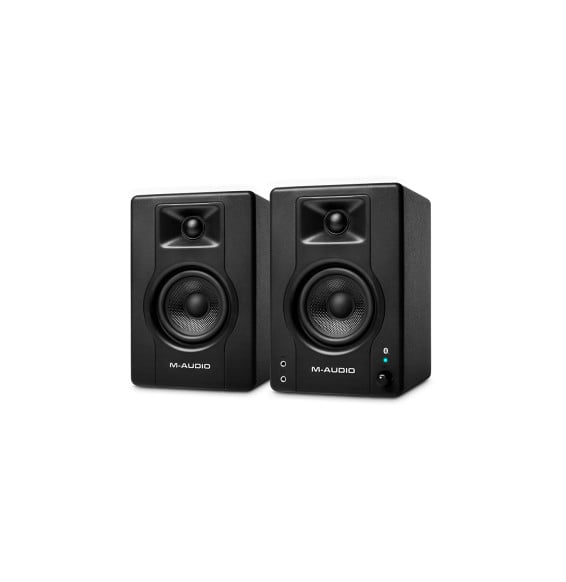
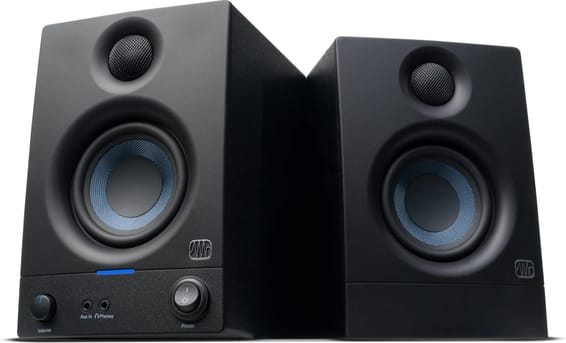
M-Audio BX3 BT pair of active studio monitors: 3.5-inch Kevlar woofers, silk dome tweeters, 120 W peak and Bluetooth. For the desk, home studio, podcasting or gaming, with RCA, jack and aux inputs and a headphone output on the front.
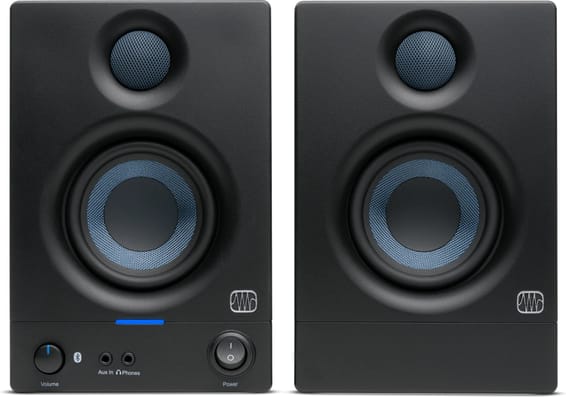
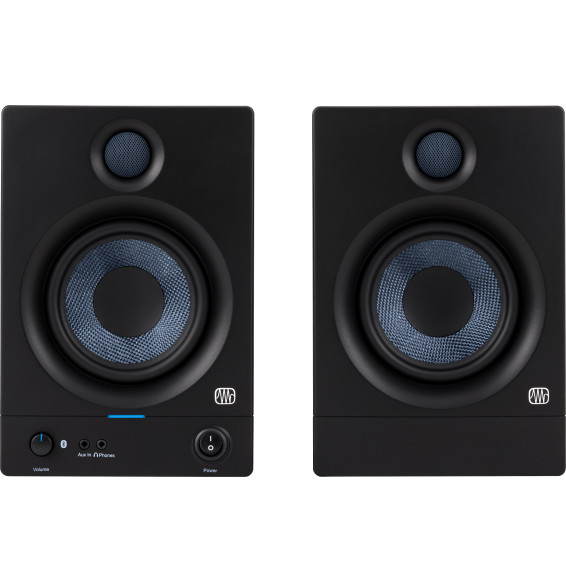
Pair of 4.5-inch active monitors for the home studio, video editing and gaming: 50 W in class AB, 70 Hz to 20 kHz response, Bluetooth 5.0 input and front headphone output. The active speaker powers the passive one through a simple speaker cable.
Bass and treble controls on the rear to compensate for a wall that is too close or a reflective desk. Kevlar cones, silk tweeters, 25 W per speaker, jack input and headphone output within reach on the front.
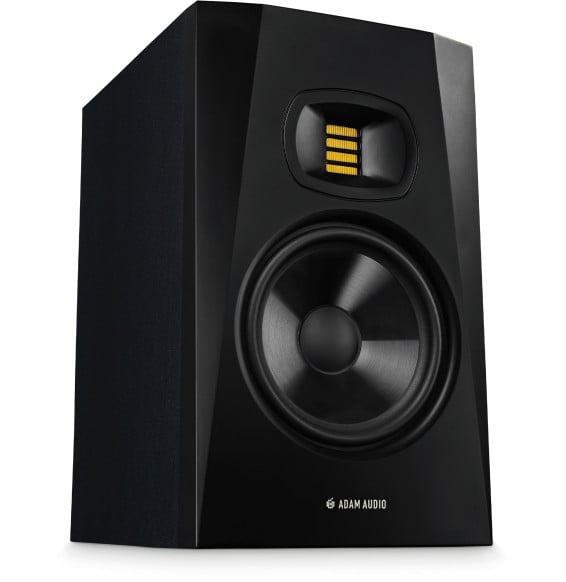
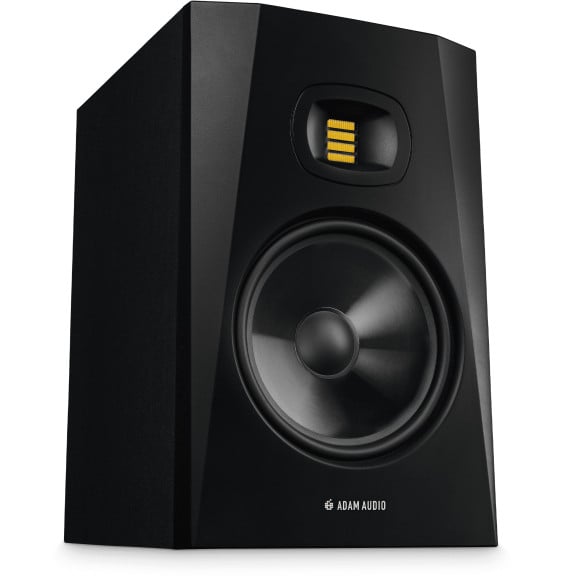
ADAM Audio T7V active studio monitor, sold individually: 7-inch polypropylene woofer and U-ART folded ribbon tweeter, 70 W class D, 39 Hz to 25 kHz, XLR and RCA inputs, bass and treble controls. The mid-sized monitor in the T Series.
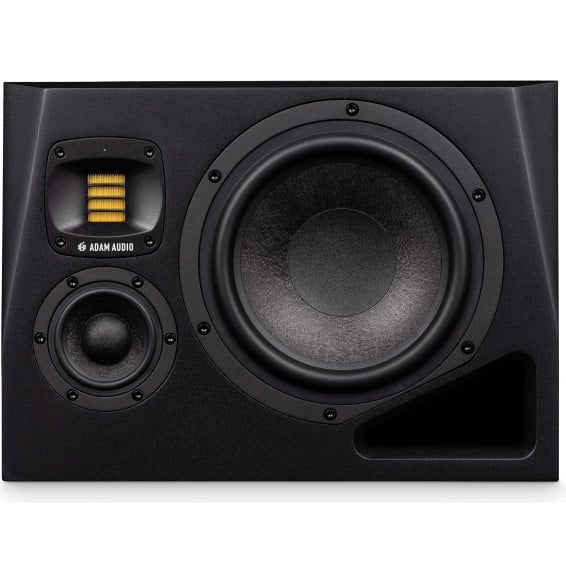
ADAM Audio T8V active studio monitor, sold individually: 8-inch polypropylene woofer and U-ART folded ribbon tweeter, 90 W class D, 33 Hz to 25 kHz, XLR and RCA inputs, bass and treble controls. The largest in the T Series, for bass-heavy music.
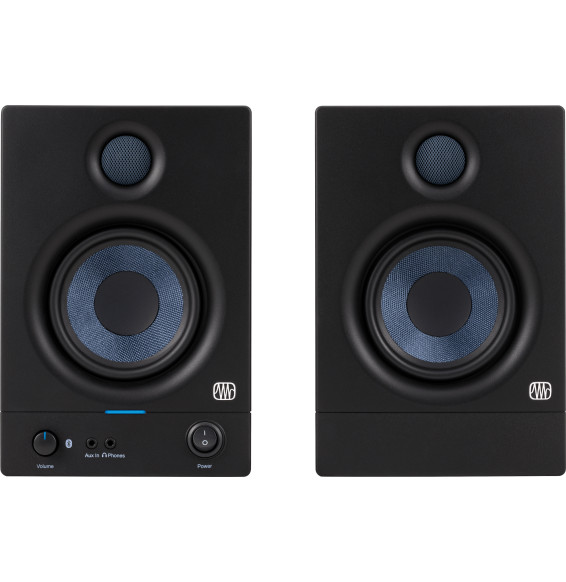
Pair of 5.25-inch active monitors for the home studio, video editing and gaming: 100 W in class D, 55 Hz to 20 kHz response, Bluetooth 5.0 input and front headphone output. The active speaker powers the passive one through a simple speaker cable.
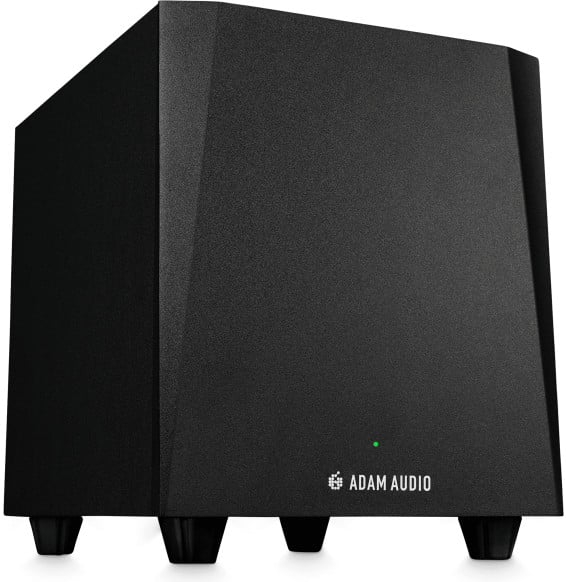
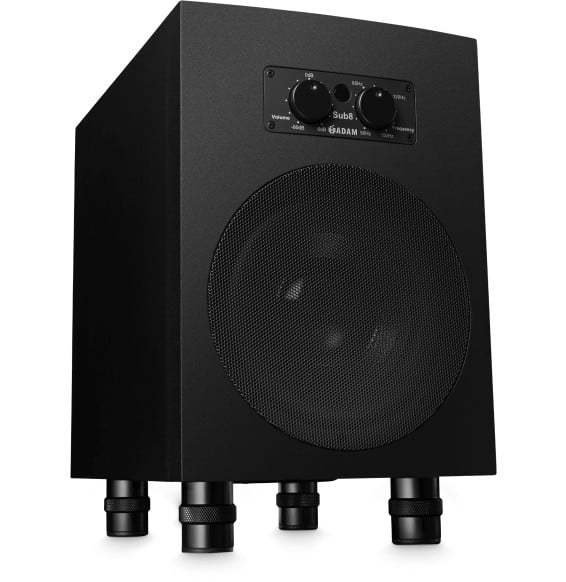
ADAM Audio T10S active subwoofer: downward-firing 10-inch woofer, 130 W class D, 28 Hz to 120 Hz, stereo XLR and RCA inputs and outputs, 80 Hz, 120 Hz or Bypass filter and phase inversion. Designed to complement the T5V and T7V monitors.