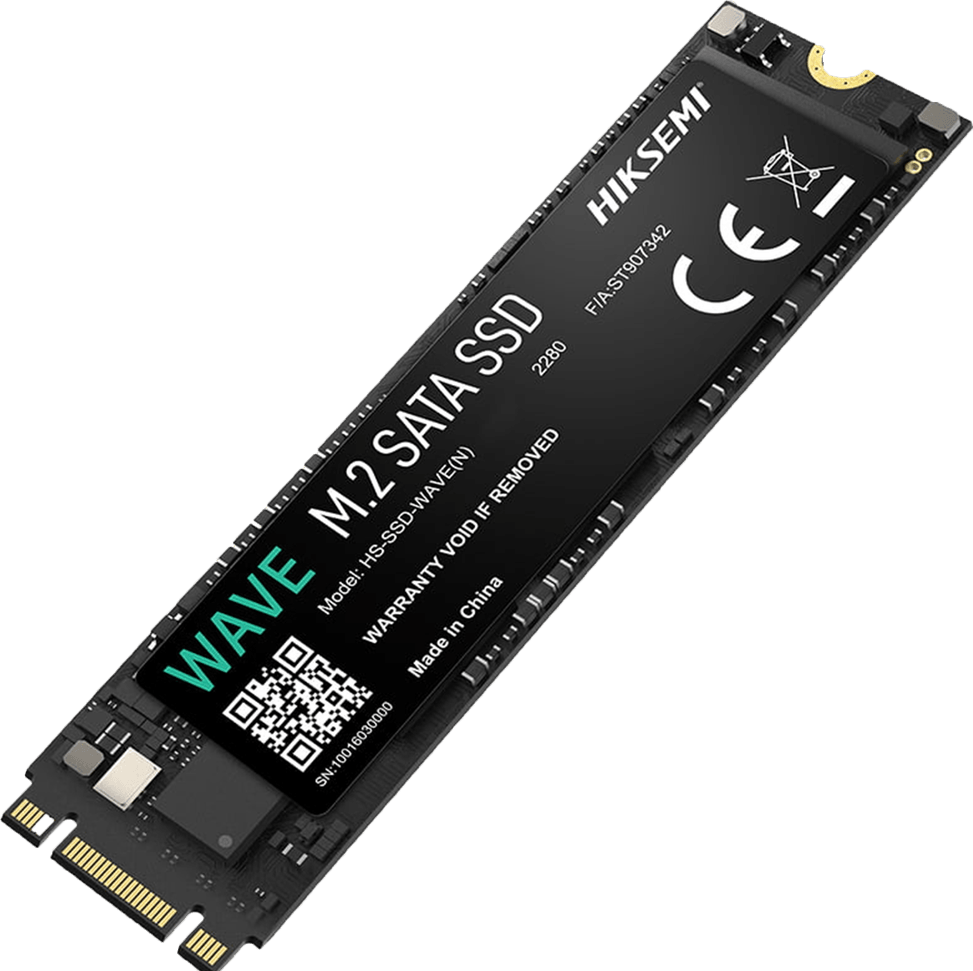
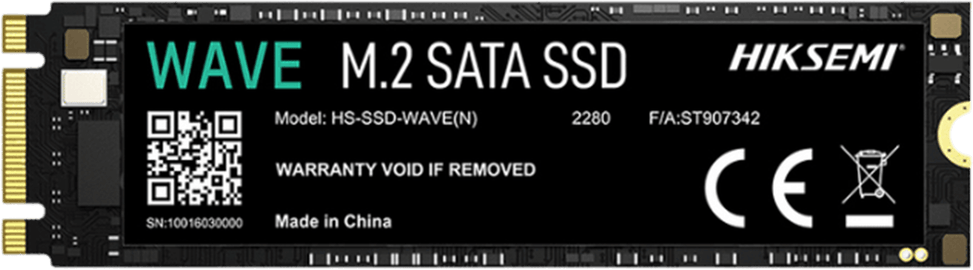
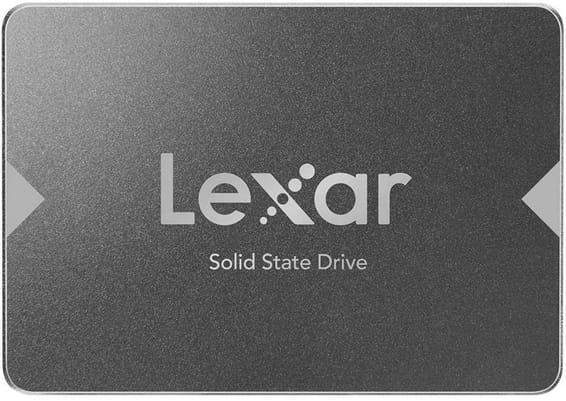
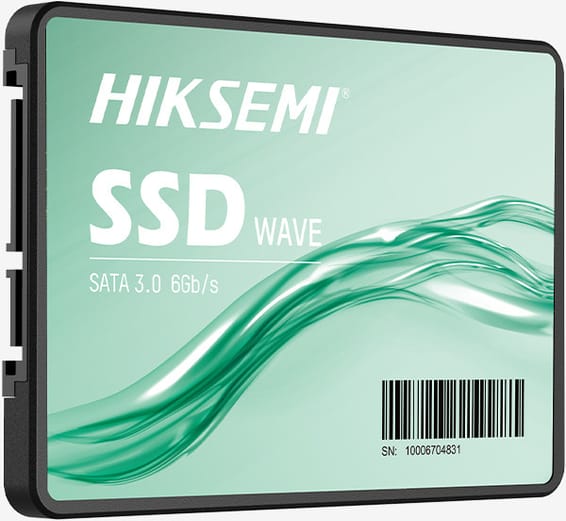
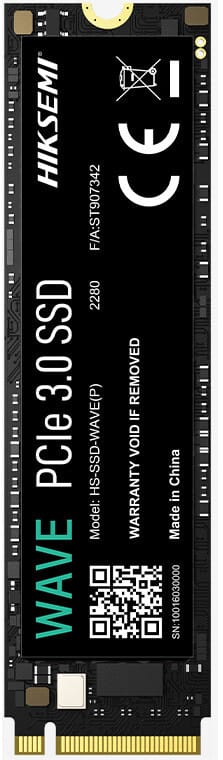
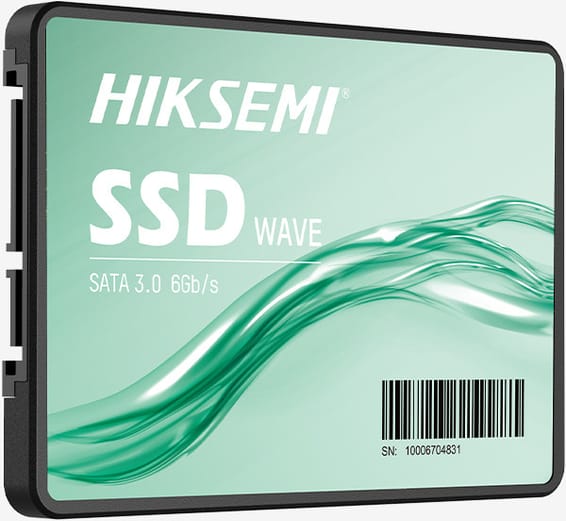
HIKSEMI Wave(N) 256 GB SSD, M.2 2280: an ultra-thin form factor for ultrabooks or mini PCs, perfect for upgrading an existing system with a compact, silent drive. Compatibility: M.2 2280 form factor, SATA III interface, installs in an M.2 SATA slot; Windows, macOS and Linux; personal computers and laptops. Technology: 3D NAND Flash memory, dedicated HIKSEMI controller, TRIM support, vibration-resistant structure to keep your data safe. Performance: sequential read speeds up to 560 MB/s, write speeds up to 480 MB/s, 4K random IOPS up to 85K read and 70K write. Endurance:TBW 70 TB, MTBF 1,500,000 h. Ideal for equipping an ultrabook, a mini PC or a recent laptop, speeding up an operating system or adding a compact secondary drive. The M.2 form factor: more compact, with no compromise on reliability.
Be the first to review this product and help other customers.
Write a review
Frequently asked questions about this product
Does this Wave(N) need a particular M.2 slot?
Yes: it needs an M.2 slot wired for SATA. Despite its stick form factor, this drive has a SATA III interface, not PCIe NVMe. Check the documentation for your motherboard or laptop: not all M.2 slots accept both protocols.
What speeds can you expect from this 256 GB version?
560 MB/s read and 480 MB/s write, with 85,000 IOPS in 4 KB random read and 70,000 in write. This is the ceiling of the SATA interface: the drive makes full use of it, and the higher capacities in the series go little further.
How many terabytes of writes can this 256 GB drive handle?
70 TB, or nearly three hundred full drive writes. That is far beyond what an office PC writes over several years, where most of the data written comes from system updates rather than continuous rewriting.
Will this drive fit in an ultrabook or a mini PC?
Yes. In the M.2 2280 form factor — 22 mm by 80 mm — it weighs no more than 5.4 g and screws flat onto the board, with no data or power cable to route through the chassis. It draws a maximum of 2.5 W.
Does this drive support TRIM?
Yes. TRIM tells the drive which blocks are no longer in use, allowing it to prepare them in advance instead of at the moment of writing. This is what stops an SSD from slowing down as it fills up, and it works with nothing to configure on a recent system.
What temperature range does this SSD operate in?
From 0 to 70 °C in operation. Its design is stated to be vibration-resistant, with no mechanical parts at all: everything relies on an electronic controller chip and 3D NAND memory. The rated mean time between failures is 1,500,000 hours.
Is the drive new and under warranty?
It is new and your invoice serves as the warranty document. Its part number is HS-SSD-WAVE-N-256G, to be quoted for any return. The full datasheet for the series gives the details capacity by capacity.
550 MB/s in sequential read, more than five times the speed of a spinning drive: noticeably quicker start-ups and application loading. No moving parts, so operation is silent and insensitive to knocks.
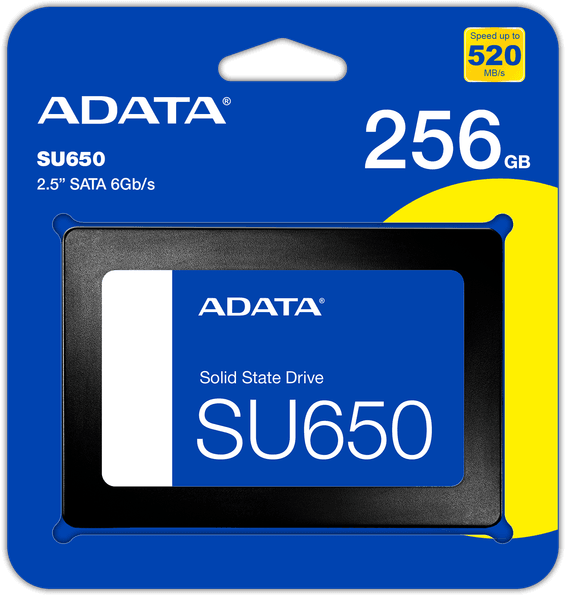
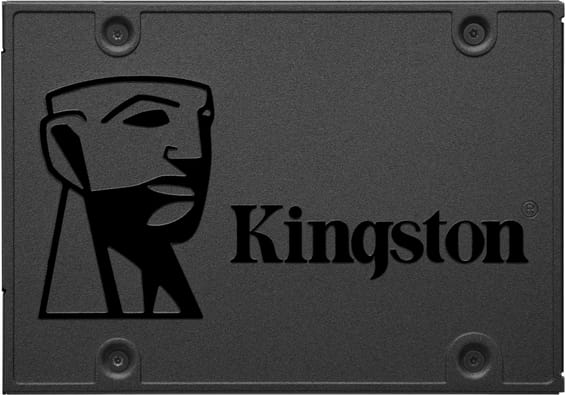
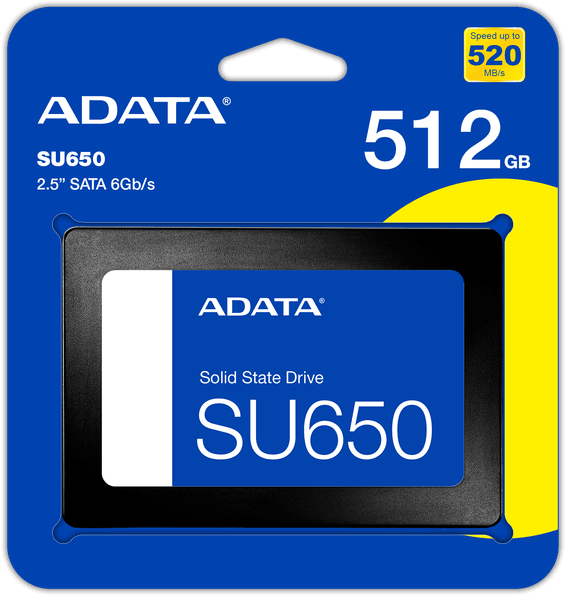
520 MB/s reading and 450 MB/s writing to replace a spinning hard drive with no noise and no vibration. 3D NAND memory, SLC cache and ECC error correction; the ADATA migration utility copies the whole system onto the new drive.
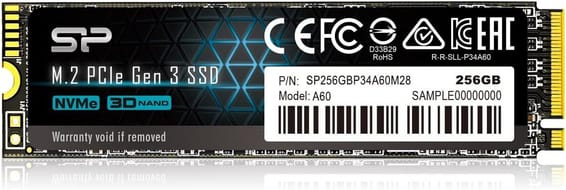
A host memory buffer (HMB) and an SLC cache take read speed to 2,200 MB/s and write speed to 1,600 MB/s. LDPC error correction, end-to-end data protection and the SP Toolbox utility to monitor drive health.
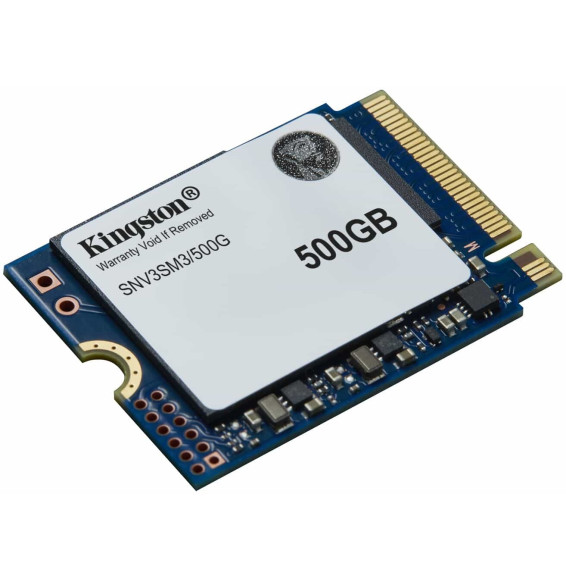
Short enough to fit an ultra-thin laptop or a handheld games console, and it weighs only 2.6 g. 5,000 MB/s read, 3,000 MB/s write, low power draw and 160 TB written of endurance.
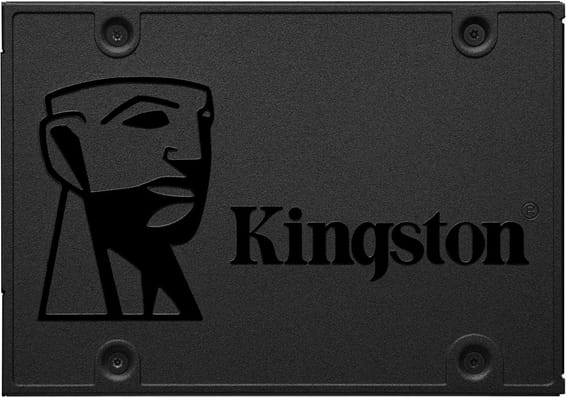
Ten times faster than a spinning drive: 500 MB/s read, 350 MB/s write, enough to wake up a machine that drags at start-up. With no moving parts, it takes the knocks and vibration of a computer on the move.
Compatible with a desktop PC, a laptop and a PS4 alike, it reads at 530 MB/s and writes at 400 MB/s. 3D NAND memory with no moving parts, for an office machine that is finally responsive.
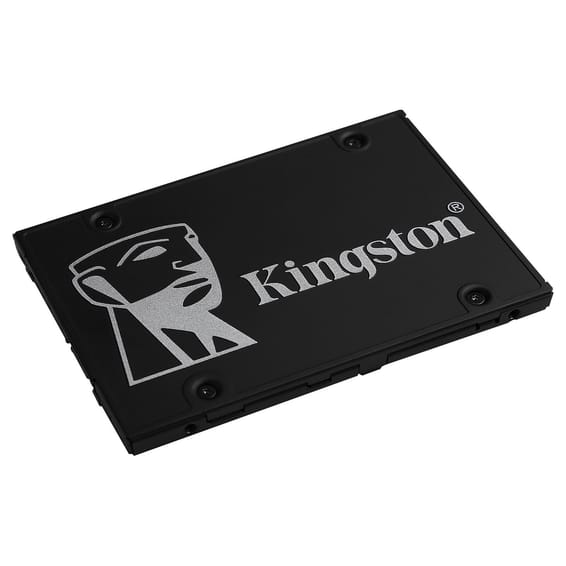
256-bit AES hardware encryption, TCG Opal and Microsoft eDrive: the data stays unreadable to anyone who gets hold of the machine. 550 MB/s read, 520 MB/s write over SATA 6 Gb/s.
Write up to 450 MB/s and read up to 500 MB/s: file copies and installations are far brisker than with a spinning drive. Silent, frugal with power and unaffected by vibration, in a tower or a laptop.
280 TB written endurance, 3D NAND memory and ECC correction: a second drive built to last. Read up to 520 MB/s and write up to 450 MB/s, with no noise or vibration, in a desktop PC or a laptop.
520 MB/s reading and 450 MB/s writing to replace a spinning hard drive with no noise and no vibration. 3D NAND memory, SLC cache and ECC error correction; the ADATA migration utility copies the whole system onto the new drive.
•Sequential reading up to 520 MB/s
•Sequential writing up to 450 MB/s
•SATA III 6 Gb/s interface, backwards compatible with SATA II
Ten times faster than a spinning drive: 500 MB/s read, 350 MB/s write, enough to wake up a machine that drags at start-up. With no moving parts, it takes the knocks and vibration of a computer on the move.
Compatible with a desktop PC, a laptop and a PS4 alike, it reads at 530 MB/s and writes at 400 MB/s. 3D NAND memory with no moving parts, for an office machine that is finally responsive.
Write up to 450 MB/s and read up to 500 MB/s: file copies and installations are far brisker than with a spinning drive. Silent, frugal with power and unaffected by vibration, in a tower or a laptop.
550 MB/s in sequential read, more than five times the speed of a spinning drive: noticeably quicker start-ups and application loading. No moving parts, so operation is silent and insensitive to knocks.
280 TB written endurance, 3D NAND memory and ECC correction: a second drive built to last. Read up to 520 MB/s and write up to 450 MB/s, with no noise or vibration, in a desktop PC or a laptop.
256-bit AES hardware encryption, TCG Opal and Microsoft eDrive: the data stays unreadable to anyone who gets hold of the machine. 550 MB/s read, 520 MB/s write over SATA 6 Gb/s.
Stated endurance of 300 TB written, enough to take years of office work and photography. Speeds of 500 MB/s read and 450 MB/s write, with no noise or vibration, in a tower or in a laptop.