The Ubiquiti U7-LR is Wi-Fi 7: does it transmit on the 6 GHz band?
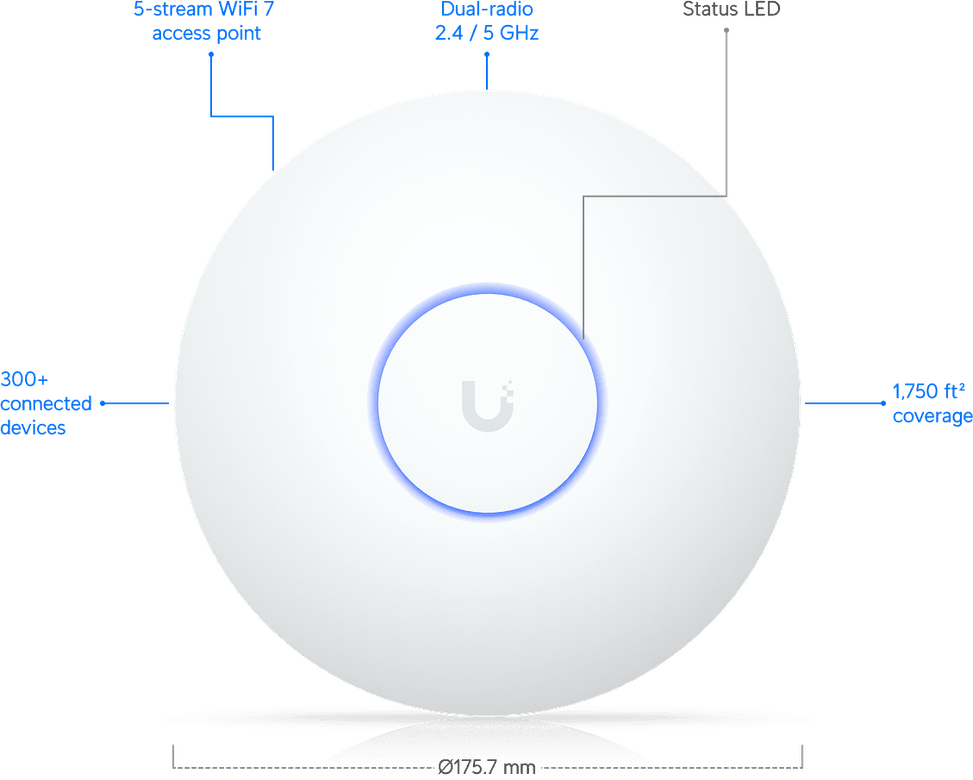
No, it is dual-band: 5 GHz up to 4.3 Gbps and 2.4 GHz up to 688 Mbps. Wi-Fi 7 brings it the modulation and efficiency of the 802.11be standard, not the third band — that is reserved for the tri-band models in the range.
What channel width does the U7 Long-Range support in Wi-Fi 7?
From 20 to 160 MHz (EHT 20/40/80/160), and it is indeed these 160 MHz channels that deliver the advertised 4.3 Gbps on the 5 GHz band. Wi-Fi 6 and Wi-Fi 5 modes are supported with the same widths, for older devices.
What do the U7-LR's 5 spatial streams mean for a busy office?
They are split into 3×3 MU-MIMO on 5 GHz and 2×2 on 2.4 GHz: the access point communicates with several devices in parallel instead of serving them one after the other. This is what allows it to claim more than 300 clients simultaneously over 160 m².
How is the U7 Long-Range powered?
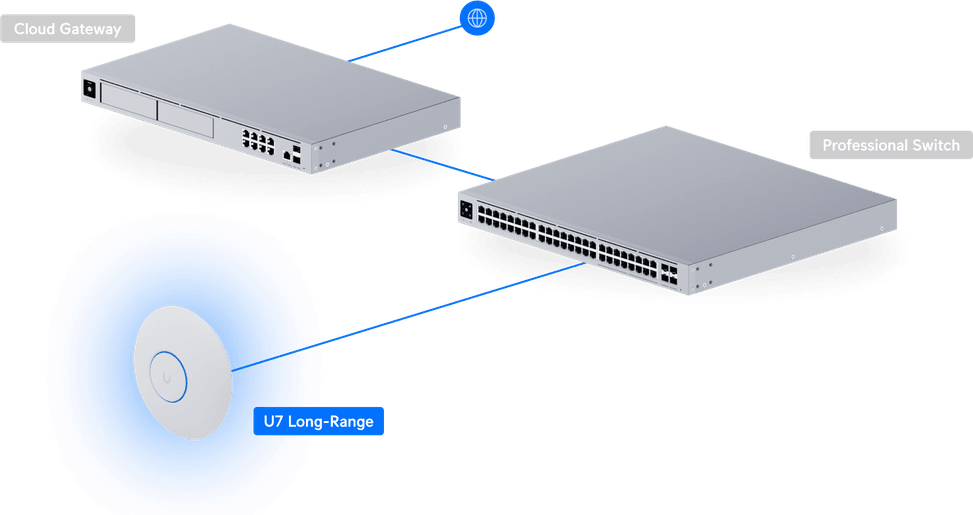
Over the network cable, via PoE, with 14 W maximum power consumption and an input voltage of 42.5 to 57 V DC. So make sure you have a PoE switch or an injector: no electrical outlet is needed at the mounting point.
Why is its network port 2.5 Gbps rather than Gigabit?
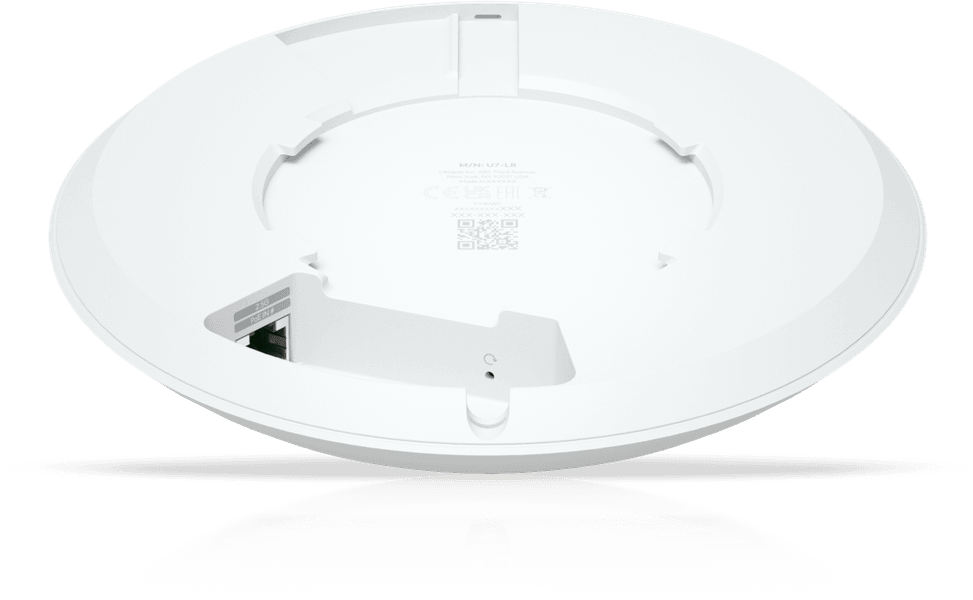
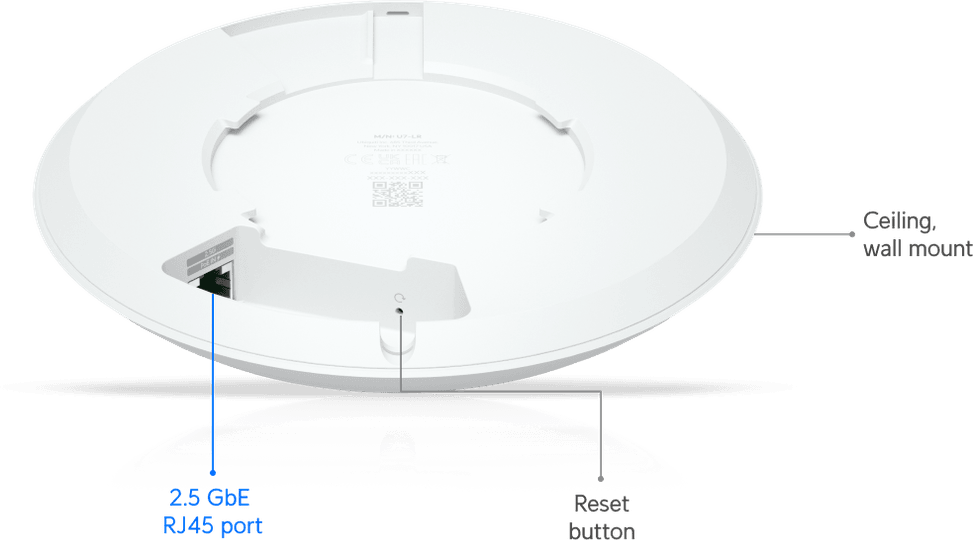
Because the radio exceeds Gigabit: with a theoretical 4.3 Gbps on 5 GHz, a 1 Gbps port would cap traffic to the wired network. The 2.5 GbE RJ45 port removes this cap, provided the switch at the other end also supports 2.5 Gbps.
Is the mounting bracket supplied with the U7-LR?
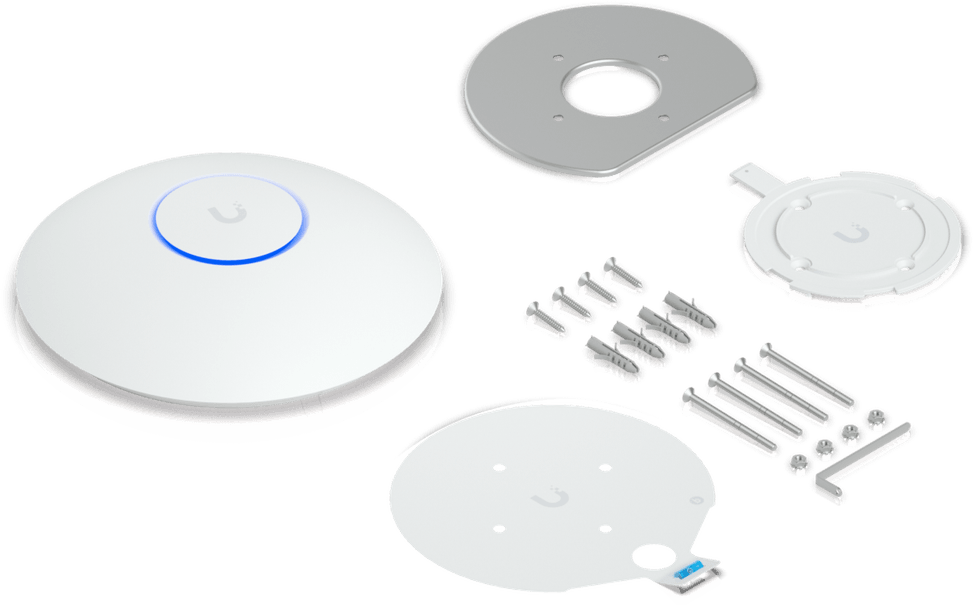
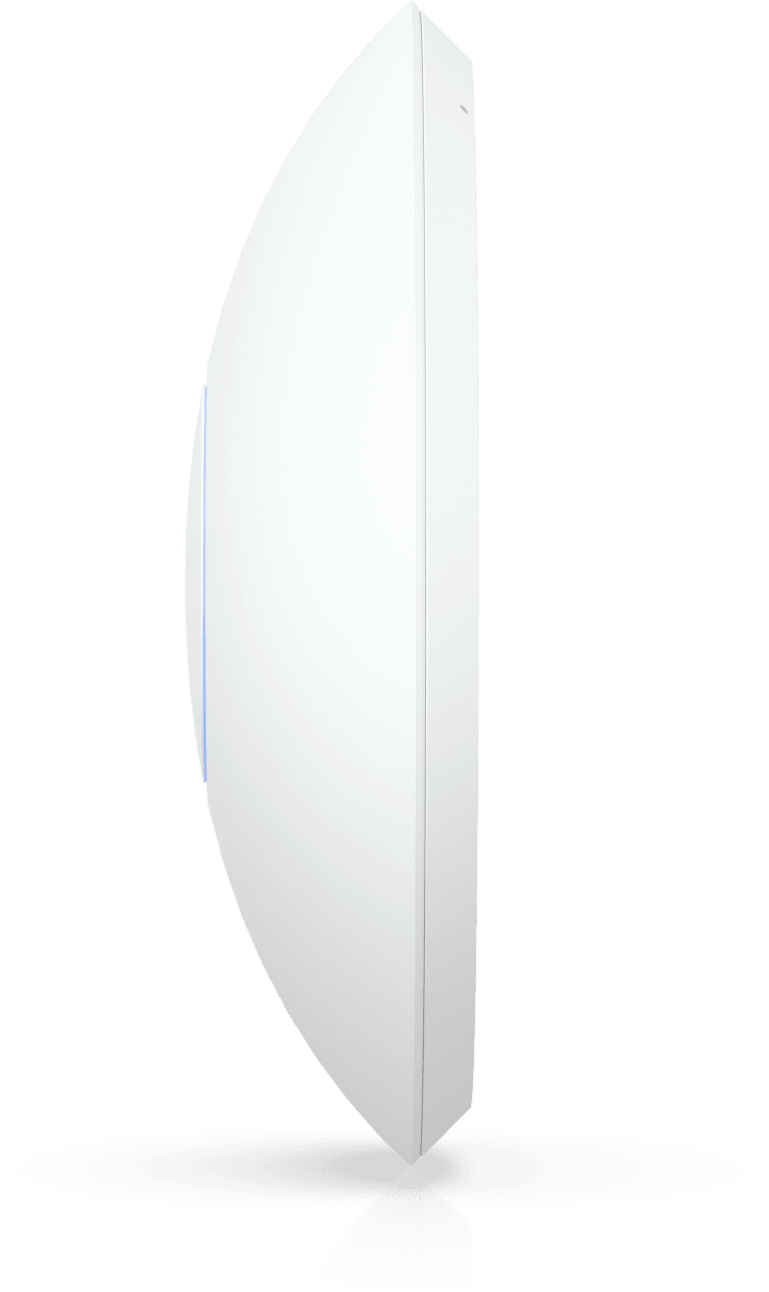
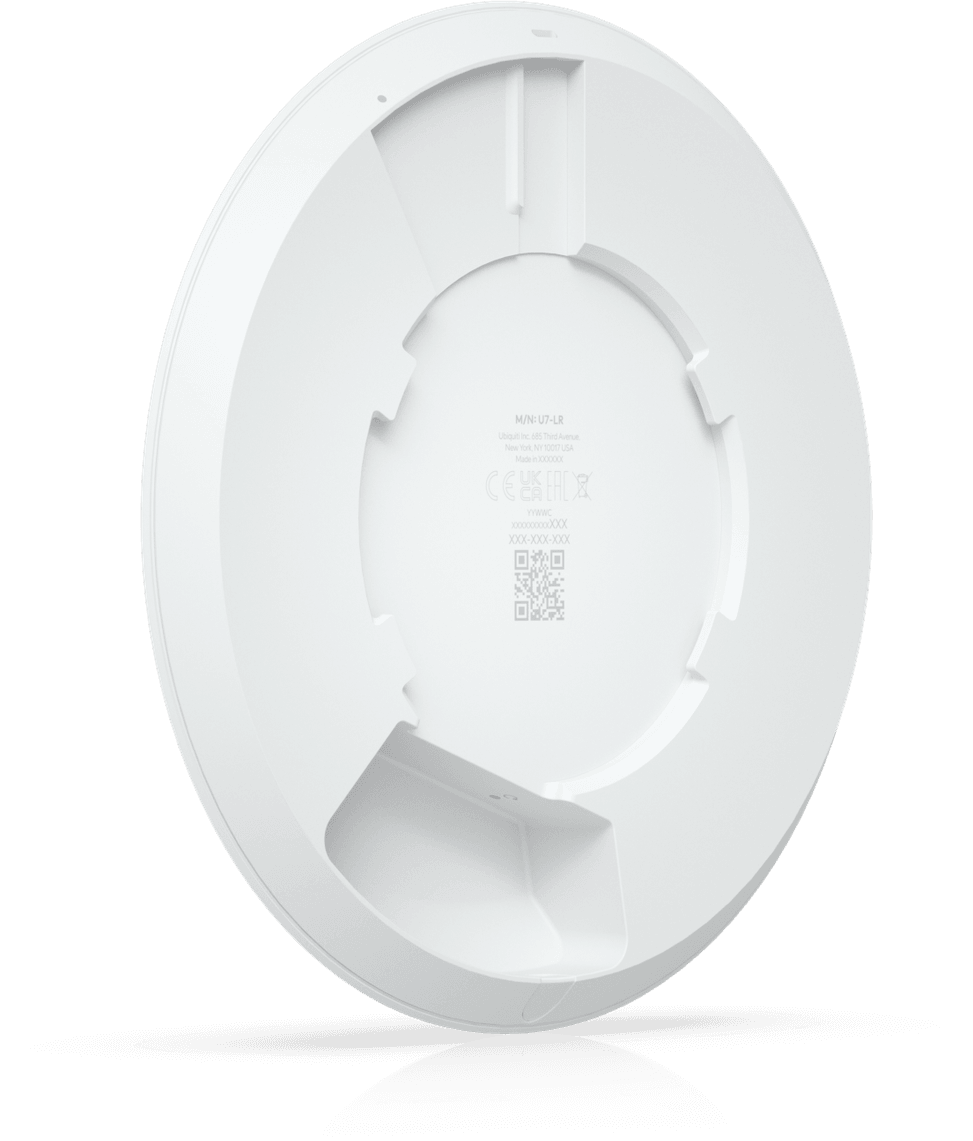
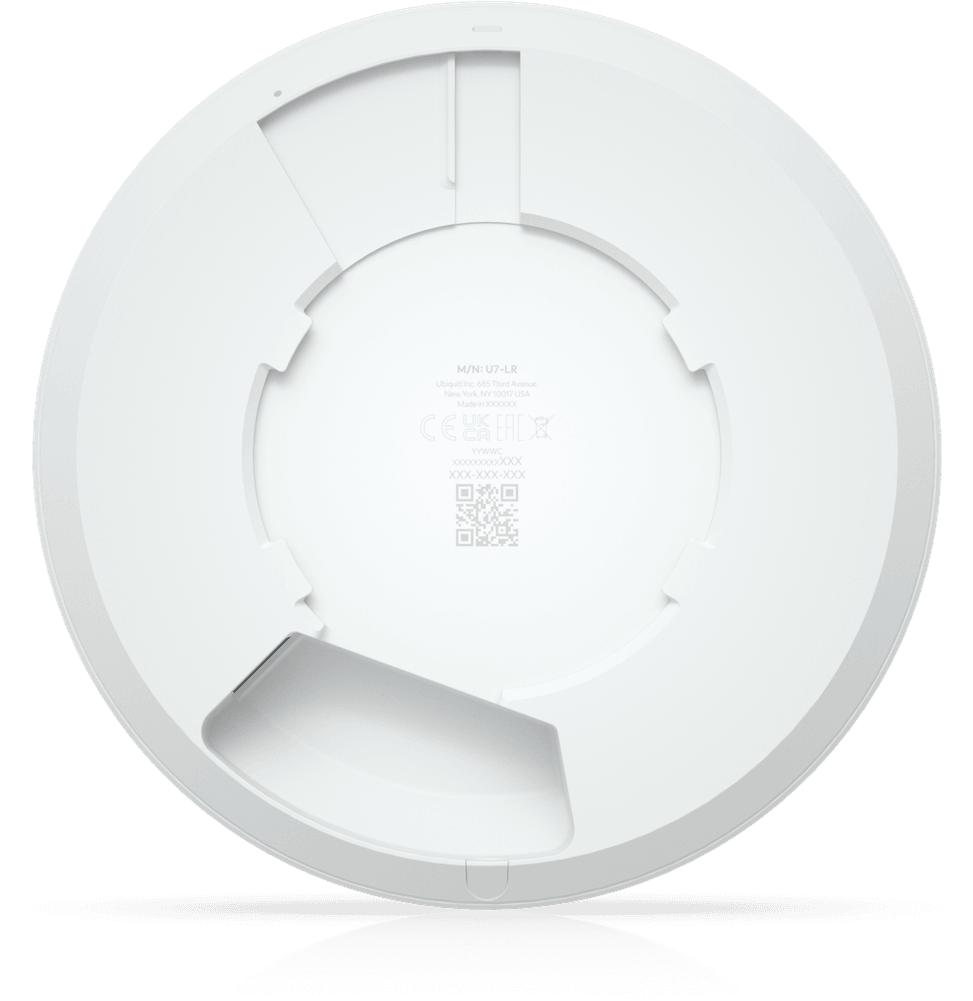
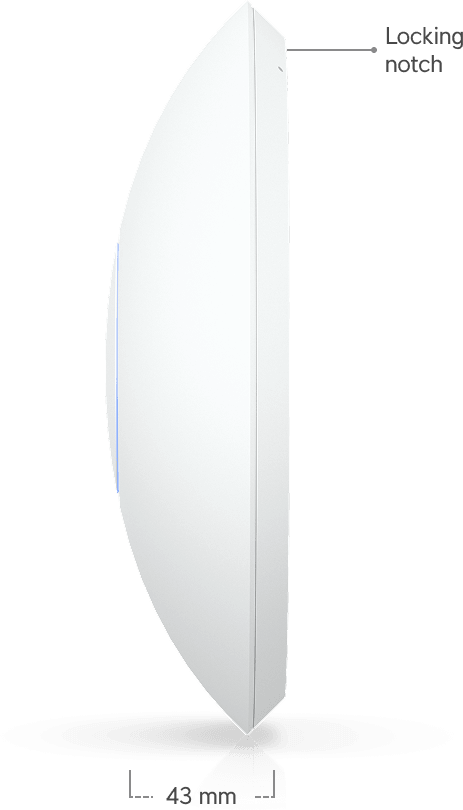
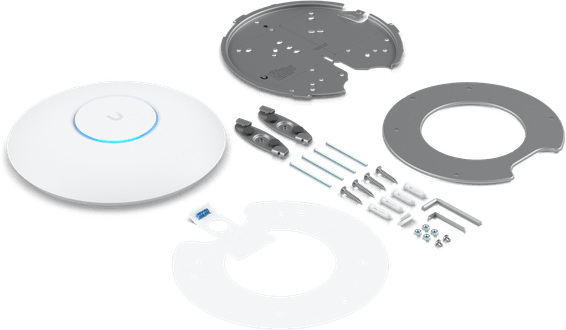
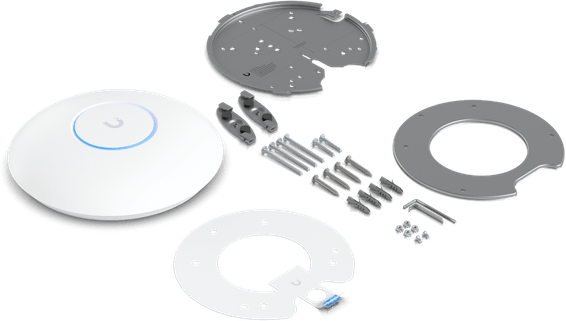
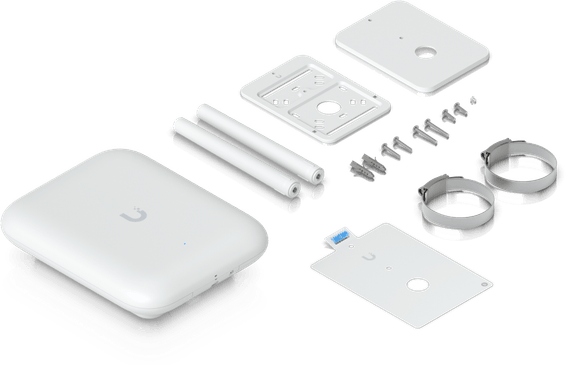
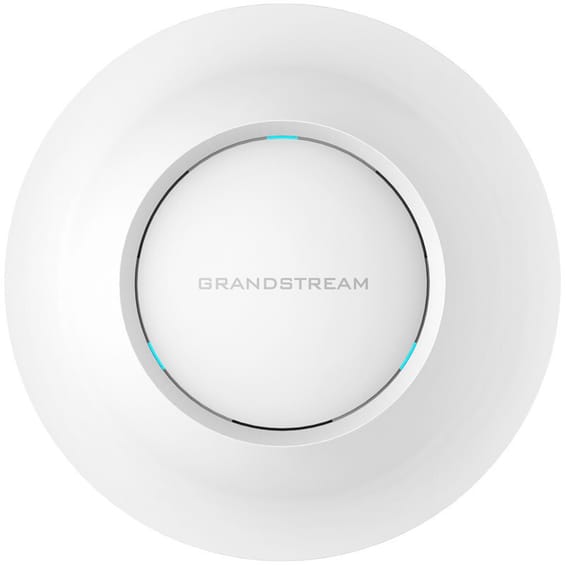
Yes, a plastic mounting plate is included, for ceiling or wall installation. The housing is 175.7 mm in diameter and 43 mm thick and weighs 448 g, made of polycarbonate and aluminium alloy; the plate is made of polycarbonate and galvanised steel.
Can it cope with a non-air-conditioned equipment room or a warehouse?
Its operating range is -30 to 50 °C, with 5 to 95% non-condensing humidity: a hot equipment room, a warehouse or a storeroom pose no difficulty. For direct exposure to rain, an outdoor model remains the right choice.
Can each user be given a different Wi-Fi password?
Yes, thanks to PPSK (private pre-shared key): a single SSID accepts several passwords, each identifying a user or a device. Revoking one access then forces no one else to change their key — invaluable in a residence or a shared space.
How can a guest network with temporary access be managed?
The captive portal can be customised with your branding and supports authentication by vouchers, by password, by payment or via an external portal server. The guest network is isolated, and devices can also be isolated from one another.
Does the U7-LR integrate with enterprise RADIUS authentication?
Yes, with dynamic VLAN assignment via RADIUS and support for RadSec, which encrypts communication with the authentication server using TLS. Passpoint (Hotspot 2.0) is also supported, for automatic connection of recognised devices.
Does the connection stay stable when moving between several UniFi access points?
Yes: 802.11r fast roaming, 802.11v transition management and 802.11k radio resource measurement switch the device to the best access point without re-authentication. Band steering, for its part, pushes compatible devices to the 5 GHz band.
Can data rates be limited or Wi-Fi switched off at certain times?
Yes, a rate cap can be set per wireless network, and schedules turn an SSID on or off automatically — a guest network closed at night, for example. Client device isolation completes the setup on public networks.
Which app is needed to configure the U7 Long-Range?
The UniFi Network application, version 9.1.120 or later; on mobile, iOS 10.20.2 or Android 10.21.7 at minimum. So update the console or the app before connecting the access point.
Is the equipment new and under warranty?
Yes, new equipment, with the invoice serving as the warranty document for 1 year. The access point is NDAA compliant and CE, FCC and IC certified, a point that some public tenders require.