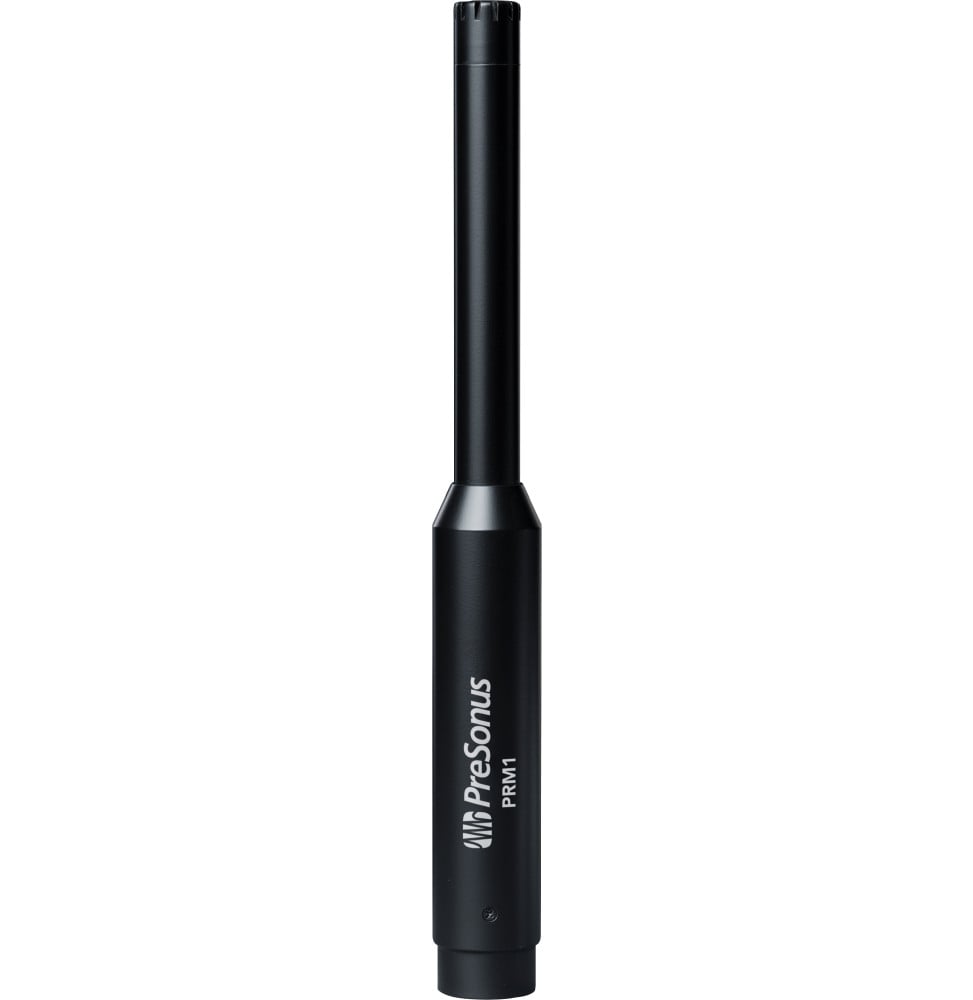
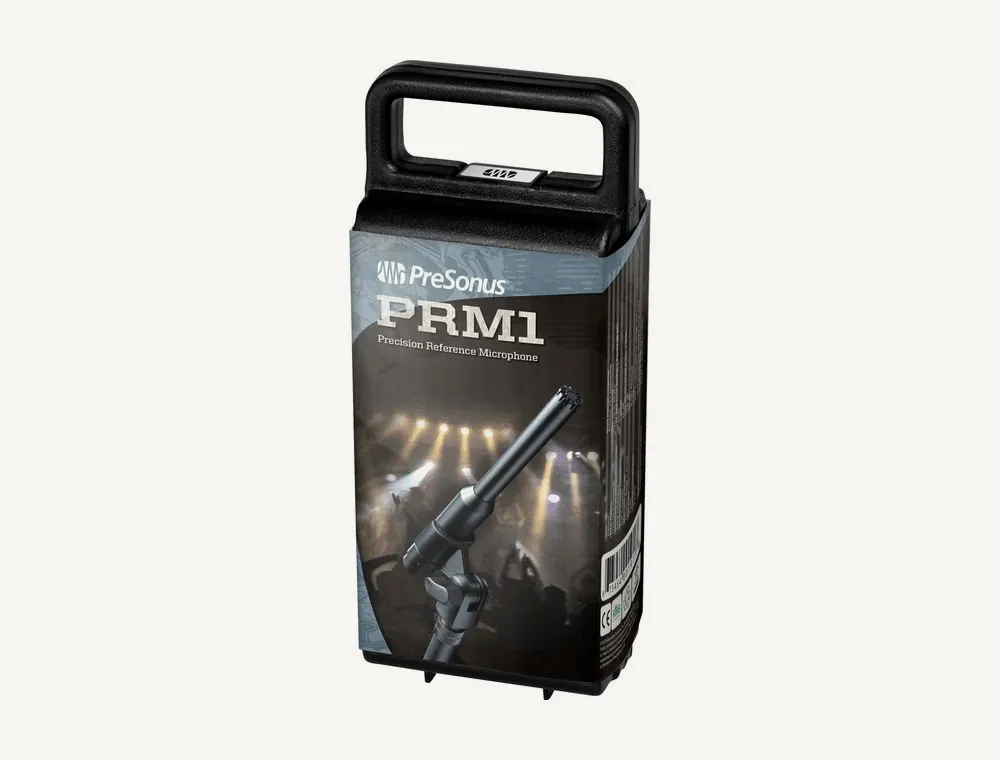
Omnidirectional electret condenser measurement mic, designed for acoustic analysis with a real-time analyser (RTA) or a spectrograph. Flat response from 20 Hz to 20 kHz, 132 dB SPL, 9 to 52 V phantom; stand mount, windscreen and hard case included.
A measurement microphone for tuning a sound system or analysing a room's acoustics with a real-time analyser (RTA): flat response from 20 Hz to 20 kHz, omnidirectional pattern and a 1/4-inch electret capsule. Analysis: pairs with UC Surface and the Smaart measurement of StudioLive mixers Pickup: -37 dB/Pa sensitivity, up to 132 dB SPL, 106 dB dynamic range Connection: XLR, 9 to 52 V phantom power Build: all-metal chassis, 150 g for 192 mm Included: stand mount, foam windscreen and hard case A mic that does not colour the sound, to read faithfully what the room does to the playback.
The PRM1 is not for recording: it is for measuring. Placed in the listening area and connected to a real-time analyser, it shows what the room and the speakers really do to the sound, before you correct the equalisation.
20 Hz - 20 kHzflat response
132 dB SPLmaximum level
9 - 52 Vphantom power
150 gall-metal chassis
A flat curve, so an honest measurement
The PRM1 neither boosts nor cuts any frequency between 20 Hz and 20 kHz. Its pre-polarised 1/4-inch electret capsule, mounted on a FET preamp, is equally sensitive in all directions: it picks up the direct sound of the speakers and the reflections off the walls, giving a faithful picture of the room. A dip or a bump on the analyser then comes from the room or the speakers, not from the mic.
Ready for the StudioLive measurement wizard
On StudioLive digital mixers, every mic input delivers phantom power, including the talkback input used by the Smaart System Check wizards in Virtual StudioLive. With UC Surface and its Smaart measurement technology, the PRM1 completes a system for analysing and correcting a sound system. It remains a standard XLR mic: any real-time analyser or spectrograph accepts it, on a mixer or interface that supplies 9 to 52 V.
Well placed, it only reports real faults
A badly placed mic shows problems that do not exist. PreSonus recommends mounting it on a stand, then choosing a primary position in the centre of a speaker's coverage, within the listening area, where it sounds its best. A few secondary positions, always within the covered area and away from the edges, complete a three-dimensional measurement.
With a flown speaker angled down, the reflection off the floor reaches the mic slightly after the direct sound and skews the curve. Three remedies: block it with a baffle, measure at ground level, or take several measurement points to even out its effect.
Stored in a case that protects it
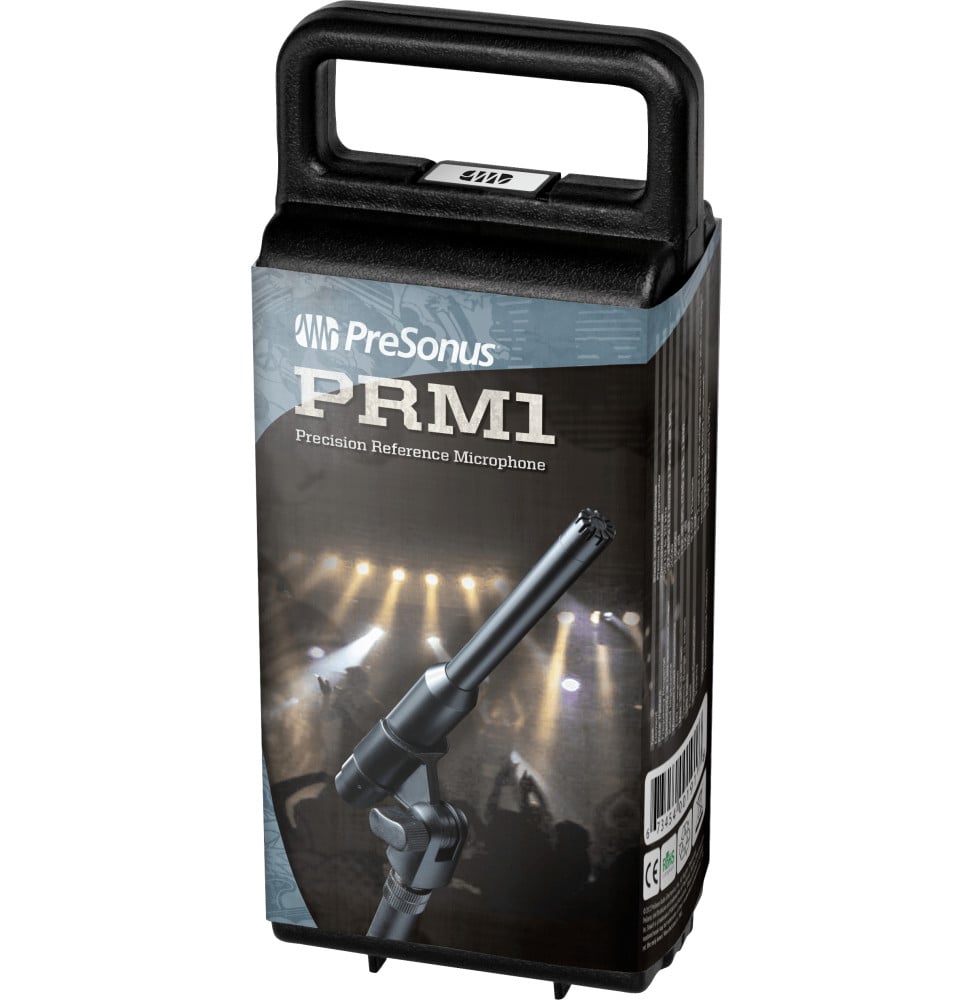
The mic travels in a hard case with its stand mount and foam windscreen. Outdoors, the windscreen reduces wind noise on the capsule. Before connecting the PRM1 or switching phantom power, PreSonus recommends muting the output of the sound system first.
Element
Pressure, FET preamp
Polarity
Pin 2 positive
Compliance
RoHS, REACh
The PRM1 is designed for measurement. A perfectly flat response faithfully reproduces what the room does, but it is not necessarily the best choice for recording a specific instrument. The XLR cable and the mic stand are not included.
Be the first to review this product and help other customers.
Write a review
Frequently asked questions about this product
What is the PreSonus PRM1 microphone for?
For measuring the sound of a room or a sound system. Connected to a real-time analyser (RTA) or a spectrograph, it faithfully reproduces the acoustic characteristics of the space: its response is flat from 20 Hz to 20 kHz and its pattern omnidirectional, so it does not colour the sound it measures. You can see what the room adds to or removes from the playback.
Does the PRM1 need phantom power?
Yes, 9 to 52 V phantom power, supplied by the mixer or audio interface on its XLR input; it draws 2 mA. No power supply or XLR cable comes in the box: plan for a male-to-female XLR cable long enough to reach from the measurement point to the mixer.
Does the PRM1 work with StudioLive mixers?
Yes: paired with UC Surface software and its Smaart measurement technology, the PRM1 gives StudioLive digital mixer owners a system for analysing and correcting their sound system. It connects like any XLR mic and also works with other analysis tools, real-time analysers or spectrographs.
What is in the PreSonus PRM1 box?
The PRM1 microphone, a mic stand mount, a foam windscreen and a hard case for storage and transport. The XLR cable and the mic stand are not included. The mic itself is 192 mm long and 21 mm in diameter and weighs 150 g, in an all-metal chassis.
What maximum sound level can the PRM1 handle?
132 dB SPL, measured at 1 kHz for at most 1% distortion, into a 1 kohm load. Its dynamic range reaches 106 dB and its signal-to-noise ratio 70 dB, for a self-noise of 26 dB A-weighted: enough to measure a sound system pushed to high volume without overloading the capsule.
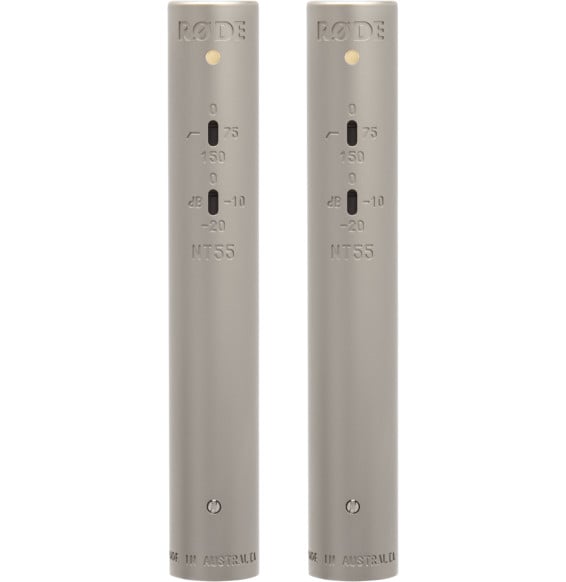
Two matched RODE NT55 small-diaphragm condenser microphones for stereo recording, each with its cardioid capsule and an NT45-O omnidirectional capsule. 75 or 150 Hz filter, pad down to -20 dB, 15 dBA self-noise, XLR output on 48 V phantom power.
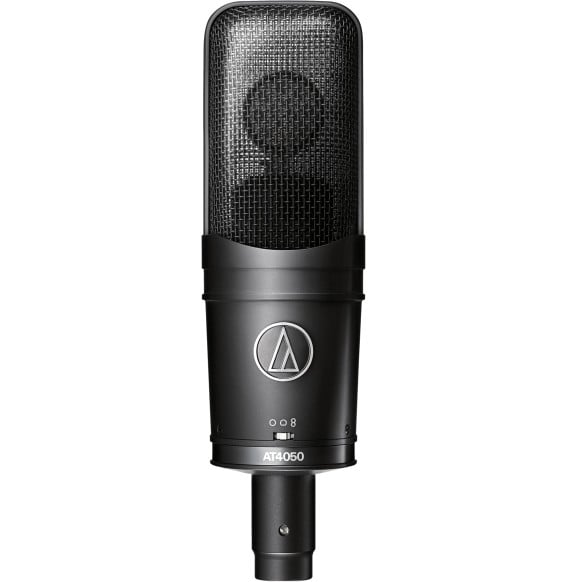
A dual-diaphragm studio condenser microphone with three polar patterns: cardioid, omnidirectional and figure-of-eight. Transformerless, it handles 149 dB SPL with 17 dB of self-noise and serves vocals, piano, strings and amps; AT8449a shock mount included.
A dual-diaphragm studio condenser microphone with three polar patterns: cardioid, omnidirectional and figure-of-eight. An 80 Hz filter, a -10 dB pad and 149 dB SPL handling suit it to vocals, piano, strings and amps, in the studio as on stage.
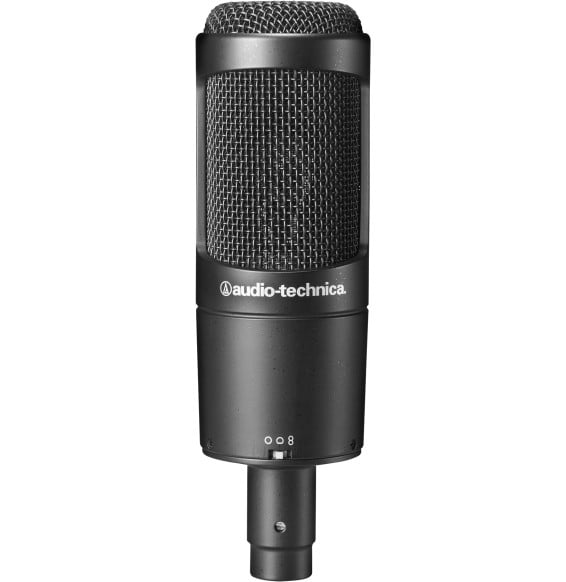
Cardioid side-address studio condenser mic for recording vocals, guitar or a podcast. 25 mm electret capsule, 134 dB SPL handling, XLR output on 48 V phantom; rigid stand mount, 3 m XLR cable and carrying case included.
Hand-built in California, this microphone with a K67 dual diaphragm and FET preamp targets vocals and guitar: 12 dBA self-noise, a Fat setting to warm up the low end, a -10 dB pad for amps and drums.
A large-diaphragm cardioid studio condenser microphone with transformerless electronics. 12 dB SPL self-noise, 145 dB SPL handling, 80 Hz filter and -10 dB pad; it comes with the AT8449a shock mount, a dust cover and a protective case.
A large-diaphragm cardioid studio condenser microphone for vocals, instruments and podcasts. It handles 148 dB SPL with 12 dB of self-noise, connects over XLR to a phantom power source and comes with its AT8458 shock mount.
A large-diaphragm cardioid condenser studio microphone for vocals and instruments. It handles 145 dB SPL with 12 dB of self-noise, and its Hemisphere plug-in, obtained when the microphone is registered, gives it the tone of eight classic studio microphones.
Large-diaphragm 25 mm condenser mic for vocals, guitar and podcasts: cardioid pattern, class A FET preamp and 135 dB maximum SPL. It connects over XLR to an interface supplying 48 V; rigid mount and carrying bag included.
Fed with +48 V phantom power from an audio interface or a mixing desk, this home-studio classic suits the voice as well as acoustic instruments. Steel body, swivel mount and carrying pouch included.
•+48 V phantom power required: audio interface or mixing desk