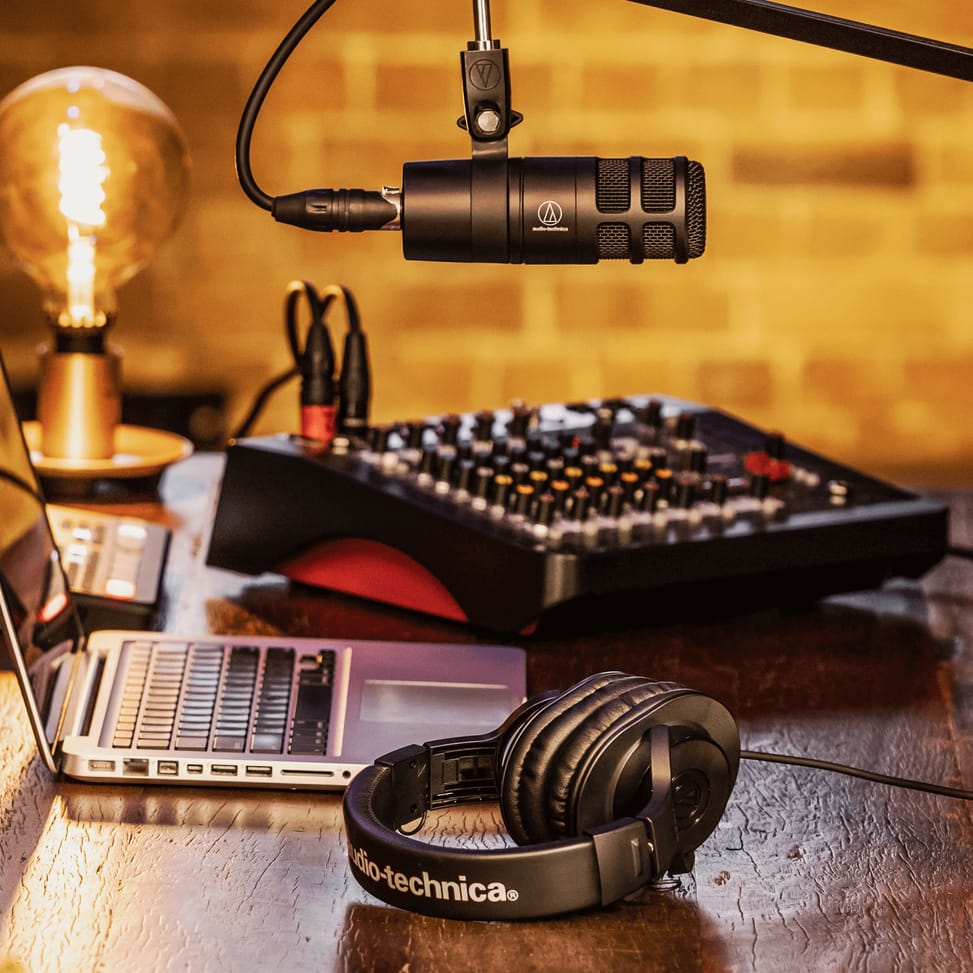
Neither the keyboard nor the fans get through: pickup tightens around the voice, even in an untreated room. It connects over XLR to an audio interface or a mixing desk, with no phantom power to switch on.
Pickup tightened around the voice, keyboard and fans kept out
XLR connection: requires an audio interface or a mixing desk
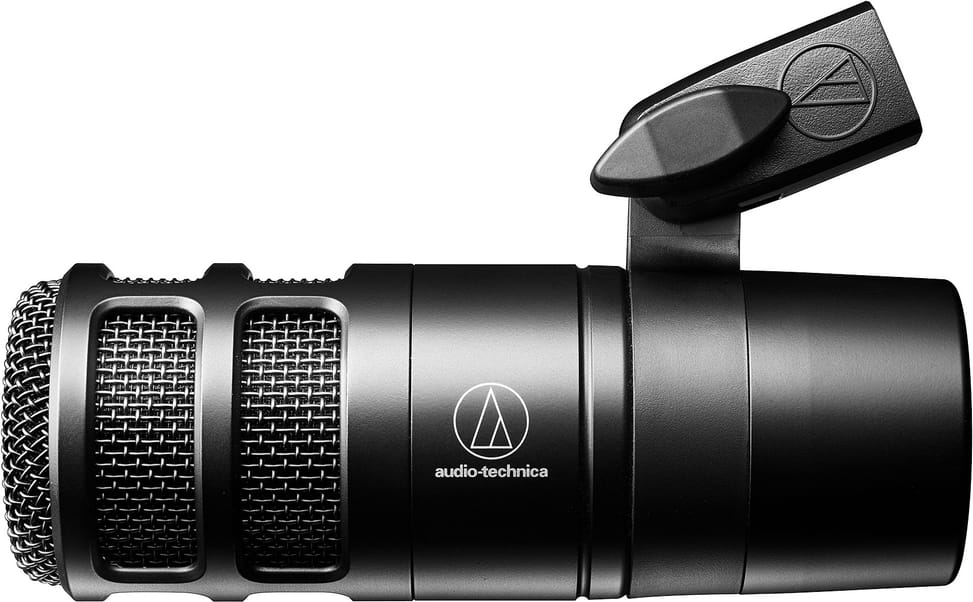
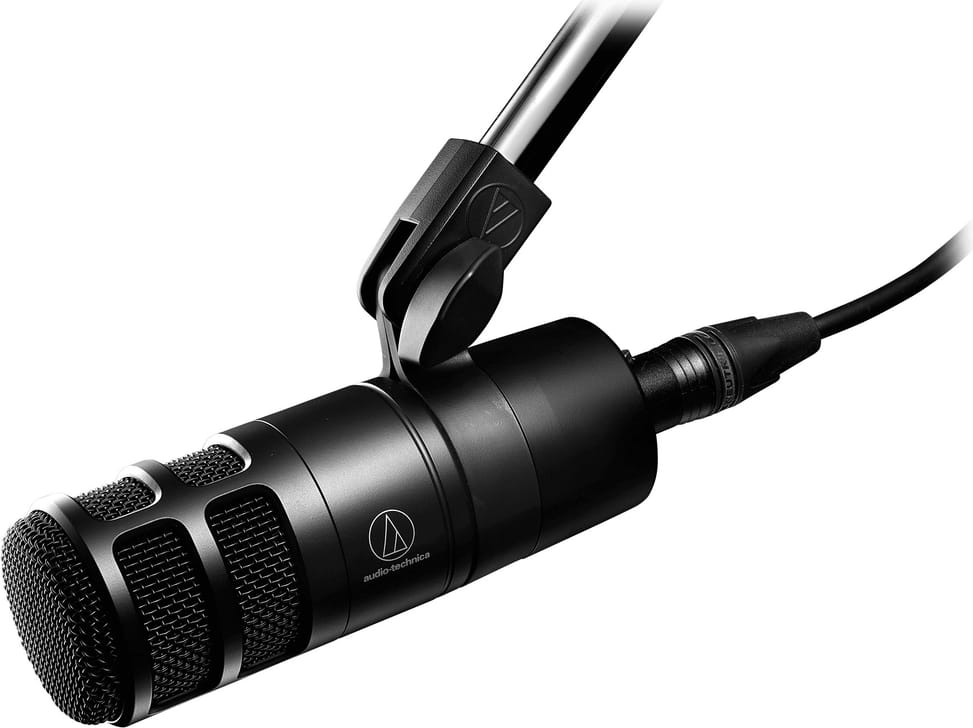
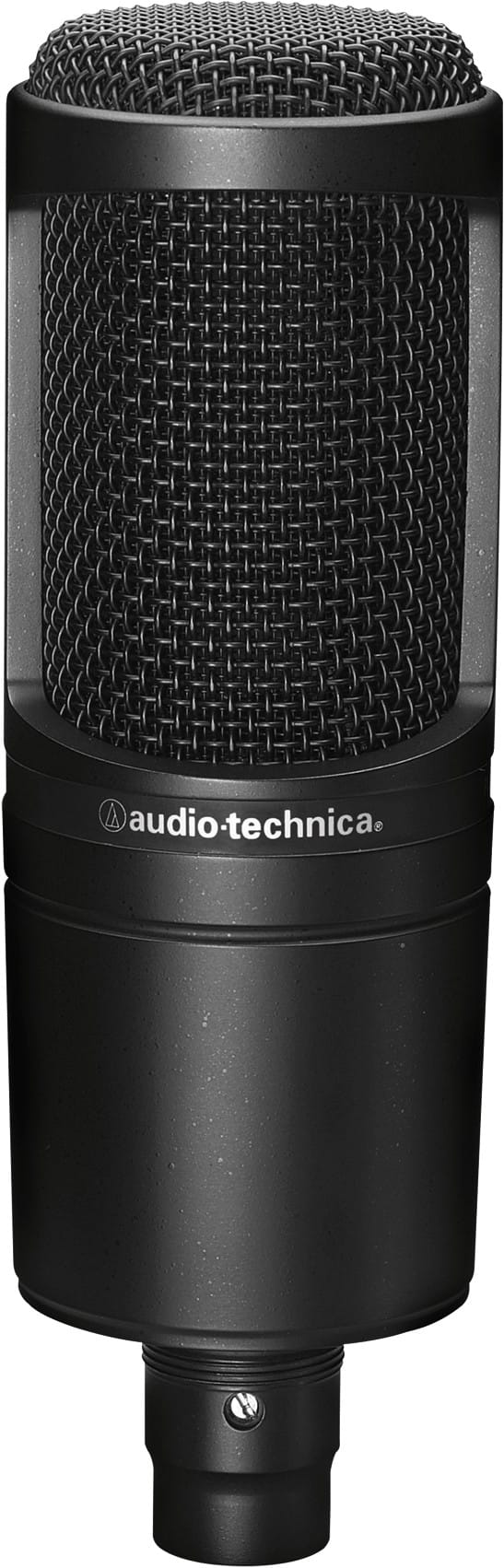
The XLR broadcast mic built for radio voice. Hypercardioid dynamic capsule, exemplary rejection of rear noise, anti-vibration internal structure and two-layer grille: the AT2040 delivers a warm, present voice without picking up the room.
Hypercardioid dynamic broadcast capsule
Strong rejection of rear noise and room noise
Built-in anti-vibration shock mount and two-layer pop-filter grille
Balanced XLR connection — phantom power not required
Frequency response of 80 Hz – 16 kHz tailored to the voice
AT2040 microphone, AT8487 stand clamp, 5/8"-27 to 3/8"-16 thread adapter, pouch
Pop and shock protection
None (AT8458a shock mount sold separately)
Weight
615 g
Power supply
None (passive dynamic microphone, no power required)
Phantom power required
No (passive dynamic microphone)
Mounting
AT8487 mounting clamp included, on microphone stand
Mounting thread
5/8"-27, 3/8"-16 adapter included
Technical specifications (continued)
Microphone type
Studio / desktop microphone
Capsule technology
Dynamic
Polar pattern
Hypercardioid
Microphone use
Podcast & streaming
Power supply included
None (no power adapter supplied)
Wireless range
None (wired microphone)
Audio processing
None
Internal recording
None
Controls
None
Lighting and indicators
None
Low-cut filter and attenuator
None
Impedance
600 ohms
Conversion resolution
None (analogue microphone, no converter)
Management software
None
Warranty
1 year
Customer reviews
No reviews yet
Be the first to review this product and help other customers.
Write a review
Frequently asked questions about this product
Does the AT2040 require phantom power?
No: no phantom power is required. It is a dynamic microphone, unlike condenser mics, which need +48 V. An entry-level interface is therefore enough.
Can the AT2040 be plugged directly into a computer?
No: it is a microphone with an XLR connection, which requires an audio interface or a mixing desk. Plan for one if you are starting from a setup with no audio chain.
Does this microphone pick up the PC’s keyboard and fans?
They are kept out: the hypercardioid pickup pattern focuses tightly on the voice and strongly rejects what comes from behind, even in an acoustically untreated room.
Do you need a pop filter in front of the AT2040?
No: the two-layer grille acts as a pop filter. An anti-vibration shock mount is also built into the body of the microphone to counter noise transmitted through the desk.
How much does the Audio-Technica AT2040 weigh?
630 g. That is a substantial weight for a desktop microphone: check that your boom arm is rated for it before mounting it.
What is in the box of the AT2040?
The microphone, a swivel mount with a 5/8-inch thread and a carrying pouch. The response is tuned for the spoken voice — it is a radio microphone, not one for miking instruments.
Is this Audio-Technica AT2040 microphone new and under warranty?
Yes, it is a new Audio-Technica product, a hypercardioid dynamic broadcast microphone with an XLR connection. The invoice serves as the warranty document for 1 year.
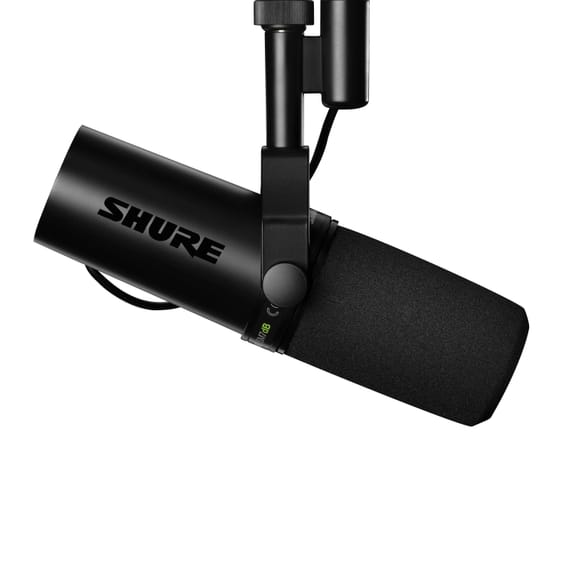
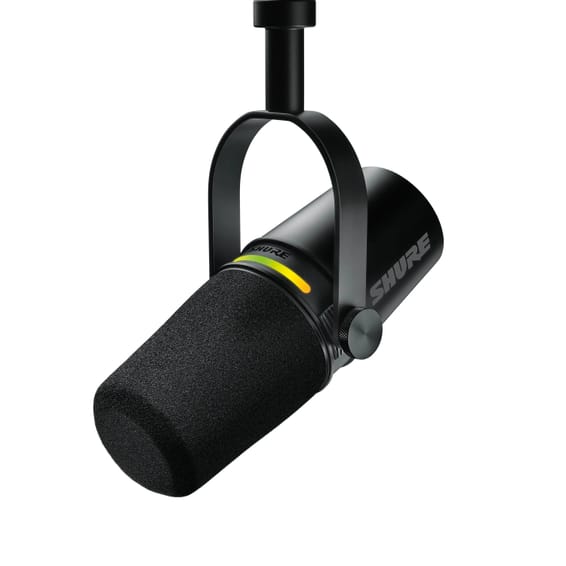
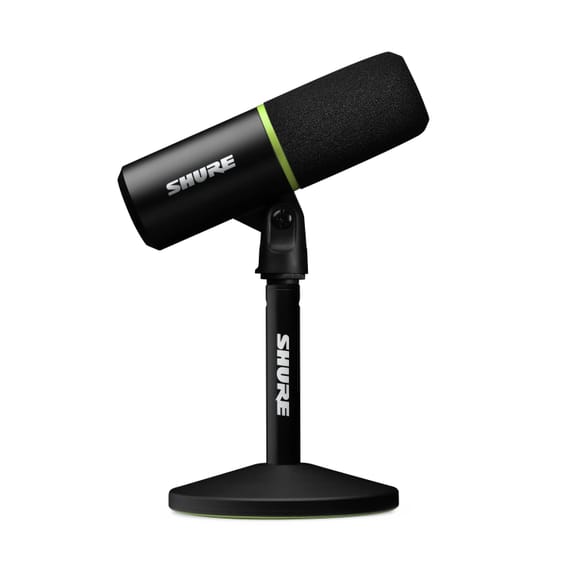
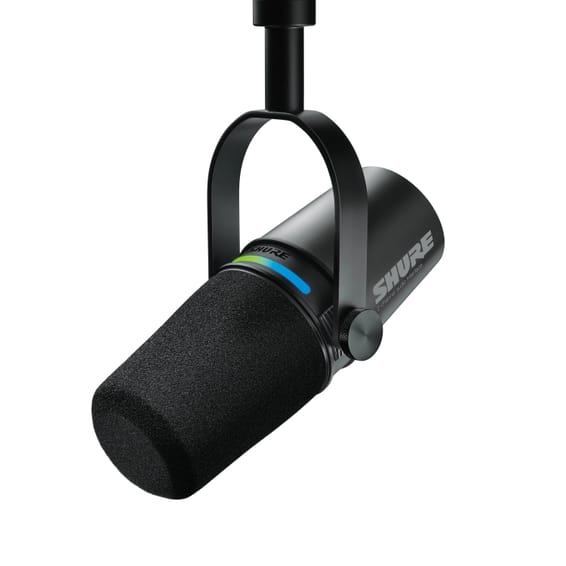
No booth and no audio interface: it plugs into the computer and keeps only the voice facing it, rejecting what comes from behind. Headphone output for real-time monitoring, touch mute and a voice-and-game mix dial.
•Plugs straight into the computer, no audio interface needed
•Hypercardioid pickup, tightened on the voice in front
A touch LED strip that acts as a live level meter and mutes the pickup with one press, among 16.8 million colours. Headphone output for monitoring, an all-metal body and an adjustable yoke for a stand or a boom.
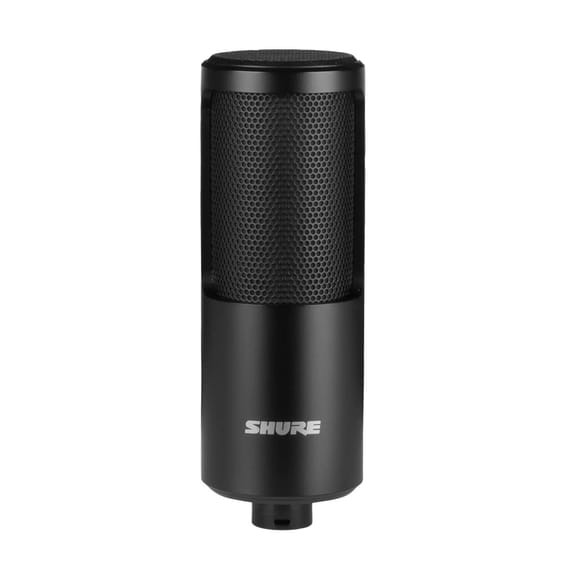
No accessories to buy separately: the pop filter and the shock mount are housed in the body. Pickup concentrates on the voice in front of the grille and connects over XLR, with no phantom power to provide.
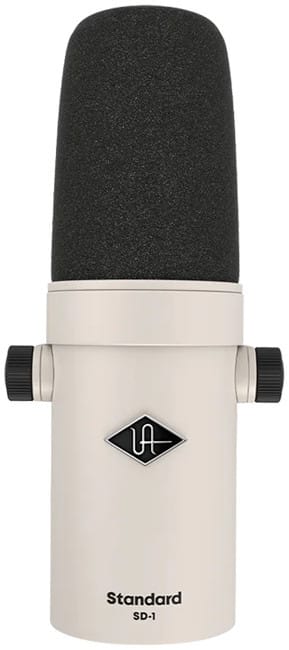
Close-miked radio or podcast voice: the pop filter holds even on a whisper, and the shielding cuts hum from screens and power supplies. Two switches adjust the bass and the presence.
•Uniform cardioid pattern, off-axis sound rejected without colouration
Set on its own according to your distance and your volume, the level stays constant from start to finish. Plosives and background noise are handled in real time, and the desk stand is already in the box.
A large diaphragm that flatters the spoken and sung voice, and a 144 dB SPL handling that copes with a guitar amp or a snare drum. It connects to an audio interface or a desk able to supply +48 V.
Fed with +48 V phantom power from an audio interface or a mixing desk, this home-studio classic suits the voice as well as acoustic instruments. Steel body, swivel mount and carrying pouch included.
•+48 V phantom power required: audio interface or mixing desk
A one-inch brass dual-diaphragm capsule: controlled bass, detailed highs and a reduced proximity effect. Shielding blocks interference from Wi-Fi and phones, and the pop filter is already in the grille.
A second microphone or a guitar plugs in at the back: two channels recorded to a computer, tablet or phone with no external interface. 48 V phantom power, +60 dB of gain and latency-free headphone monitoring.
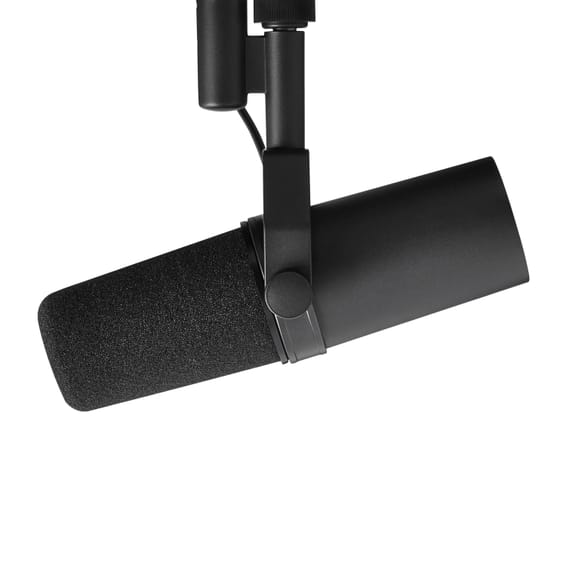
Two gain steps, +18 or +28 dB, delivered by the on-board preamp: any interface can keep up, even on a soft voice. A switch bypasses it to return to the original behaviour of the SM7B.
•Built-in preamp: +18 dB or +28 dB of extra gain, with no background noise
•Bypass switch to return to the original behaviour of the SM7B
•Preamp powered by the 48 V of an interface or a mixing desk