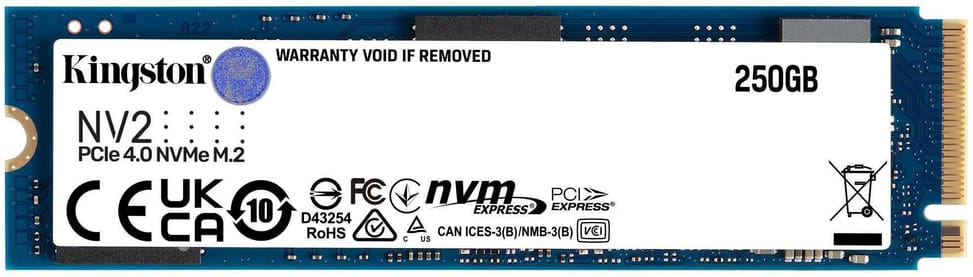
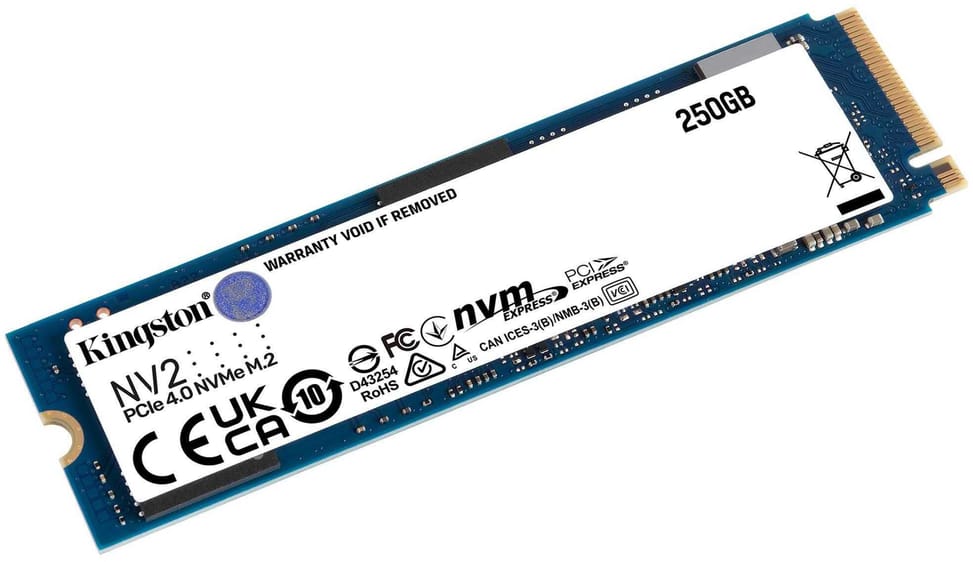
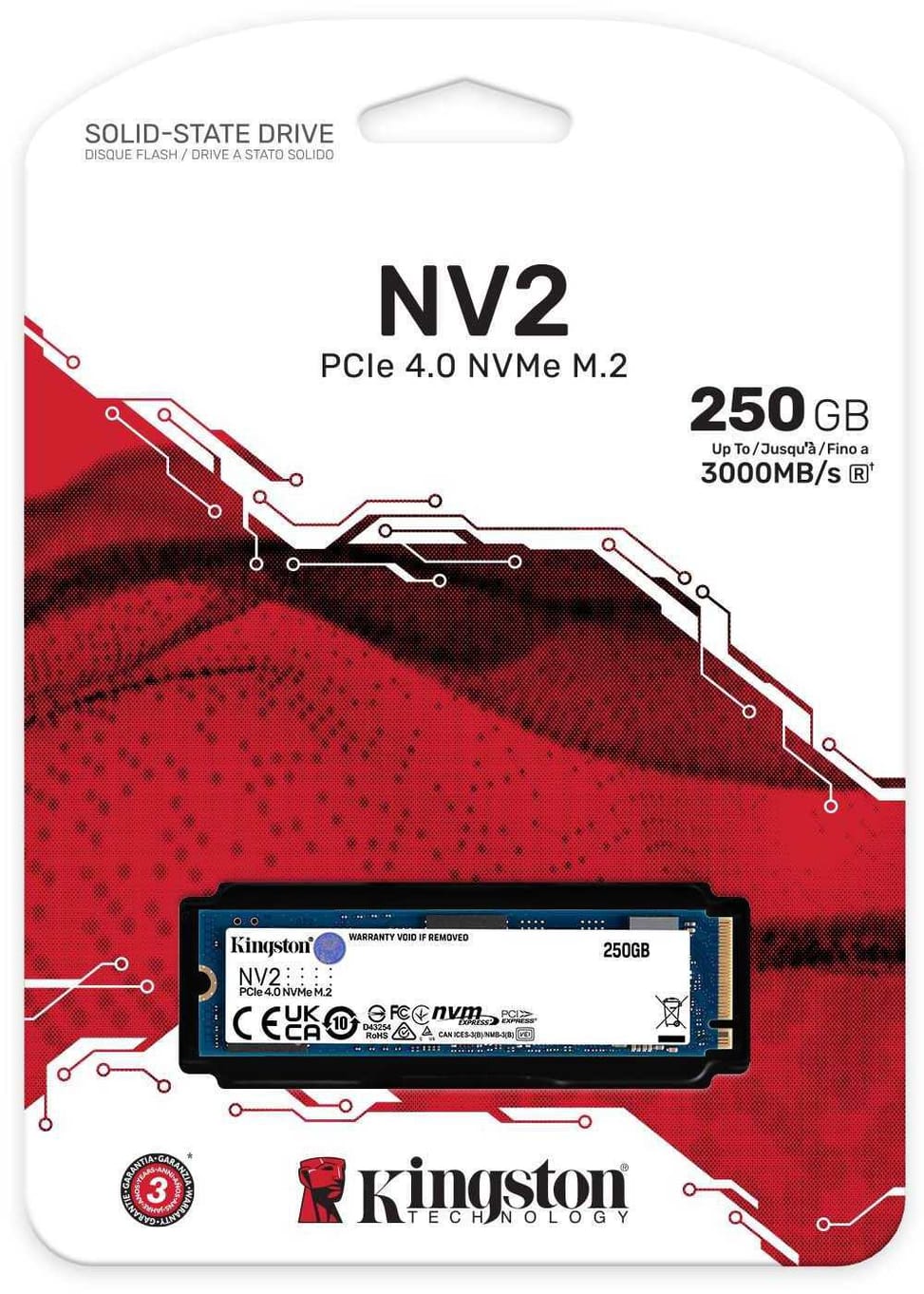
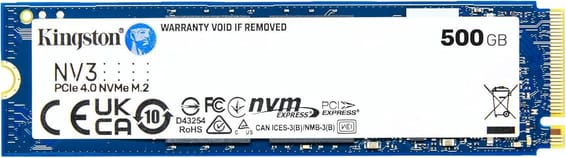
A spare machine or an ageing laptop: this 2.2 mm single-sided board brings 3,000 MB/s in read and 1,300 MB/s in write, plenty to host a responsive system without crowding the motherboard.
Discover the Kingston NV2 M.2 2280 PCIe Gen 4x4 NVMe 250 GB internal SSD. With fourth-generation PCIe Gen 4, transfer data at exceptional speeds. This SSD offers maximum bandwidth of 8 GB/s. The NV2's superior performance delivers read/write speeds of up to 3,000/1,300 MB/s, ideal for ultra-portable computers. Its single-sided M.2 2280 form factor saves space, perfect for compact devices. Enjoy fast, efficient storage with remarkable energy savings.
Be the first to review this product and help other customers.
Write a review
Frequently asked questions about this product
What speeds does the NV2 deliver in its 250 GB version?
3,000 MB/s read and 1,300 MB/s write. This is the entry point of the series: the 500 GB and 1 TB versions go up to 3,500/2,100 MB/s, and the 2 TB and larger to 3,500/2,800. The clearest gap is in writing, and therefore in copying and installing.
Is 250 GB enough to install Windows on it?
That is what this capacity is for: hosting a responsive system and everyday software on a secondary machine or an ageing laptop, without cluttering the motherboard. If you also want to store documents, photos and games, the series goes up to 4 TB in the same format.
Is this module single-sided?
Yes, it is a single-sided M.2 2280 design, 2.2 mm thick and weighing 7 g. Nothing protrudes on the underside of the board, which saves space and suits compact devices, ultraportable computers and custom motherboards.
How many terabytes can this 250 GB model write?
80 TB, or more than three hundred complete fills of the drive. Relative to its size, this is the same proportion as on the higher capacities: 160 TB on the 500 GB, 320 TB on the 1 TB. The counter can be read in the Kingston SSD Manager application.
Is this SSD energy-efficient enough for an older laptop?
Yes, Kingston quotes reduced power requirements and heat output. On a laptop whose battery has already aged, replacing a spinning hard drive and its motor with this module is one of the few upgrades that brings back both speed and battery life.
What slot do I need to take this module?
An M.2 2280 connector — 22 × 80 mm — wired for PCIe and recognised as NVMe. The advertised speeds assume a PCIe 4.0 motherboard; on an earlier generation, the bus becomes the limiting factor, not the drive.
Is the drive new and under warranty?
It is new and your invoice serves as the warranty document. It carries the part number SNV2S/250G, to be quoted for any return. The full datasheet gives the speeds and endurance of the four capacities in the series.
A host memory buffer (HMB) and an SLC cache take read speed to 2,200 MB/s and write speed to 1,600 MB/s. LDPC error correction, end-to-end data protection and the SP Toolbox utility to monitor drive health.
550 MB/s in sequential read, more than five times the speed of a spinning drive: noticeably quicker start-ups and application loading. No moving parts, so operation is silent and insensitive to knocks.
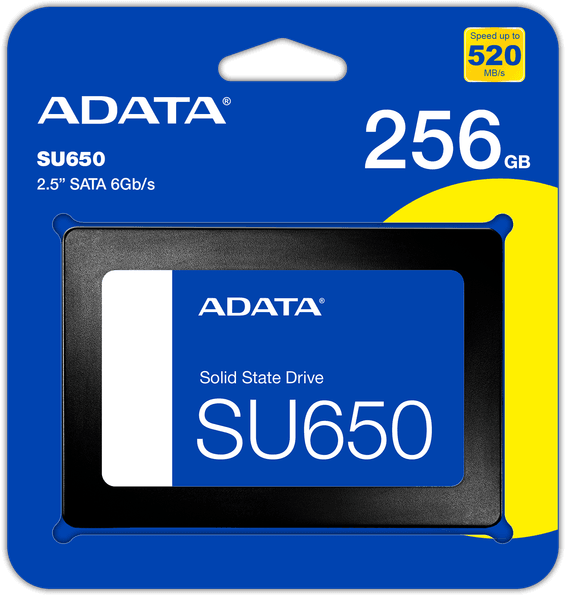
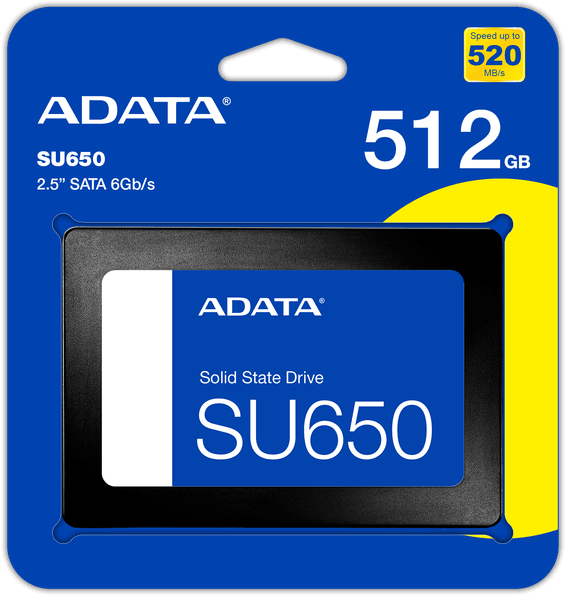
520 MB/s reading and 450 MB/s writing to replace a spinning hard drive with no noise and no vibration. 3D NAND memory, SLC cache and ECC error correction; the ADATA migration utility copies the whole system onto the new drive.
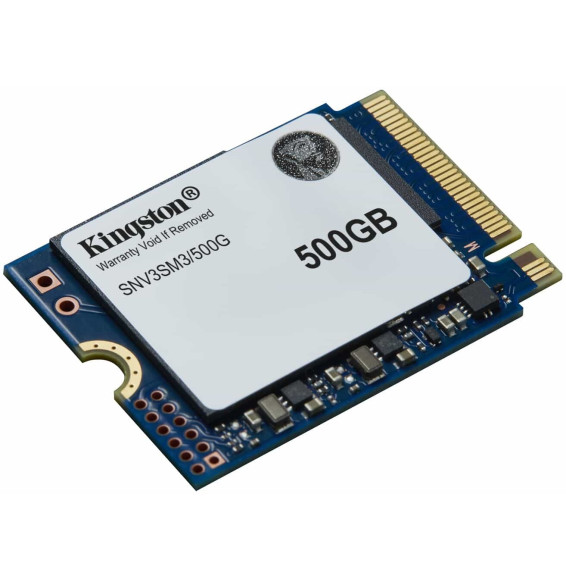
Short enough to fit an ultra-thin laptop or a handheld games console, and it weighs only 2.6 g. 5,000 MB/s read, 3,000 MB/s write, low power draw and 160 TB written of endurance.
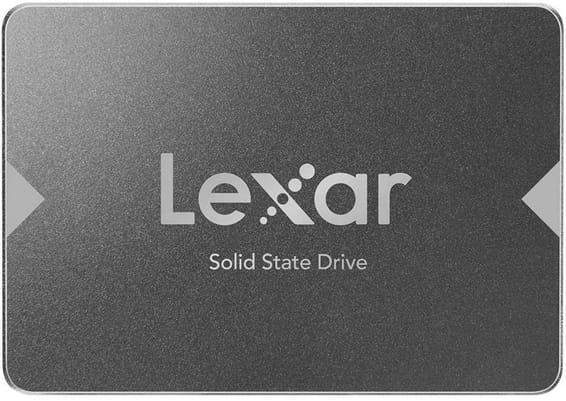
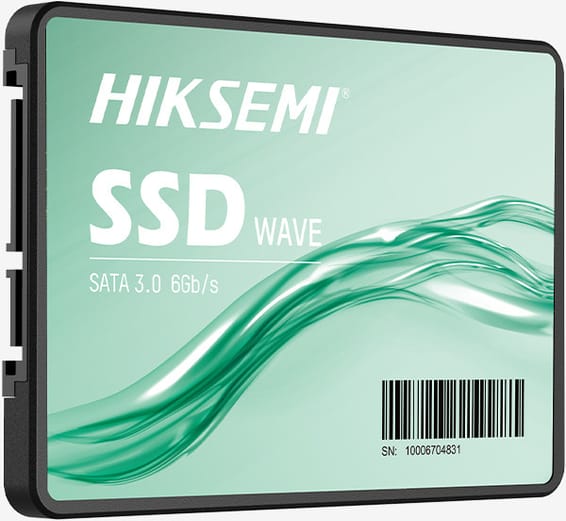
Ten times faster than a spinning drive: 500 MB/s read, 350 MB/s write, enough to wake up a machine that drags at start-up. With no moving parts, it takes the knocks and vibration of a computer on the move.
Compatible with a desktop PC, a laptop and a PS4 alike, it reads at 530 MB/s and writes at 400 MB/s. 3D NAND memory with no moving parts, for an office machine that is finally responsive.
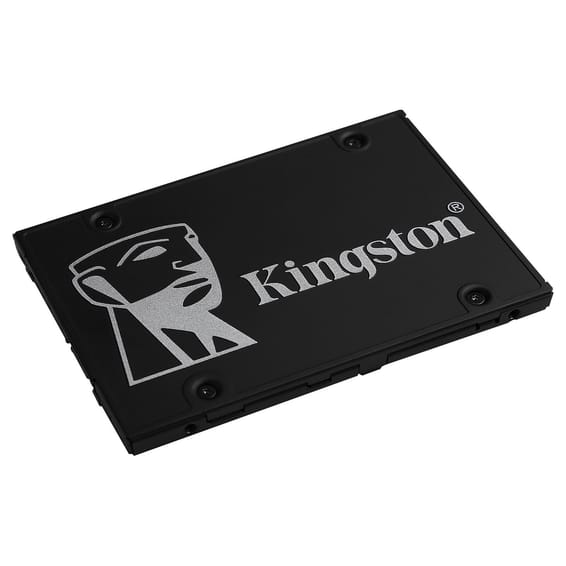
256-bit AES hardware encryption, TCG Opal and Microsoft eDrive: the data stays unreadable to anyone who gets hold of the machine. 550 MB/s read, 520 MB/s write over SATA 6 Gb/s.
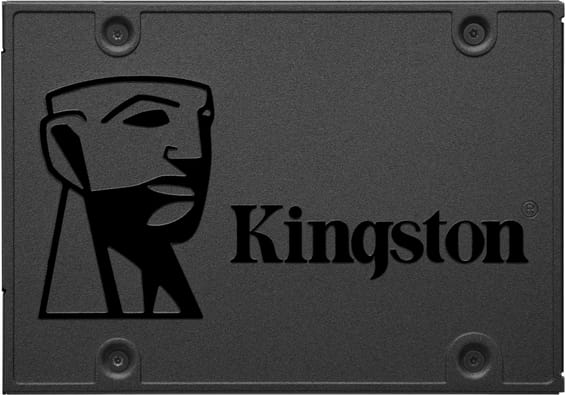
Write up to 450 MB/s and read up to 500 MB/s: file copies and installations are far brisker than with a spinning drive. Silent, frugal with power and unaffected by vibration, in a tower or a laptop.
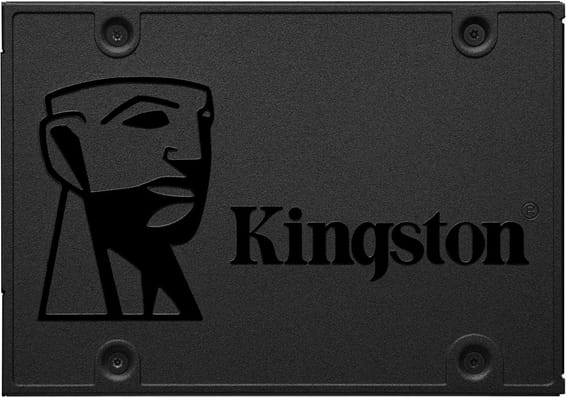
280 TB written endurance, 3D NAND memory and ECC correction: a second drive built to last. Read up to 520 MB/s and write up to 450 MB/s, with no noise or vibration, in a desktop PC or a laptop.
A host memory buffer (HMB) and an SLC cache take read speed to 2,200 MB/s and write speed to 1,600 MB/s. LDPC error correction, end-to-end data protection and the SP Toolbox utility to monitor drive health.
Simple upgrade for a laptop or a tower: 5,000 MB/s read and 3,000 MB/s write, host memory buffer and SLC cache. 160 TB written of endurance and PlayStation 5 compatibility.
2,500 MB/s read and 1,025 MB/s write, with no moving parts at all: the shock- and drop-resistant design protects the data. 3D NAND memory and TRIM command support to hold the speeds over time.
520 MB/s reading and 450 MB/s writing to replace a spinning hard drive with no noise and no vibration. 3D NAND memory, SLC cache and ECC error correction; the ADATA migration utility copies the whole system onto the new drive.
Ten times faster than a spinning drive: 500 MB/s read, 350 MB/s write, enough to wake up a machine that drags at start-up. With no moving parts, it takes the knocks and vibration of a computer on the move.
Compatible with a desktop PC, a laptop and a PS4 alike, it reads at 530 MB/s and writes at 400 MB/s. 3D NAND memory with no moving parts, for an office machine that is finally responsive.
Short enough to fit an ultra-thin laptop or a handheld games console, and it weighs only 2.6 g. 5,000 MB/s read, 3,000 MB/s write, low power draw and 160 TB written of endurance.
Around six times the speed of a SATA model: 3,300 MB/s claimed in read, for instant start-ups and application launches. 240 TB written endurance and a design with no moving parts, resistant to shocks.