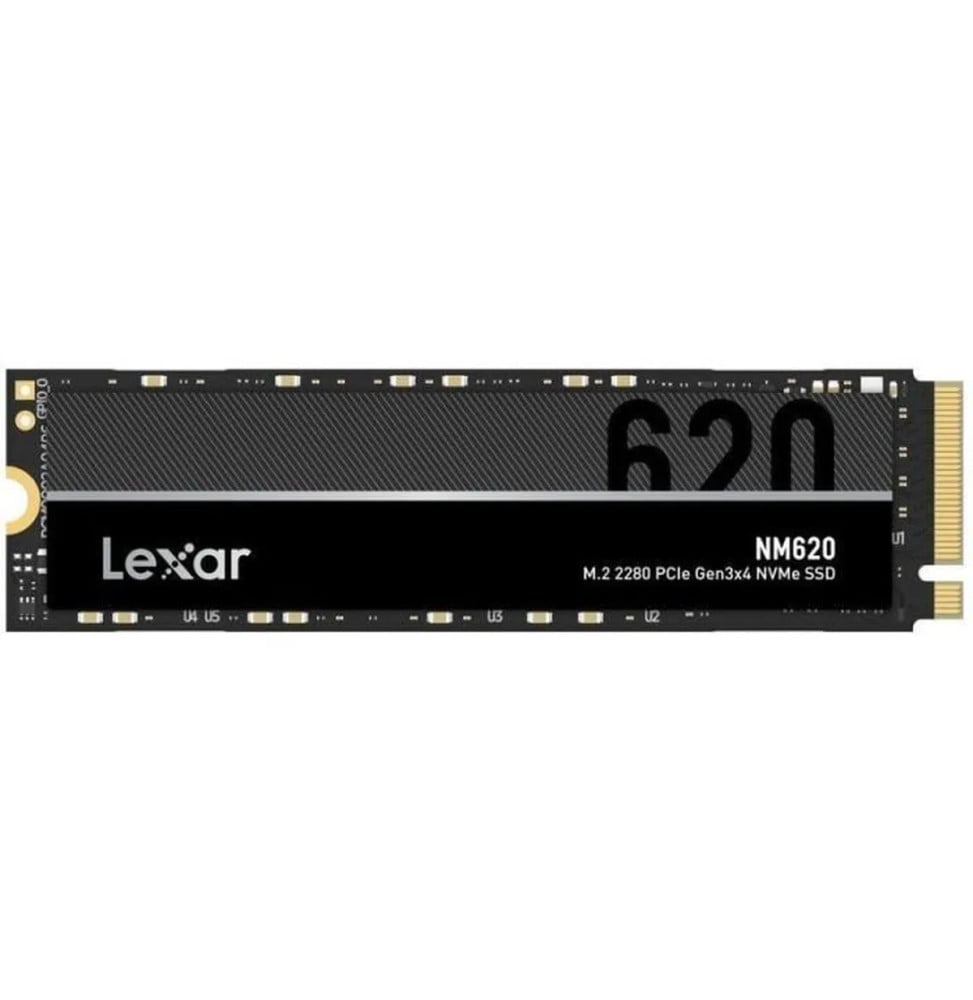
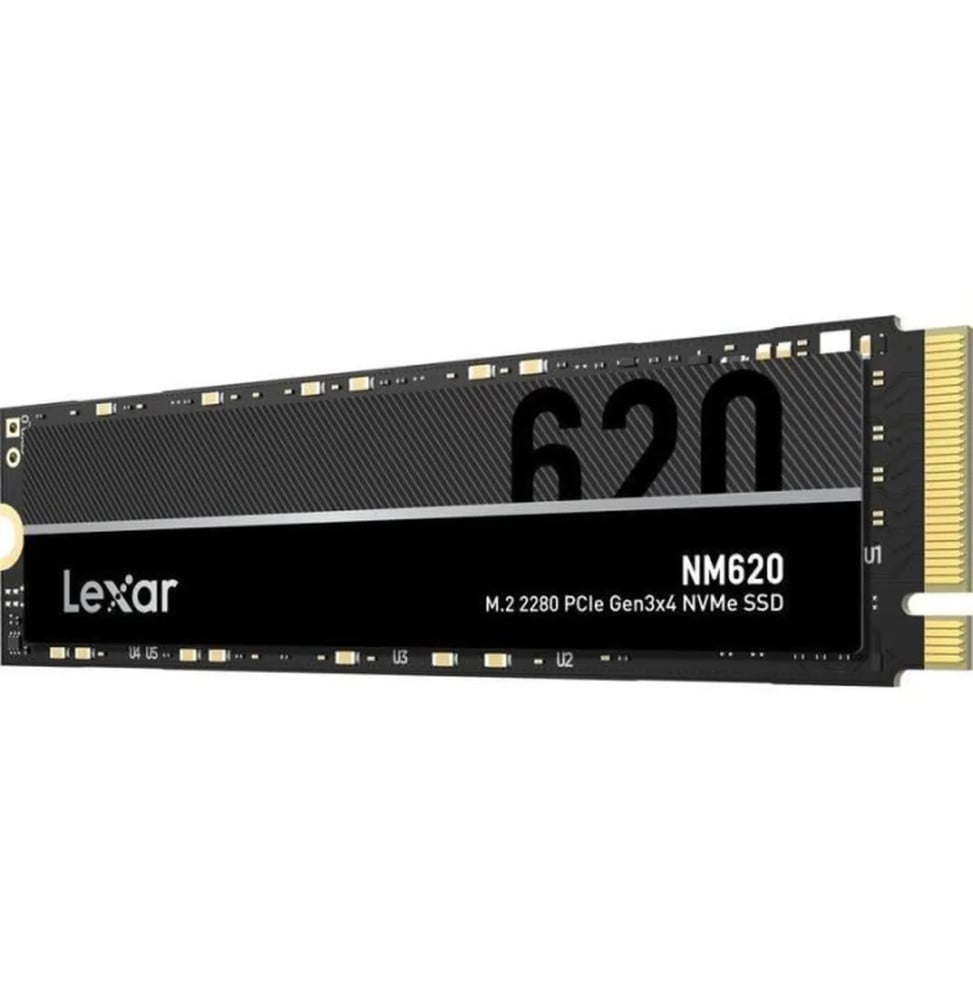
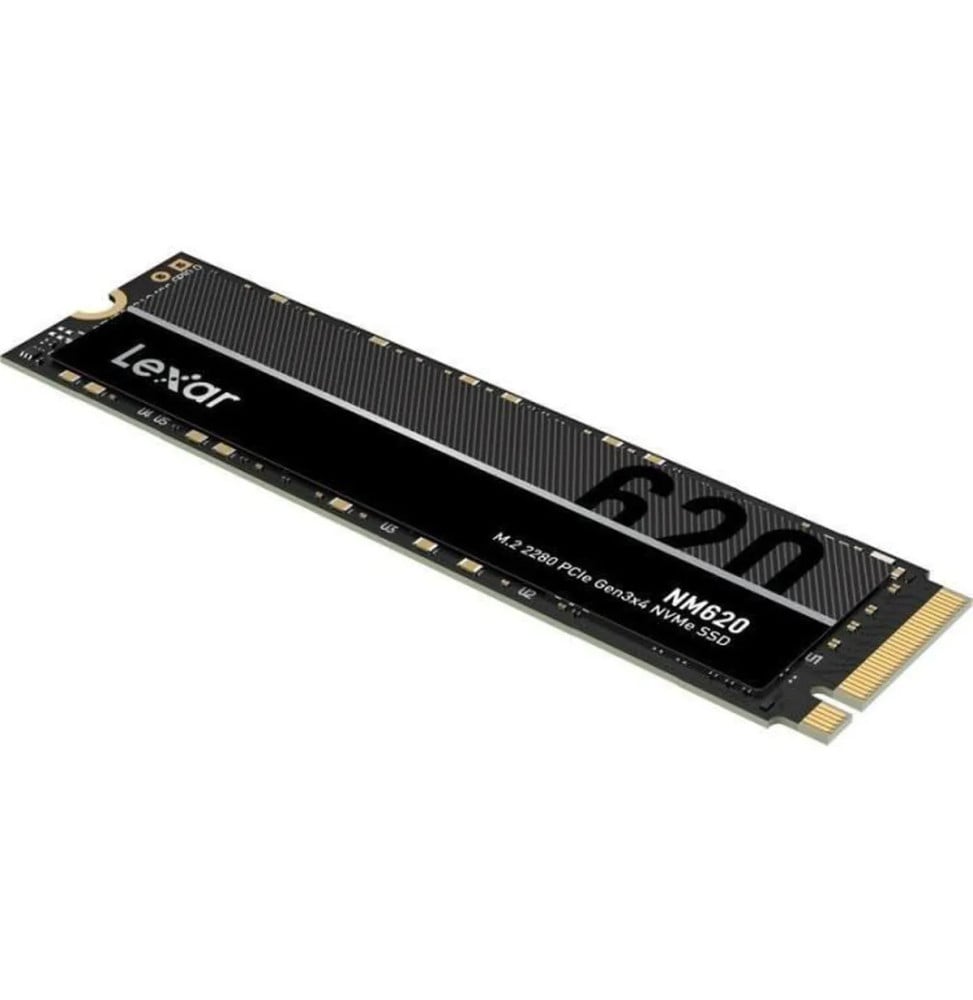
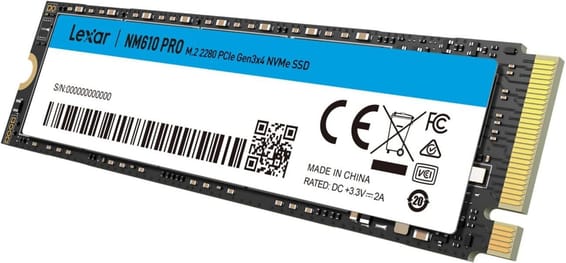
An M.2 2280 NVMe SSD on PCIe Gen3 x4, available in 256 GB or 2 TB, reading at up to 3,500 MB/s. Its 3D NAND TLC memory handles 125 TB of writes on the 256 GB and 1,000 TB on the 2 TB: enough to revive a laptop or desktop PC that boots slowly.
256 GB or 2 TB, M.2 2280 form factor
PCIe Gen3 x4, NVMe 1.4
Up to 3,500 MB/s read
Write up to 1,300 MB/s (256 GB) or 3,000 MB/s (2 TB)
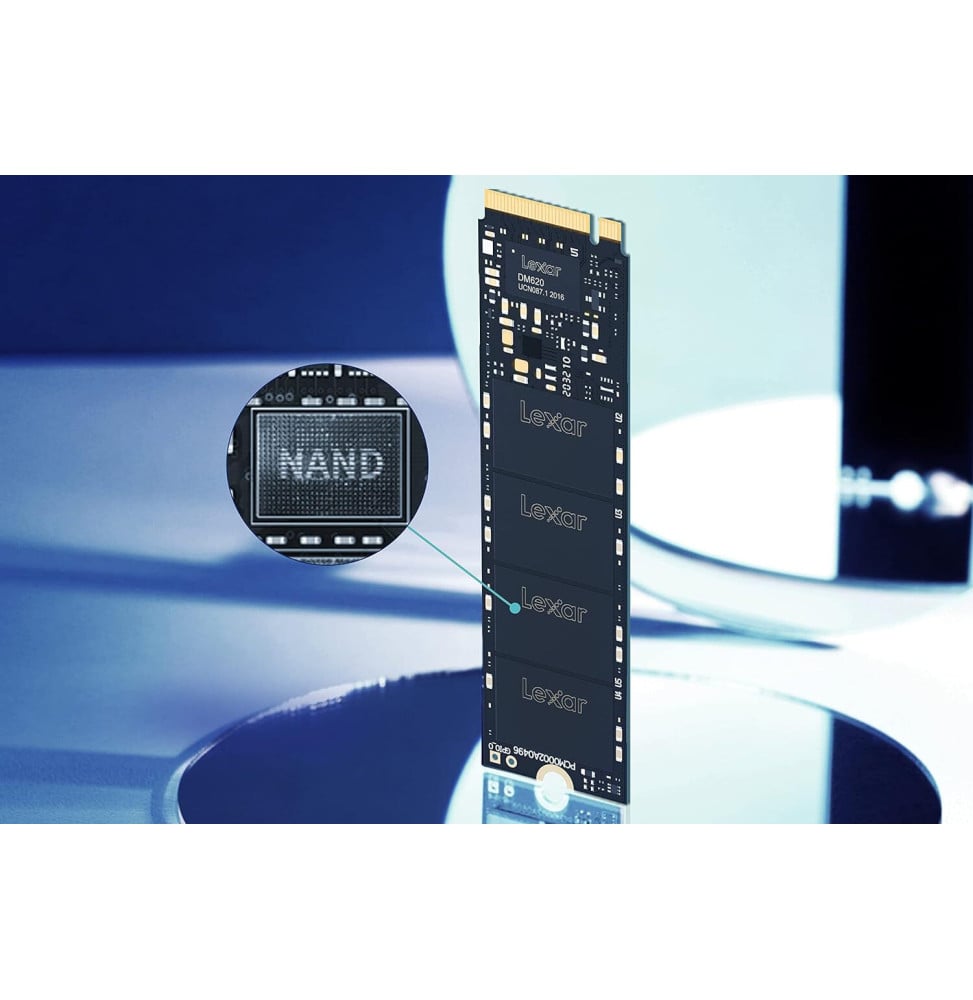
3D NAND TLC memory
Endurance 125 TB (256 GB) or 1,000 TB written (2 TB)
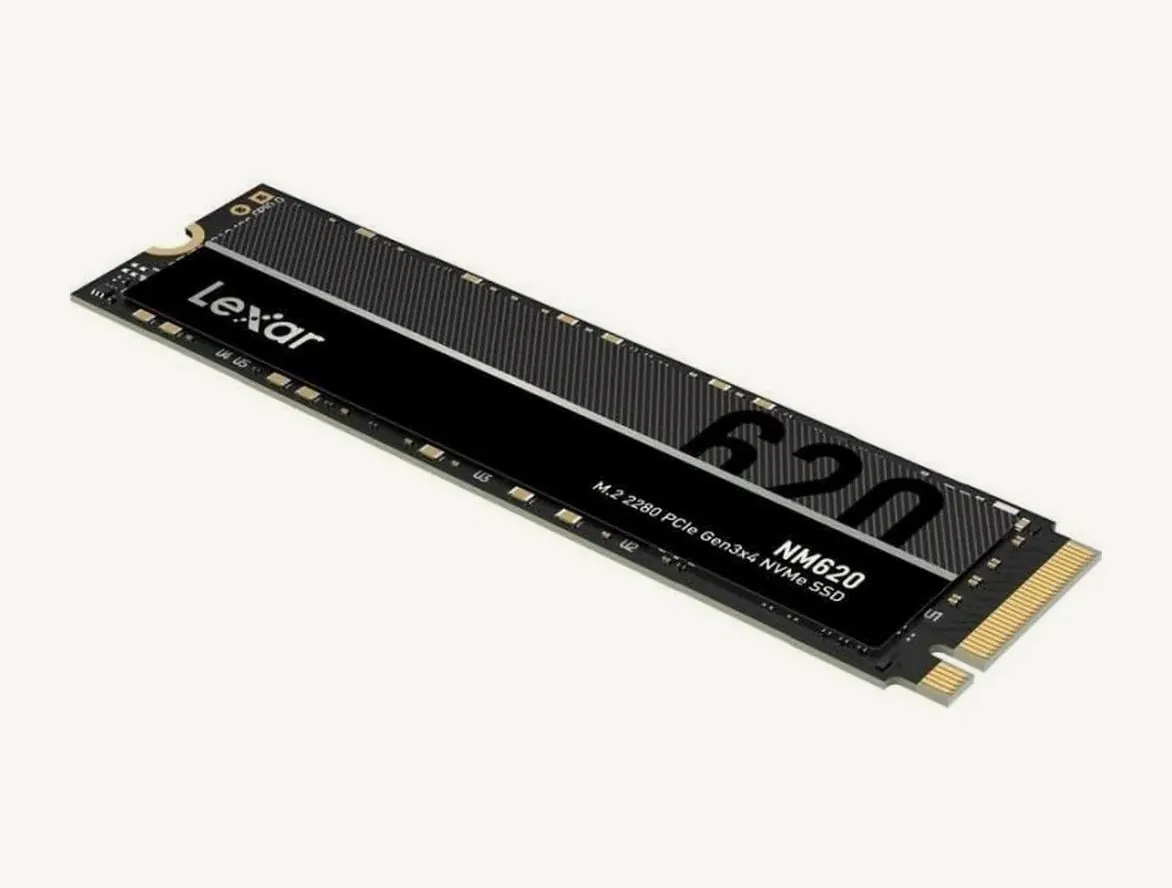
An NVMe SSD to breathe new life into a sluggish laptop or desktop PC: 256 GB or 2 TB, M.2 2280 form factor and PCIe Gen3 x4 interface. Compatibility: M.2 2280 module, PCIe Gen3 x4 interface, NVMe 1.4 protocol Technology: 3D NAND TLC flash memory, no moving parts Performance: up to 3,500 MB/s sequential read; write speeds up to 1,300 MB/s for the 256 GB and 3,000 MB/s for the 2 TB Endurance: 125 TB written for the 256 GB, 1,000 TB written for the 2 TB, MTBF of 1.5 million hours Durability: withstands 1,500 G shocks, operates from 0 to 70 °C Uses: system and software drive for a laptop, main drive for a desktop PC, game or project library on the 2 TB A clear step up from a hard drive or a SATA SSD, in a 9 g module.
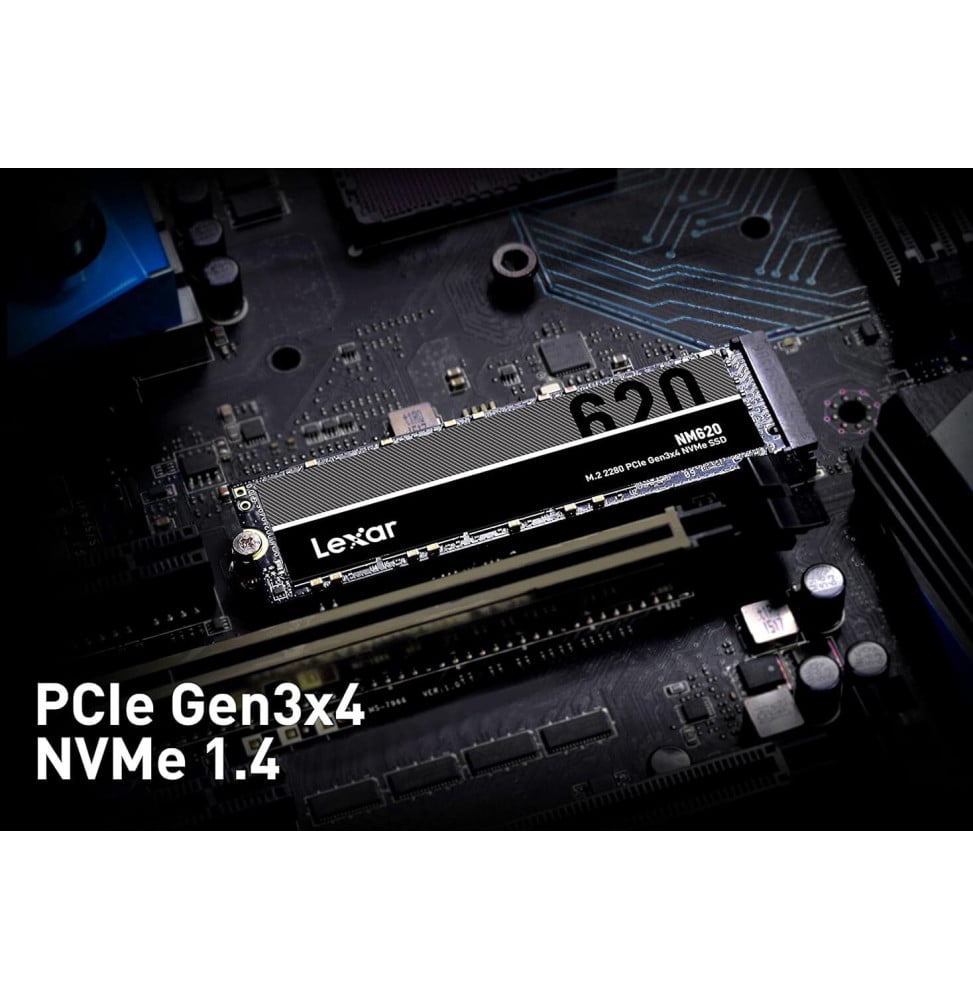
The NM620 slides into the motherboard's M.2 slot and talks NVMe over four PCIe Gen3 lanes: the system, software and projects move from the hard drive to flash memory with no moving parts.
3,500 MB/ssequential read
2.25 mmthick, for 80 x 22 mm
1,500 Gshock withstood over 0.5 ms
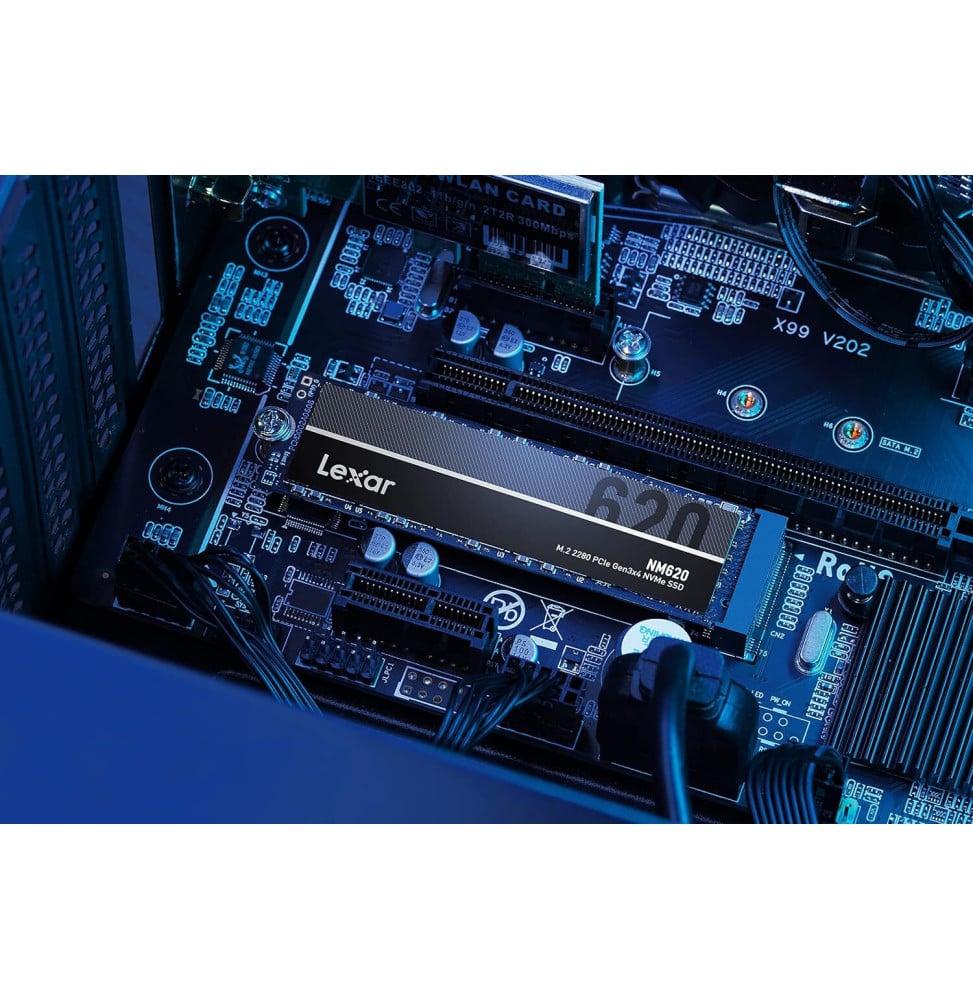
No cable, no bay: it screws onto the motherboard
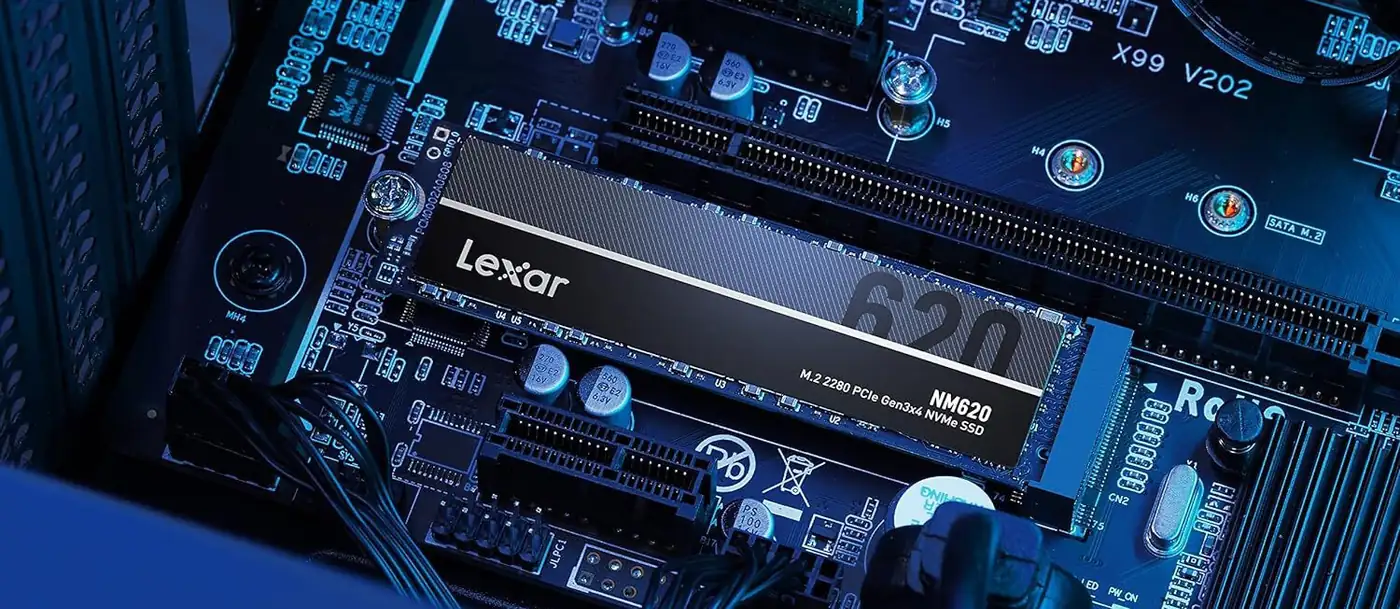
In M.2 2280 format, the NM620 fits straight into the dedicated connector on the motherboard of a desktop PC or a recent laptop, then is held by a single screw. It takes up no bay and no power cable, which also makes it an ideal second drive in a tower that is already full.
256 GB for the system, 2 TB to keep everything at hand
Both capacities read at the same speed; they differ in write speed and endurance. The 256 GB writes at up to 1,300 MB/s and handles 125 TB of writes, or 0.44 full fills per day. The 2 TB climbs to 3,000 MB/s write and 1,000 TB written: the right choice for a game library or video footage.
Designed for a laptop on the move
Its 3D NAND TLC memory has no moving parts: the NM620 withstands vibrations from 10 to 2,000 Hz at 20 G, operates from 0 to 70 °C and can be stored from -40 to 85 °C outside the machine.
Protocol
NVMe 1.4, PCIe Gen3 x4
256 GB write
1,300 MB/s, 240,000 IOPS
2 TB write
3,000 MB/s, 256,000 IOPS
256 GB endurance
125 TB written, 0.44 DWPD
Vibration
10 to 2,000 Hz, 20 G
Storage, powered off
-40 to 85 °C
Before ordering, check that your computer's M.2 slot accepts NVMe SSDs: a connector reserved for M.2 SATA SSDs will not recognise this drive. The attached PDF datasheet, from an earlier edition, states 3,300 MB/s read; Lexar's current page states 3,500 MB/s.
Be the first to review this product and help other customers.
Write a review
Frequently asked questions about this product
Will the Lexar NM620 fit in my computer?
Yes, if it has an M.2 2280 slot that accepts NVMe (PCIe) SSDs: the module measures 80 x 22 mm and is 2.25 mm thick. Check in the computer's manual that the slot is not reserved for M.2 SATA SSDs, because a SATA-only slot will not recognise this NVMe drive.
How does it differ from a 2.5-inch SATA SSD?
The NM620 plugs directly into an M.2 slot on the motherboard, with no cable, and communicates via NVMe over PCIe Gen3 x4: it reads at up to 3,500 MB/s, whereas the SATA III interface tops out at 6 Gb/s, or about 550 MB/s. The computer does, however, need a free M.2 NVMe slot.
What speeds can I expect depending on the capacity?
Both versions read at up to 3,500 MB/s sequential. For writing, the 256 GB reaches 1,300 MB/s with 92,000 IOPS read and 240,000 write; the 2 TB reaches 3,000 MB/s with 300,000 IOPS read and 256,000 write. In both cases, the system boots far faster than with a hard drive.
How much data can it write over its lifetime?
Endurance is 125 TB written (TBW) for the 256 GB version, or about 0.44 full drive writes per day, and 1,000 TB written for the 2 TB version. Office or family use writes a few tens of gigabytes a day: this reserve covers several years, with an MTBF of 1.5 million hours.
Can the NM620 withstand shocks and heat?
It operates between 0 and 70 °C and can be stored from -40 to 85 °C. With no moving parts, it withstands 1,500 G shocks for 0.5 ms and vibrations from 10 to 2,000 Hz, making it a good choice for a laptop carried in a bag every day.
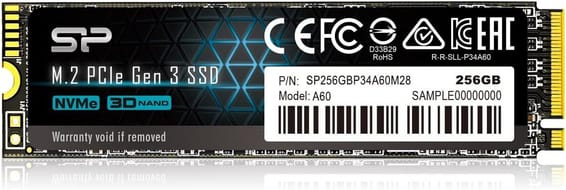
A host memory buffer (HMB) and an SLC cache take read speed to 2,200 MB/s and write speed to 1,600 MB/s. LDPC error correction, end-to-end data protection and the SP Toolbox utility to monitor drive health.
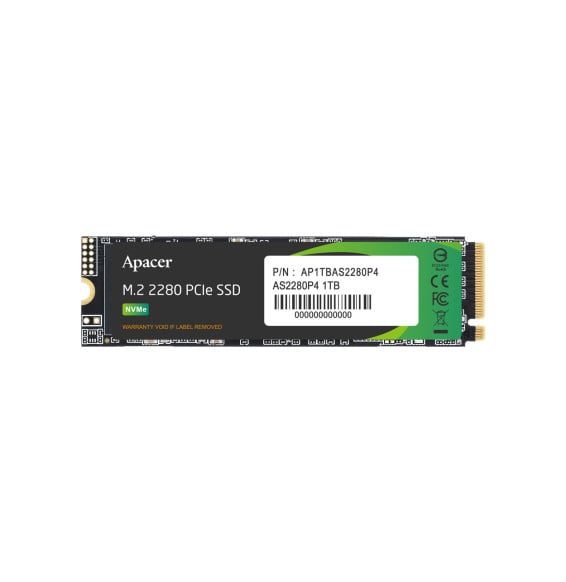
Apacer AS2280P4 256 GB internal SSD in M.2 2280 format, PCIe Gen3 x4 NVMe: up to 2,100 MB/s sequential read and 1,000 MB/s sequential write, 3D TLC memory and endurance of more than 200 TB written.
2,500 MB/s read and 1,025 MB/s write, with no moving parts at all: the shock- and drop-resistant design protects the data. 3D NAND memory and TRIM command support to hold the speeds over time.
Around six times the speed of a SATA model: 3,300 MB/s claimed in read, for instant start-ups and application launches. 240 TB written endurance and a design with no moving parts, resistant to shocks.
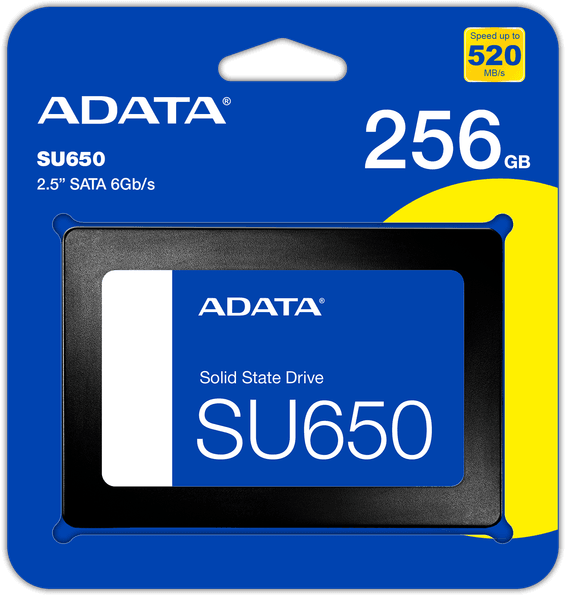
520 MB/s reading and 450 MB/s writing to replace a spinning hard drive with no noise and no vibration. 3D NAND memory, SLC cache and ECC error correction; the ADATA migration utility copies the whole system onto the new drive.
Ten times faster than a spinning drive: 500 MB/s read, 350 MB/s write, enough to wake up a machine that drags at start-up. With no moving parts, it takes the knocks and vibration of a computer on the move.
Compatible with a desktop PC, a laptop and a PS4 alike, it reads at 530 MB/s and writes at 400 MB/s. 3D NAND memory with no moving parts, for an office machine that is finally responsive.
Simple upgrade for a laptop or a tower: 5,000 MB/s read and 3,000 MB/s write, host memory buffer and SLC cache. 160 TB written of endurance and PlayStation 5 compatibility.
Designed to run 24/7, it takes an array's cache to 3,000 MB/s read and 750 MB/s write. 491 TB written of endurance, end-to-end data protection and wear monitoring straight in DSM.