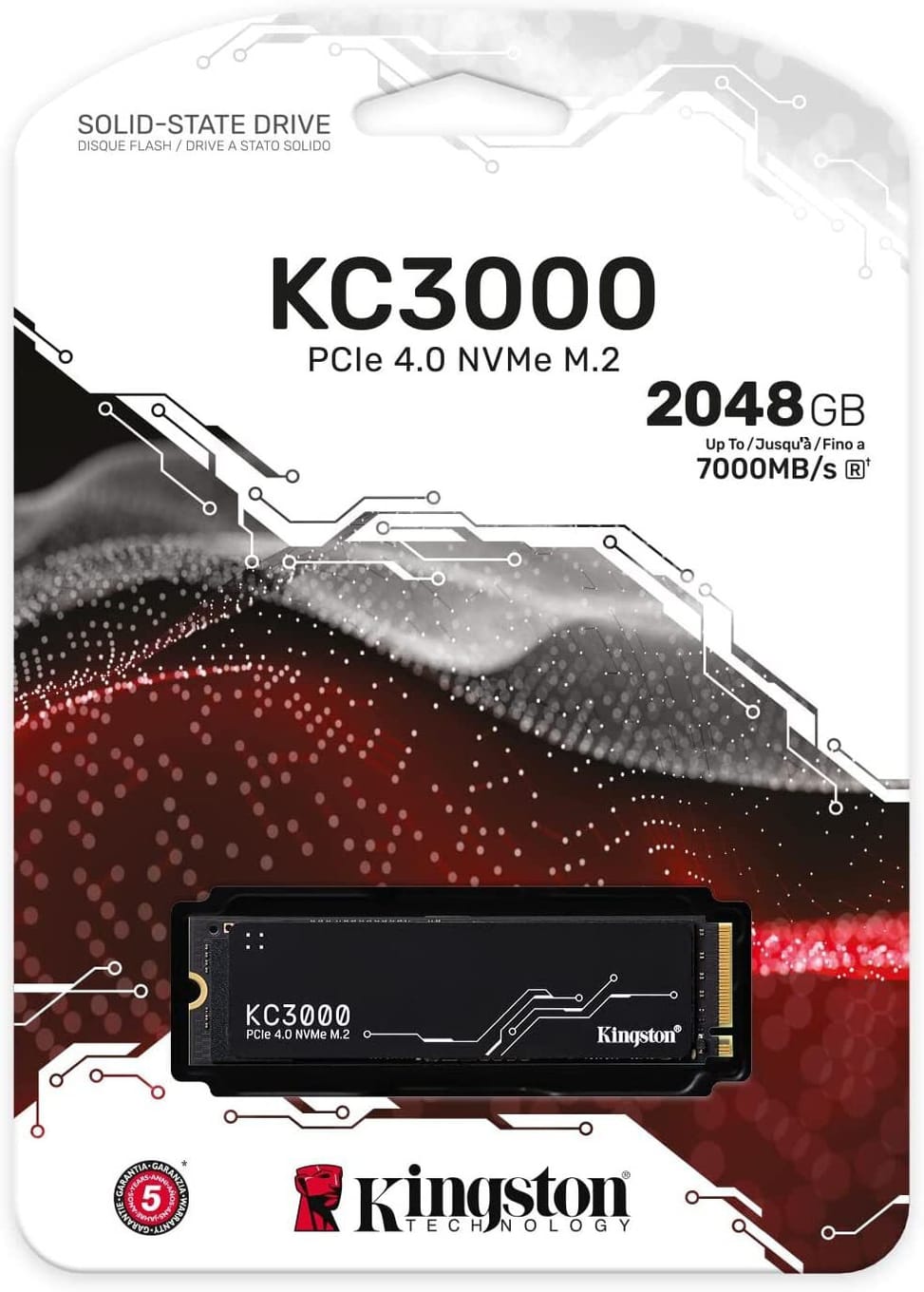
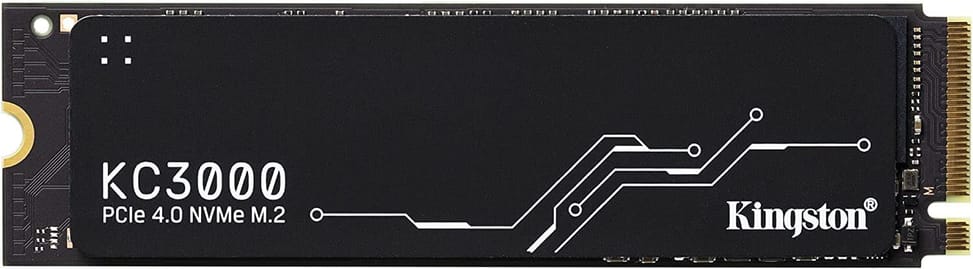
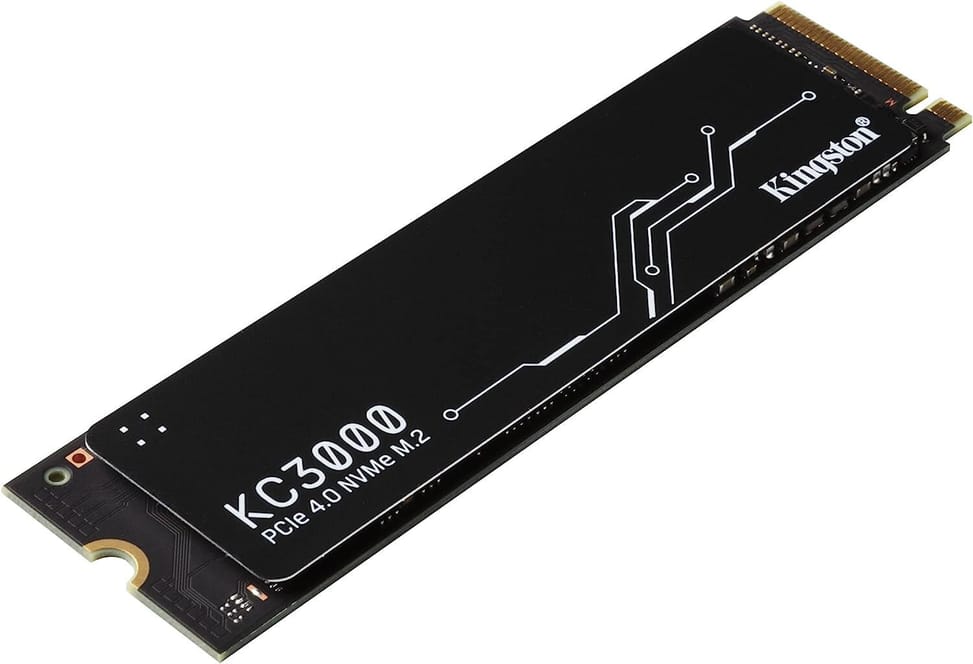
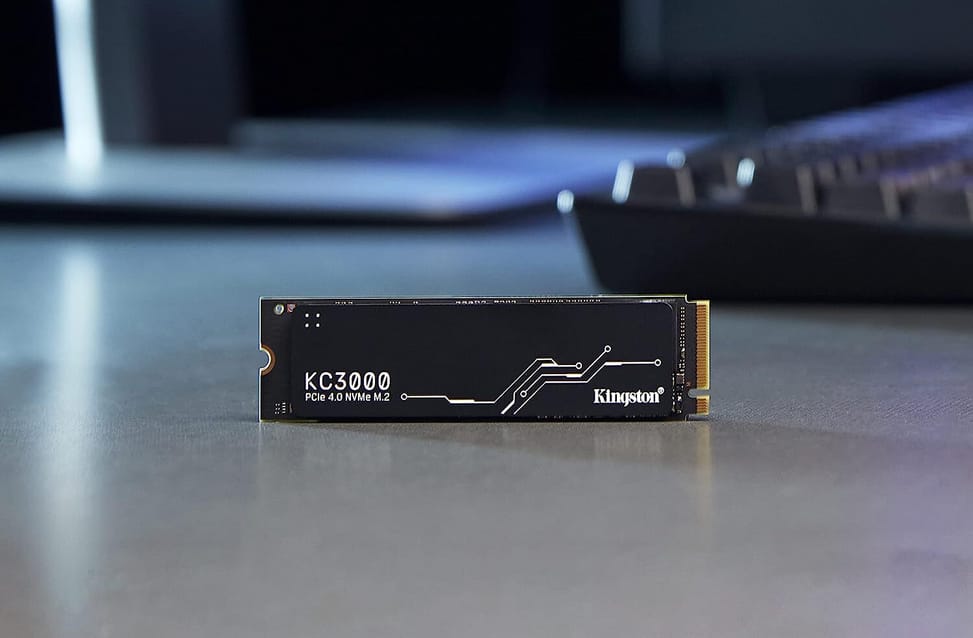
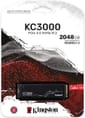
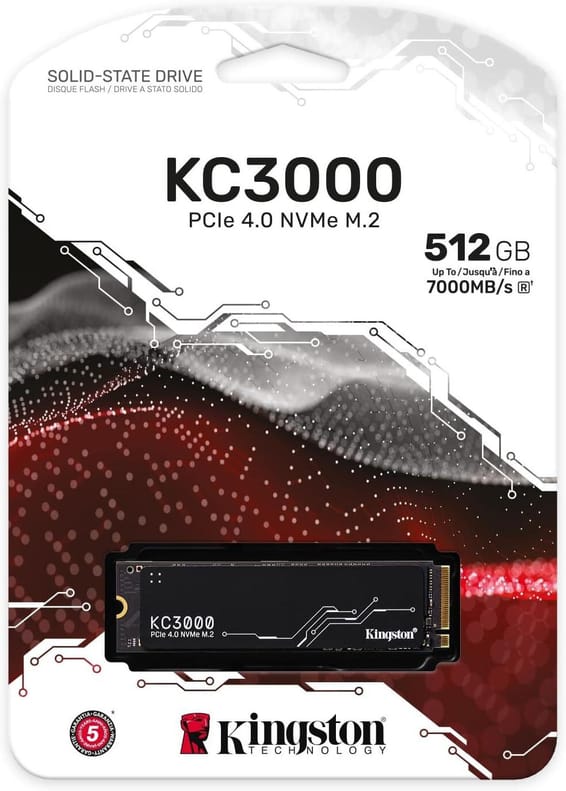
Symmetrical: 7,000 MB/s in read as in write, with 1 million IOPS in both directions. Endurance of 1.6 PB written and a low-profile aluminium-graphene heat spreader to take sustained workloads.
Sequential read up to 7,000 MB/s
Sequential write up to 7,000 MB/s
Up to 1,000,000 IOPS in 4K random read and write
Endurance 1.6 PB written (TBW)
Phison E18 controller
3D TLC memory with DRAM cache
Low-profile aluminium-graphene heat spreader, 3.5 mm thick
Supercharge your performance with the Kingston KC3000 M.2 2280 PCIe Gen 4.0 x4 NVMe 3D TLC 2048 GB SSD. Harnessing the power of PCIe Gen 4, this SSD delivers read/write speeds of up to 7,000 MB/s, ideal for resource-hungry tasks such as 4K content creation and 3D rendering. Its compact M.2 2280 form factor fits easily on motherboards and cuts load times. With its aluminium-graphene heat spreader, it maintains peak performance and dissipates heat efficiently, for a powerful and energy-efficient storage experience.
Be the first to review this product and help other customers.
Write a review
Frequently asked questions about this product
Does the 2 TB KC3000 write as fast as it reads?
Yes, and that is what sets it apart: 7,000 MB/s in both directions on this 2,048 GB capacity. The smaller models in the series are asymmetrical — 3,900 MB/s write on the 512 GB, 6,000 on the 1 TB — with write speed only matching read speed from 2 TB upwards.
How much power does this SSD draw at peak?
9.9 W maximum when writing and 2.8 W when reading, for 0.36 W on average. This write peak is what explains the heatsink: in a closed case, bear in mind that the module needs to dissipate this energy to sustain its speeds over time.
Does the heatsink increase the module's thickness?
Yes, and the difference depends on the capacity: 3.5 mm on the 2,048 and 4,096 GB versions, against 2.21 mm on the 512 and 1,024 GB. Weight goes from 7 to 9.7 g. Check the clearance under the M.2 cover of your motherboard before ordering this capacity.
What does the advertised million IOPS mean in everyday use?
1,000,000 IOPS in both 4K random read and write on this capacity. It is these small accesses that make for smoothness: 3D rendering with many files, 4K content creation, compiling. The lower capacities peak lower, at 450,000 read IOPS for the 512 GB.
What write endurance does this 2 TB version offer?
1.6 petabytes, i.e. 800 full drive fills, calculated on the JEDEC client workload. That is twice the 1 TB and four times the 512 GB. The counter can be tracked as a percentage used in the Kingston SSD Manager application.
Which controller does this SSD use, and why does it matter?
A Phison E18, paired with 3D TLC memory. It is this combination that delivers symmetrical read-write at 7,000 MB/s and the million IOPS: on a drive of this calibre, the controller weighs as much in the result as the memory itself.
Is this SSD suitable for a server?
No. Kingston states that the KC3000 is designed for desktop or laptop PCs and not for server environments. Its target is demanding workstations: 4K content creation, 3D rendering, work machines where loading times weigh on the working day.
Can it withstand the vibrations of a machine being transported?
It tolerates 2.17 G in operation, from 7 to 800 Hz, and 20 G when not operating, from 20 to 1,000 Hz. Its operating range is 0 to 70 °C, its storage range -40 to 85 °C, and the advertised mean time between failures is 1,800,000 hours.
Is the drive new and under warranty?
It is new, and your invoice serves as the warranty document, with free technical support from the manufacturer. It carries the reference SKC3000D/2048G. The full datasheet details the four capacities in the series.
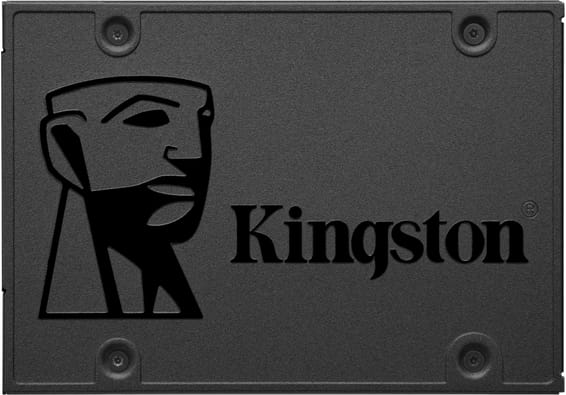
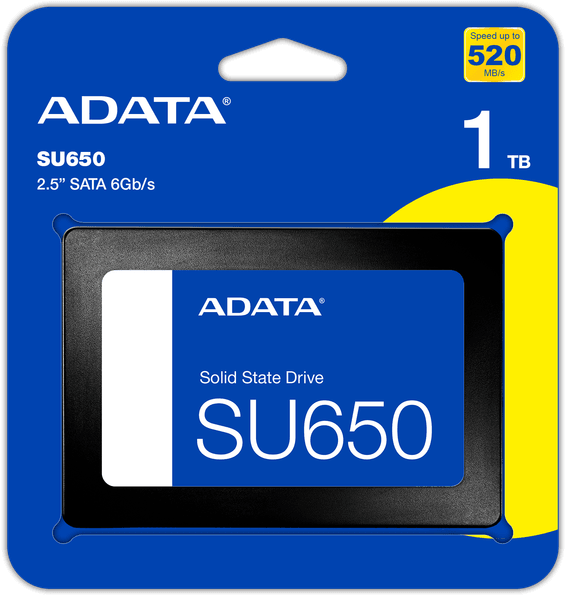
Stated endurance of 300 TB written, enough to take years of office work and photography. Speeds of 500 MB/s read and 450 MB/s write, with no noise or vibration, in a tower or in a laptop.
Silent and free of vibration, it withstands 1,500 G shocks over 0.5 ms and runs from 0 to 70 °C. Read up to 520 MB/s, write up to 450 MB/s, with an SLC cache and ECC error correction to hold the pace.
Built for animation and video editing, it reaches 6,000 MB/s read and 4,000 MB/s write. Host memory buffer and SLC cache, 320 TB written of endurance and PlayStation 5 compatibility as expanded storage.
Around six times the speed of a SATA model: 3,300 MB/s claimed in read, for instant start-ups and application launches. 240 TB written endurance and a design with no moving parts, resistant to shocks.
2,500 MB/s read and 1,025 MB/s write, with no moving parts at all: the shock- and drop-resistant design protects the data. 3D NAND memory and TRIM command support to hold the speeds over time.
7,200 MB/s read and 4,400 MB/s write in a 6 g module just 2.45 mm thick. 500 TB written endurance, no moving parts and proven resistance to shock and vibration.
Simple upgrade for a laptop or a tower: 5,000 MB/s read and 3,000 MB/s write, host memory buffer and SLC cache. 160 TB written of endurance and PlayStation 5 compatibility.
Built for heavy use with 1000 TB written of endurance and a mean time between failures of 1500000 hours. A 6 g module, 2.45 mm thick, with no moving parts, resistant to shocks and vibration.
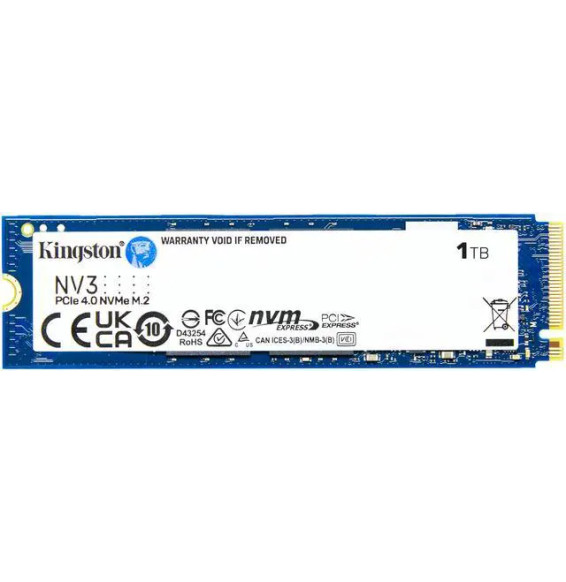
Built for 3D rendering and 4K editing: 7,000 MB/s read, 3,900 MB/s write, Phison E18 controller and DRAM cache. The low-profile aluminium-graphene heatsink prevents throughput dropping under sustained load.
•Sequential read up to 7,000 MB/s
•Sequential write up to 3,900 MB/s
•Up to 450,000 IOPS on 4K random read and 900,000 on write
7,200 MB/s read and 4,400 MB/s write in a 6 g module just 2.45 mm thick. 500 TB written endurance, no moving parts and proven resistance to shock and vibration.
Built for heavy use with 1000 TB written of endurance and a mean time between failures of 1500000 hours. A 6 g module, 2.45 mm thick, with no moving parts, resistant to shocks and vibration.
Built for animation and video editing, it reaches 6,000 MB/s read and 4,000 MB/s write. Host memory buffer and SLC cache, 320 TB written of endurance and PlayStation 5 compatibility as expanded storage.
Energy-efficient and cool-running, it reaches 6,000 MB/s read and 4,000 MB/s write. 320 TB written of endurance, 2,000,000 hours MTBF and Acronis cloning software included.
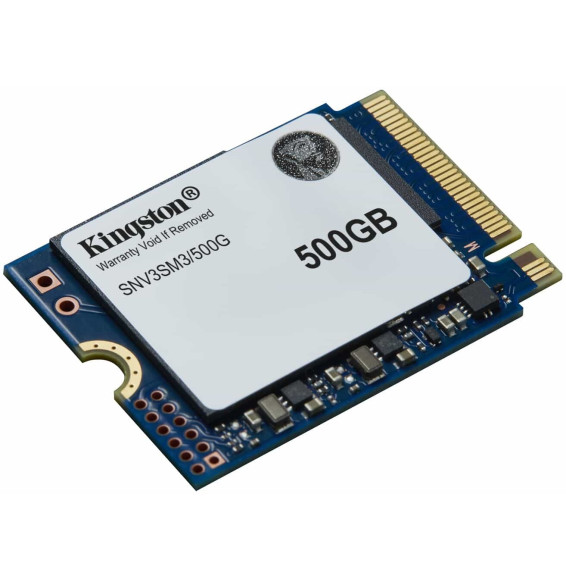
Short enough to fit an ultra-thin laptop or a handheld games console, and it weighs only 2.6 g. 5,000 MB/s read, 3,000 MB/s write, low power draw and 160 TB written of endurance.
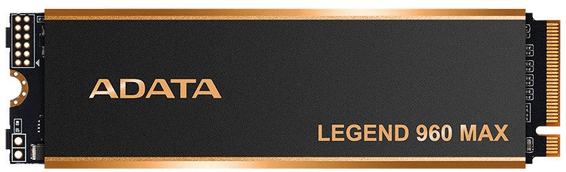
The finned aluminium heatsink lowers the temperature by 40% and holds the speed over time: 7,400 MB/s read, 6,000 MB/s write. It also fits inside a PS5.
Simple upgrade for a laptop or a tower: 5,000 MB/s read and 3,000 MB/s write, host memory buffer and SLC cache. 160 TB written of endurance and PlayStation 5 compatibility.
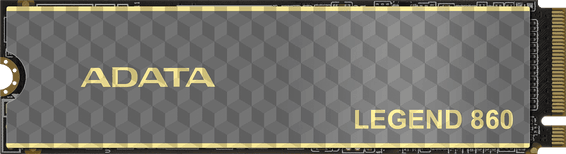
A host memory buffer (HMB) and an SLC cache take read speed to 2,200 MB/s and write speed to 1,600 MB/s. LDPC error correction, end-to-end data protection and the SP Toolbox utility to monitor drive health.