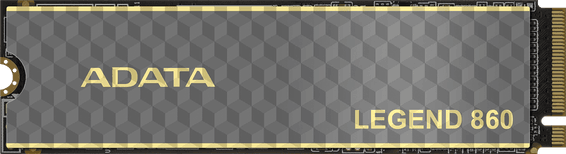
Does the 1 TB version offer the same speeds and endurance as the 2 and 4 TB?
No. In 1 TB: 7,400 MB/s read but 6,000 MB/s write, against 6,500 MB/s on the 2 and 4 TB. Endurance also follows capacity: 600 TB written (TBW) here, against 1,200 TB for the 2 TB and 2,400 TB for the 4 TB. These speeds were measured on a Ryzen 7 3700X platform running Windows 10: real-world results depend on the motherboard, the processor and the free space.
What happens if my motherboard only supports PCIe 3.0?
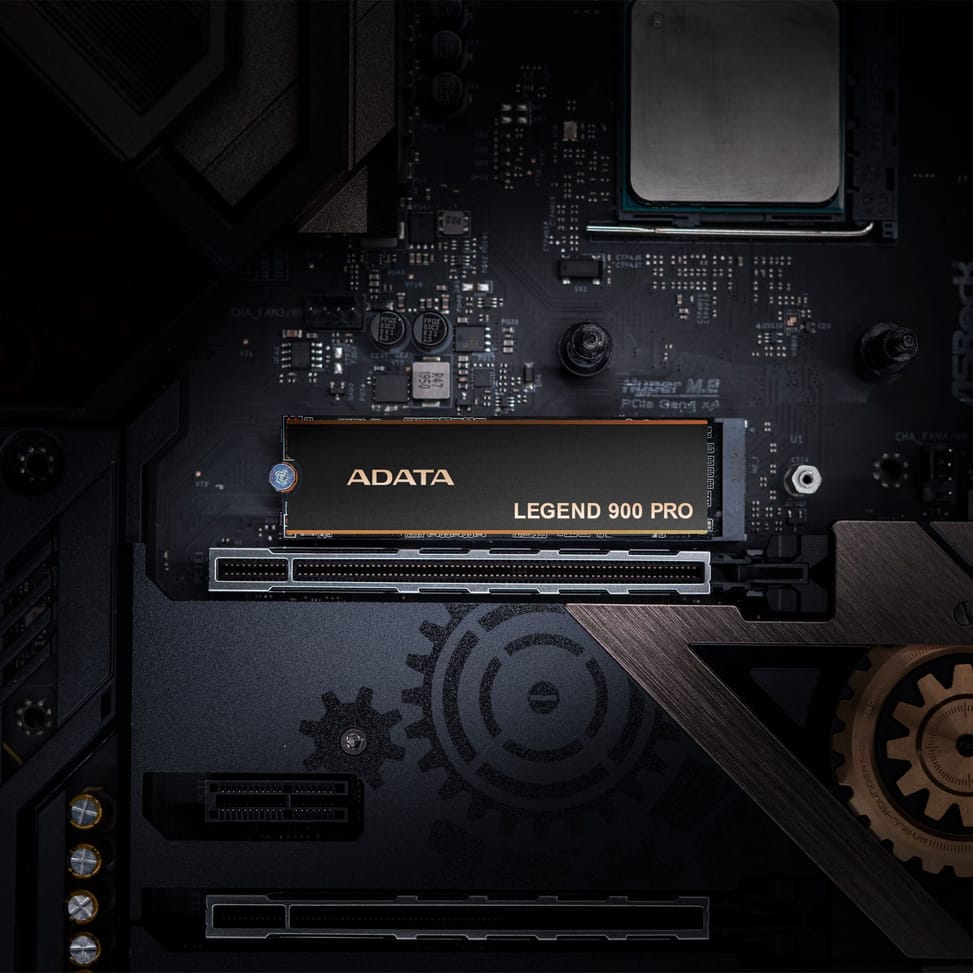
It still works: the LEGEND 900 PRO is backward compatible with PCIe 3.0. On a 3rd-generation motherboard, sequential speeds drop to 3,400 MB/s read and 3,000 MB/s write. Also check how the M.2 slot is wired: fitted in an x2 slot, the drive is capped by the slot, not by its own capabilities.
Is the heatsink included, and how thick is the SSD once installed?
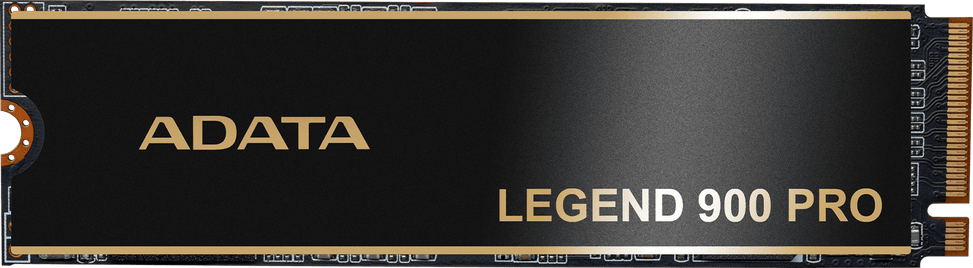
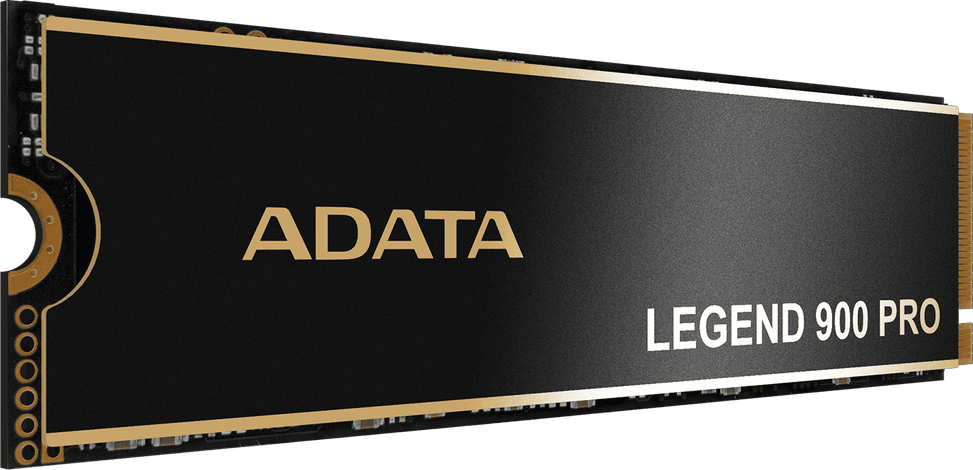
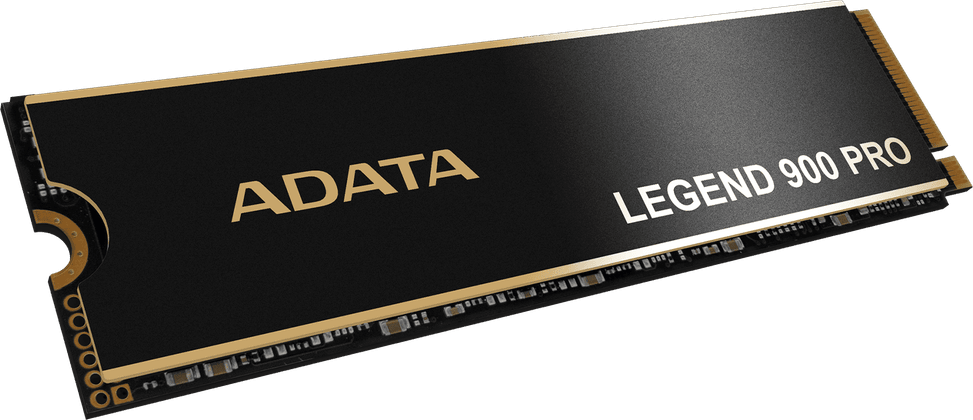
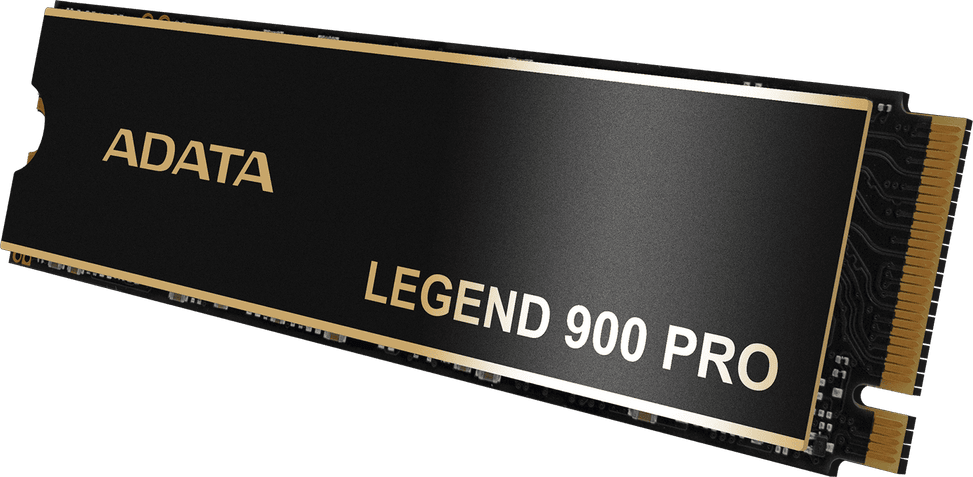
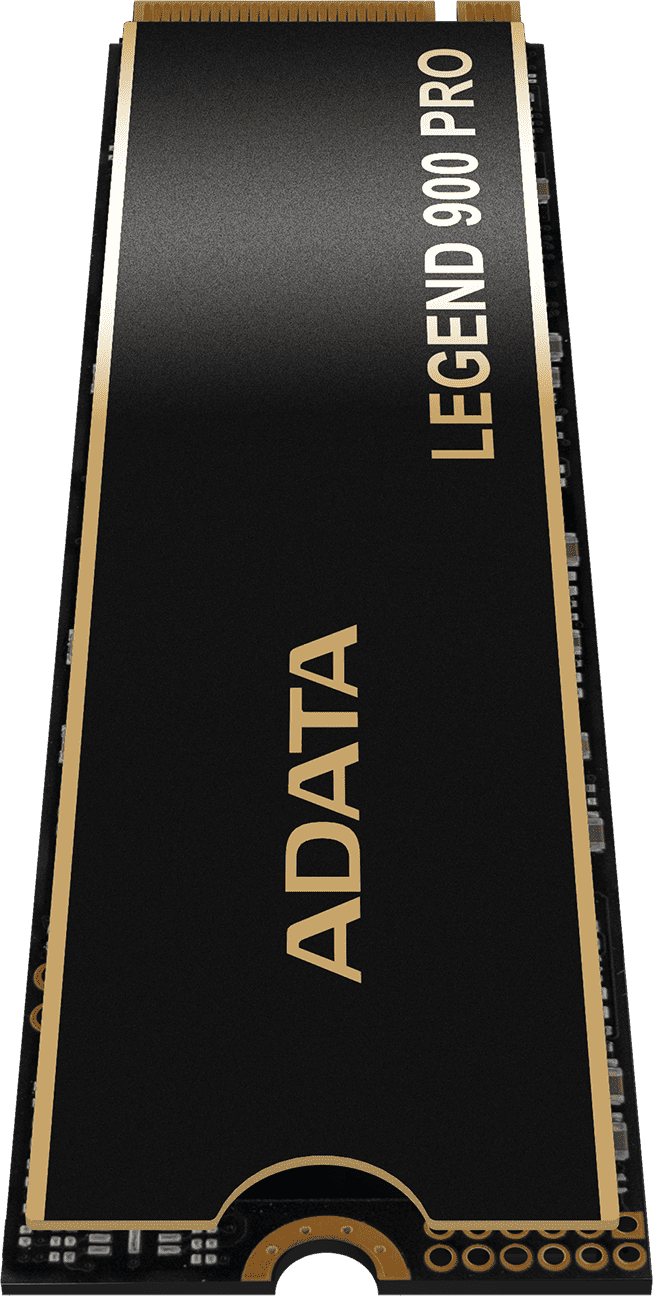
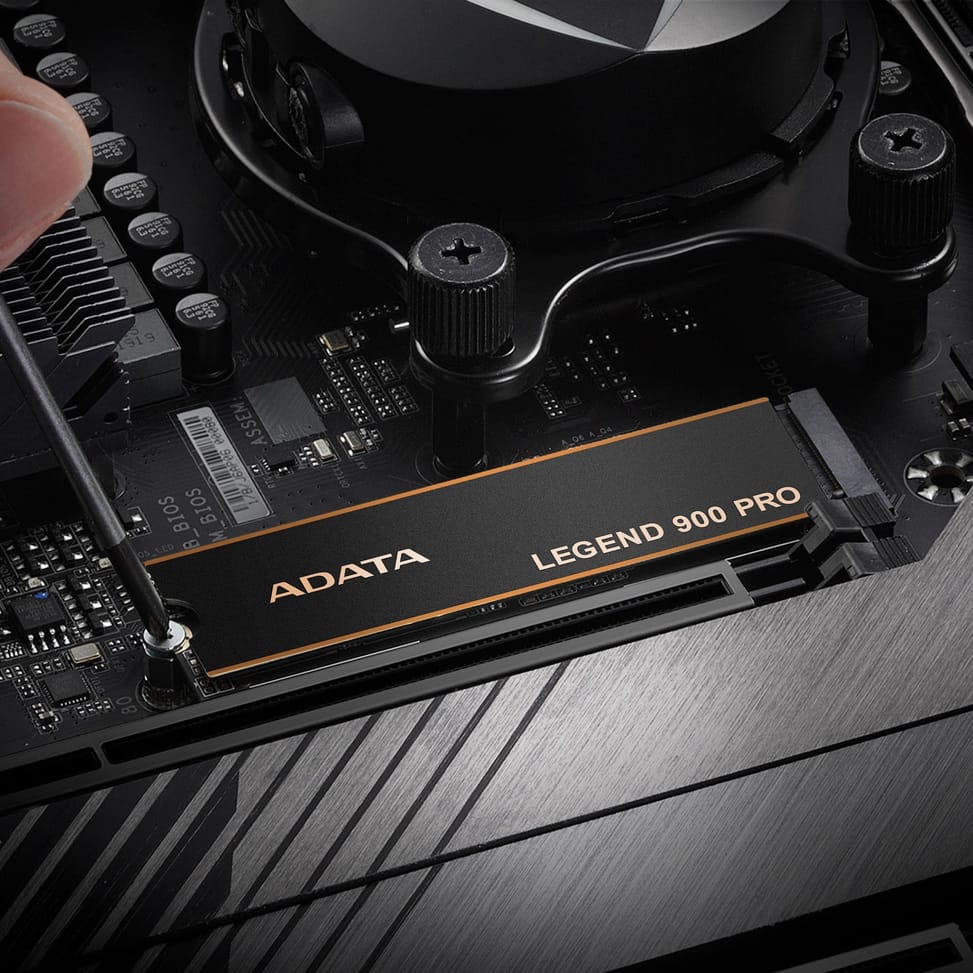
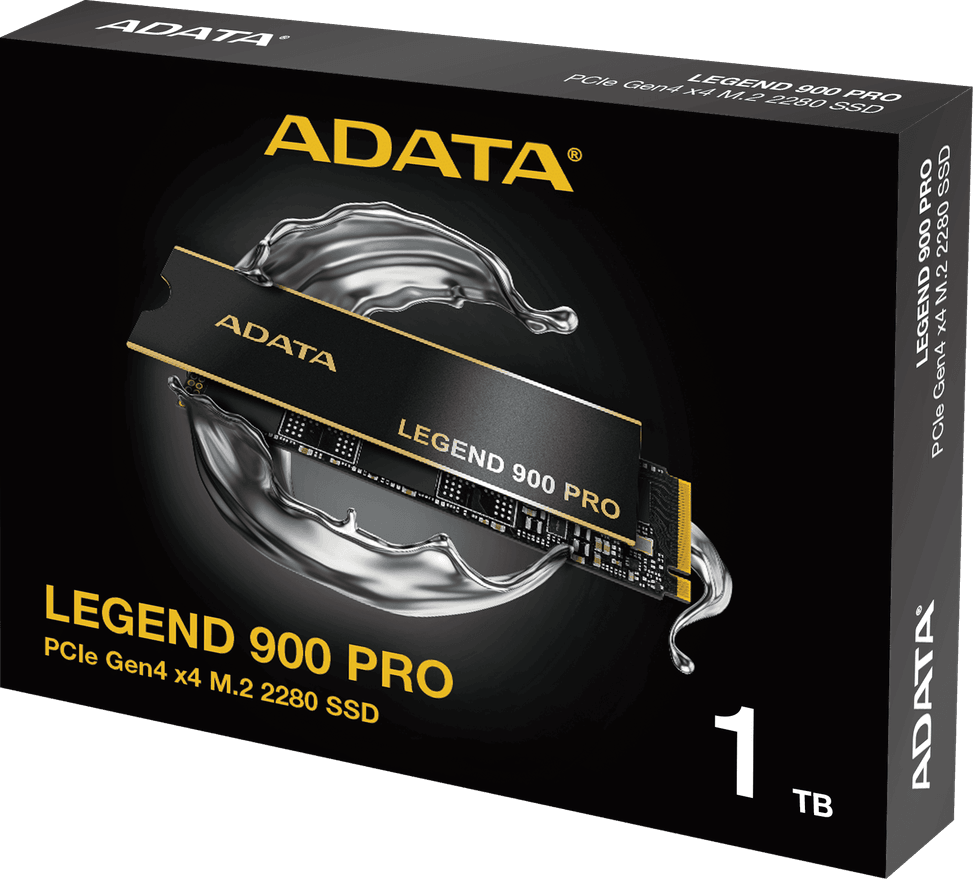
The heatsink is included. With it, the drive measures 80 × 22 × 3.43 mm and weighs 9.2 g; without it, 2.15 mm and 6.2 g. Measure the height available under the M.2 cover of your motherboard or laptop before installing the version with the heatsink.
Can it really be installed in a PS5, and with what performance?
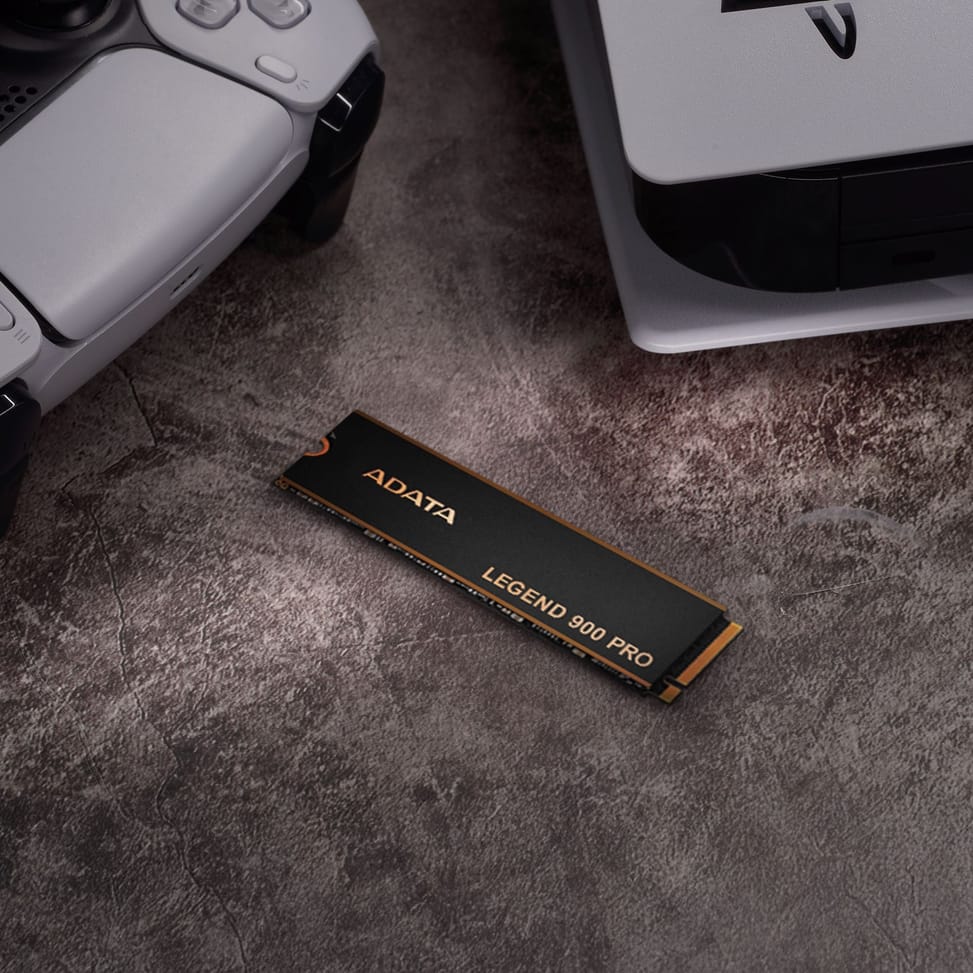
Yes: it fits into the PS5 expansion slot, where it is a perfect fit, and ADATA publishes an M.2 installation guide dedicated to the console. Sony points out, however, that even above the official required speed, not all games get the same performance as with the console's built-in SSD.
Why won't Windows show 1,000 GB once the drive is formatted?
Because the SSD counts in decimal (1 TB = 1,000 GB) and Windows in binary. The capacity shown equals the advertised capacity × 0.93, i.e. about 930 GB usable on this 1 TB. Nothing abnormal: it is simply a difference in calculation method between the drive and the system.
What is the minimum Windows version for this NVMe SSD?
Windows 8.1 or later for NVMe driver support, with Windows 10 recommended for the best user experience. Linux is also supported, including Fedora, SUSE, Ubuntu and Red Hat. Remember to format the drive as NTFS: with FAT32, no file larger than 4 GB can be saved to it.
Does the TRIM command work if I set the SSD up in RAID?
No: no RAID configuration supports TRIM, whatever the operating system. As a single drive, TRIM is used under Windows 7, Server 2008, macOS 10.7 and recent versions of Linux; it improves write performance and helps extend the SSD's lifespan. Pairing two SSDs in RAID 0 for speed would therefore lose you that benefit.
Does the drive have its own buffer memory, or does it borrow the PC's?
It relies on HMB (Host Memory Buffer) technology, which uses part of the host computer's memory as a buffer, backed by an SLC cache to absorb write bursts. Hardware LDPC error correction, for its part, safeguards the integrity of the data transferred.
How do you monitor the drive's wear and health over time?
With the ADATA SSD Toolbox software, which uses S.M.A.R.T. technology to display the drive's status, its remaining lifespan, its operating temperature and its capacity; it is also the tool that delivers the latest firmware versions. Toolbox does not, however, detect a drive declared as a virtual disk in Windows Storage Spaces: you must first initialise it in Disk Management.
How resistant is it to shocks and temperatures?
It withstands 1,500 G for 0.5 ms, operates from 0 to 70 °C and can be stored from −40 to 85 °C. Its mean time between failures (MTBF) is rated at 1,500,000 hours, the LEGEND series being built with rigorously checked and tested components.
Does this SSD hold certifications recognised in Morocco?
Yes. Its certifications include CE, FCC, RoHS and UKCA, plus BSMI, KC, EAC, RCM and a Morocco approval. Both local and European regulatory requirements are therefore covered, a point that matters for a business purchase.
Is the SSD new and under warranty?
Yes: the drive is
new and sealed in its original packaging, supplied with its invoice, which serves as the
1-year warranty document. Full specifications are in the
datasheet (PDF).