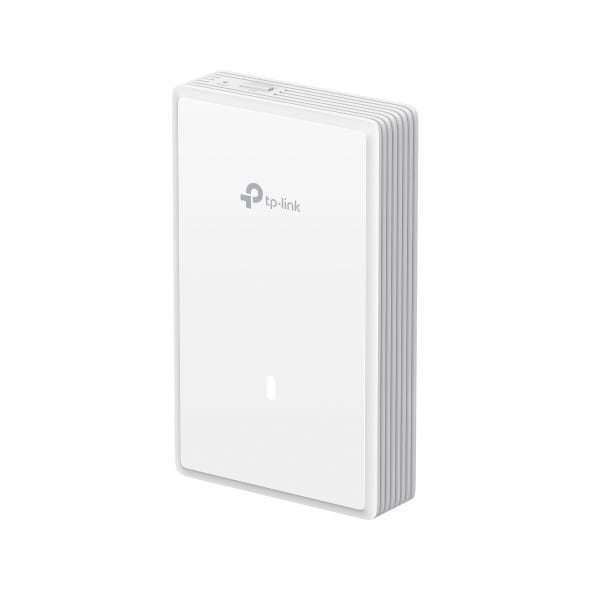
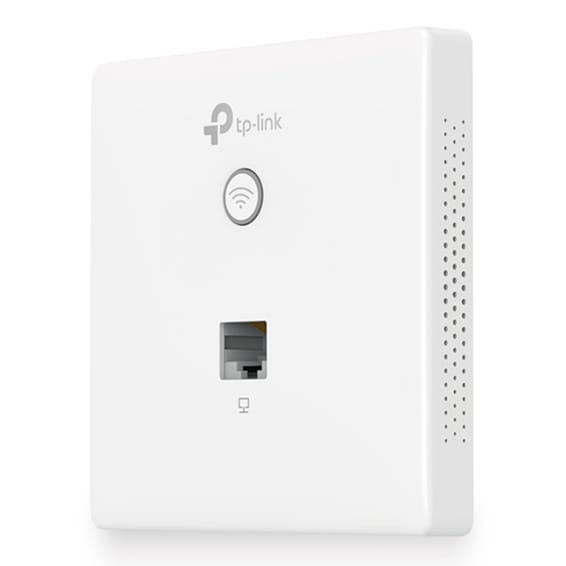
TP-Link EAP725-Wall BE3600 WiFi 7 Wall-Mount Access Point (EAP725-WALL)
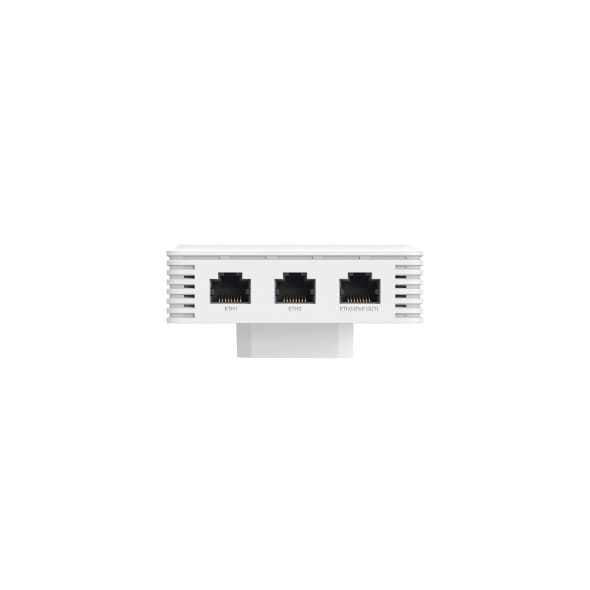
Every room or office gets its own network and its own sockets: two Gigabit ports on the front, plus a 2.5 Gbps port that powers an IP phone with no mains socket. 250 devices served at the same time.
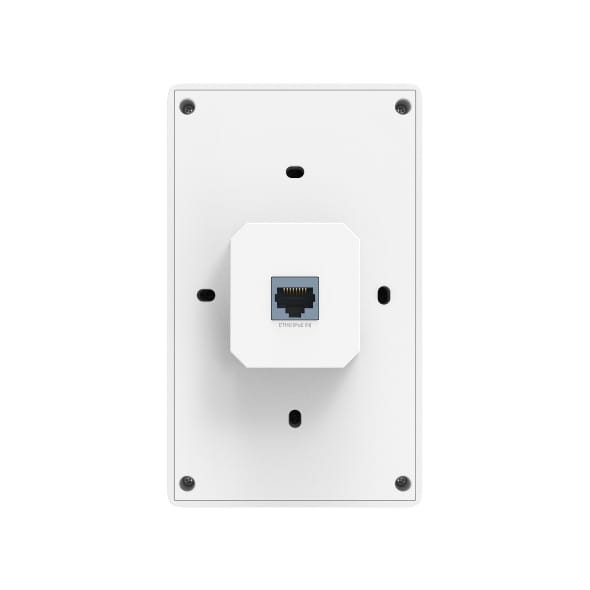
2.5 Gbps PoE input port and 2.5 Gbps PoE passthrough port to power another device
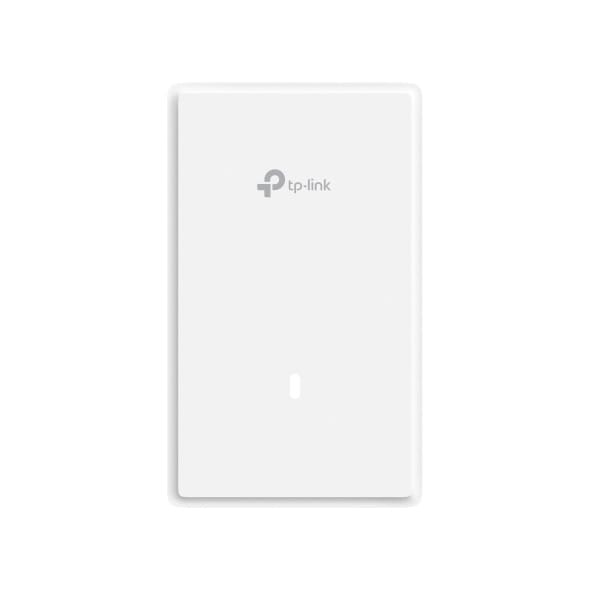
2 wired Gigabit ports on the front
250 devices connected at the same time
Up to 2,882 Mbps on 5 GHz and 688 Mbps on 2.4 GHz
Room coverage up to 70 m²
MLO: a device uses the 2.4 and 5 GHz bands at the same time
Powered over PoE+ (802.3at) or PoE++ (802.3bt)
Centralised Omada SDN management: mobile app, browser or cloud
Omada mesh and seamless roaming from one access point to another
WPA3 encryption and rogue access point detection
Captive portal and guest network, up to 16 SSIDs
Bluetooth BLE 5.2 for IoT uses
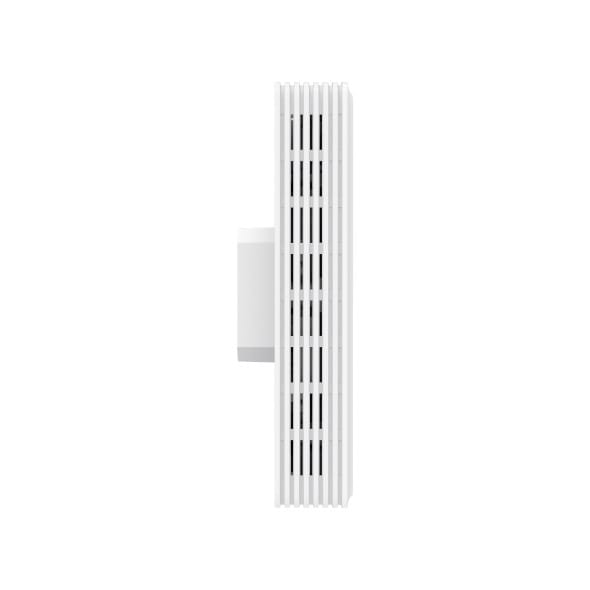
143 x 86 x 40 mm housing, mounting screws included
TP-Link EAP725-Wall wall-mount Wi-Fi 7 BE3600 access point: future-proof your network with one of the first Wi-Fi 7 access points. Wi-Fi & speed:Wi-Fi 7 BE3600 — up to 2,882 Mbps on 5 GHz + 688 Mbps on 2.4 GHz. Ports:2.5 GbE Multi-Gigabit uplink + front-facing wired RJ45 ports. Format: discreet wall plate that replaces a network socket, PoE powered. Management:Omada SDN controller, cloud or on-premises. Use cases: hotels, offices, premium residences. An elegant wall-mount Wi-Fi 7 access point that combines top speeds with a clean installation.
Be the first to review this product and help other customers.
Write a review
Frequently asked questions about this product
Can the EAP725-Wall power an IP phone through its network port?
Yes, it has a 2.5 Gbps PoE passthrough port — but on one condition: the access point itself must be powered via 802.3bt. With 802.3at, passthrough is disabled. Passthrough then has 7 W available, enough for an IP phone or a small sensor.
How many network ports does the EAP725-Wall provide in the room?
Two Gigabit RJ45 ports on the front, plus the 2.5 Gbps PoE passthrough port. A desktop computer, a TV and a phone can therefore connect directly to the plate, without running extra cables back to the rack.
Does this Wi-Fi 7 access point broadcast on the 6 GHz band?
No, it is dual-band: 2,882 Mbps on 5 GHz and 688 Mbps on 2.4 GHz. Wi-Fi 7 brings it Multi-Link Operation, Multi-RU and 4K-QAM modulation, not the third band.
What does the EAP725-Wall's Multi-Link Operation bring?
A compatible device uses both bands at the same time instead of choosing one: throughput adds up and latency drops sharply, with one band taking over when the other suffers interference. Multi-RU and 4K-QAM add to the gain in dense environments.
What area does the EAP725-Wall cover from a bedroom wall?
Up to 70 m², i.e. a bedroom or an office from corner to corner. The figure comes from laboratory measurements: thick partitions and metal furniture reduce it, hence the value of one access point per room rather than one in the corridor.
How many devices can the EAP725-Wall handle at the same time?
More than 250 concurrent connections, over two spatial streams per band. That is well beyond what a bedroom needs: the headroom comes into play in a shared office or a meeting room equipped with a single wall plate.
What is the EAP725-Wall's power consumption?
17 W, excluding PoE passthrough. You therefore need at least an 802.3at port; with 802.3bt, the access point also has the 7 W needed to power the device connected to its passthrough port.
Is this wall-mounted access point protected against power surges?
Its Ethernet ports withstand ±4 kV surges, with ESD protection of ±8 kV air discharge and ±4 kV contact discharge. Its stated mean service life exceeds 372,000 hours at 25 °C, and remains 162,000 hours at 40 °C.
Does the EAP725-Wall support WPA3 and enterprise authentication?
Yes, in WPA3-Personal and WPA3-Enterprise alike, with 802.1X support, as well as WPA and WPA2. Rogue access point detection flags any unauthorised access point broadcasting on the premises.
How many Wi-Fi networks can be broadcast from this wall plate?
16 SSIDs, eight per band, including an isolated guest network with a captive portal. Each room or department can thus have its own network, separate from the staff network.
Does the EAP725-Wall also act as a Bluetooth gateway?
Yes, it features a Bluetooth Low Energy 5.2 radio for IoT use: compatible room sensors, beacons or locks communicate with it without an additional gateway in the corridor.
Does the connection hold when moving from one room to another?
Yes: roaming relies on 802.11k, 802.11v and 802.11r, supplemented by Layer 2 assisted roaming. The device switches to the neighbouring access point without re-authenticating, which keeps a call or a video conference in progress going.
How much space does the EAP725-Wall take up, and in what conditions does it operate?
143 × 86 × 40 mm, in the format of a wall plate fitted in place of a network wall socket, for indoor use between 0 and 40 °C. The mounting screws are supplied.
Is the equipment new and under warranty?
Yes, new equipment, with the invoice serving as the warranty document for 1 year. The manufacturer's full specifications are in this document: EAP725-Wall (PDF).
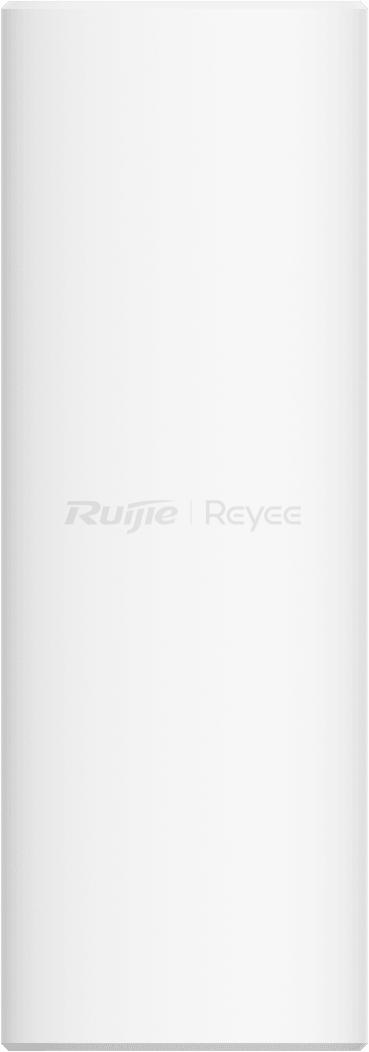
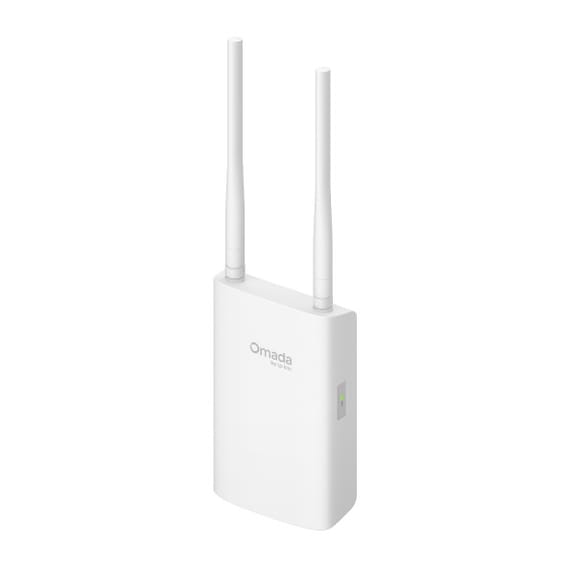
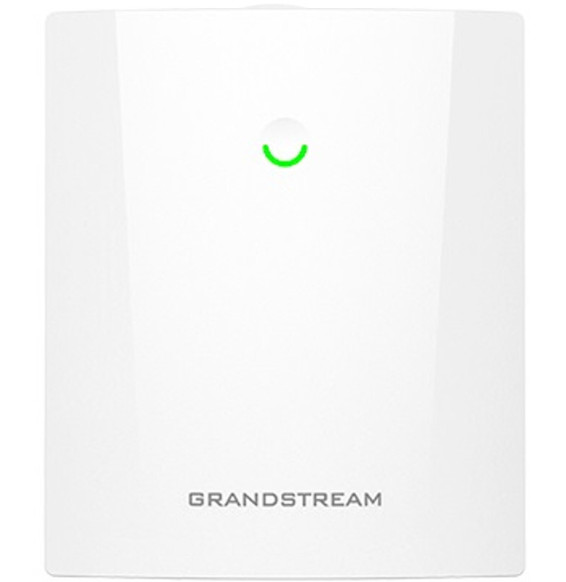
Indoors as well as out: IP65 housing, operation from -30 to +65 °C and 4 kV lightning protection. Up to 2,401 Mbps on the 5 GHz band, 110 recommended clients and around 150 m² covered, wall or pole mounted.
•Up to 2,401 Mbps on 5 GHz (160 MHz channels) and 573 Mbps on 2.4 GHz
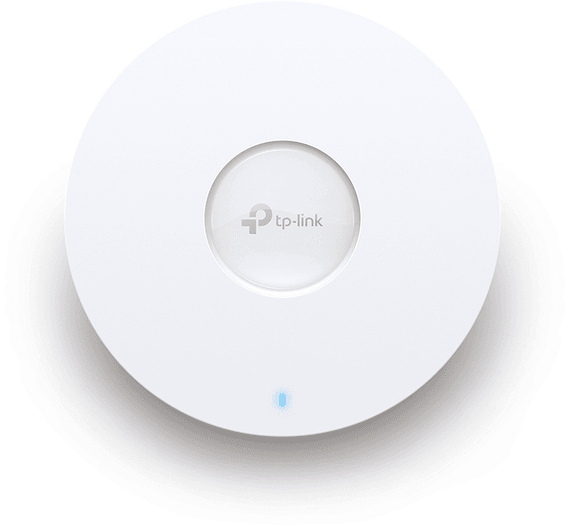
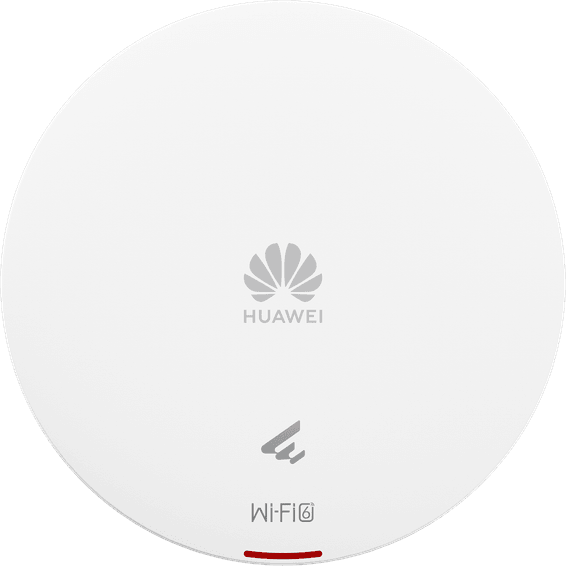
Compact (180 mm across, 35 mm thick), it steers its own signal with smart antennas. Up to 2,880 Mbps on the 5 GHz band and a 2.5 Gbps port, all powered over the network cable.
•Up to 2,880 Mbps on 5 GHz and 689 Mbps on 2.4 GHz
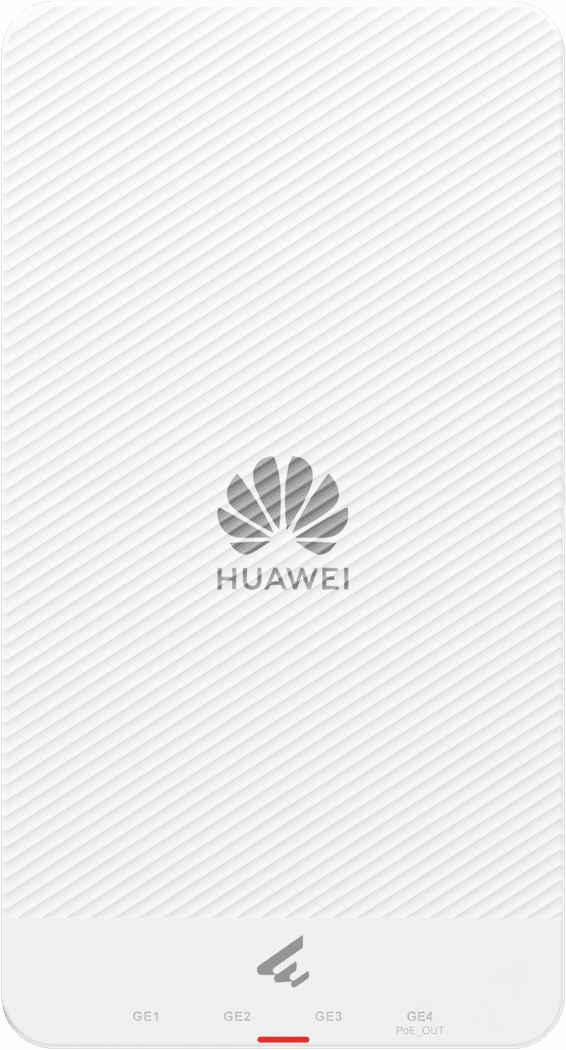
Powered over PoE+, it in turn powers a wired device through one of its four outgoing ports: a camera or an IP phone connects with no mains socket. Up to 2,400 Mbps on the 5 GHz band.
•1 incoming Gigabit port with PoE and 4 outgoing Gigabit ports, one of them PoE OUT
IP66 sealing when wall-mounted, IP65 on a pole and 6 kV lightning protection: the yard, the car park or the warehouse are covered. Up to 300 m of range on 5 GHz, and it works from -30 to +70 °C.
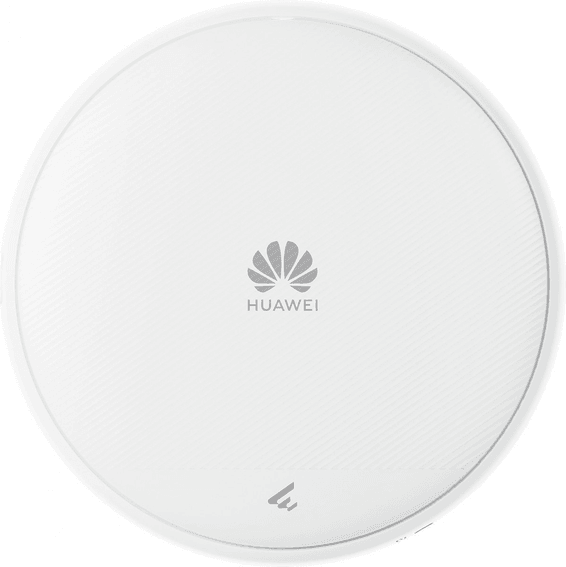
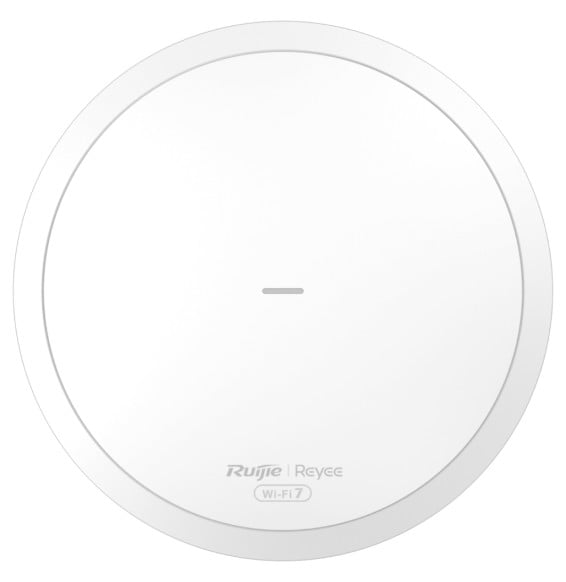
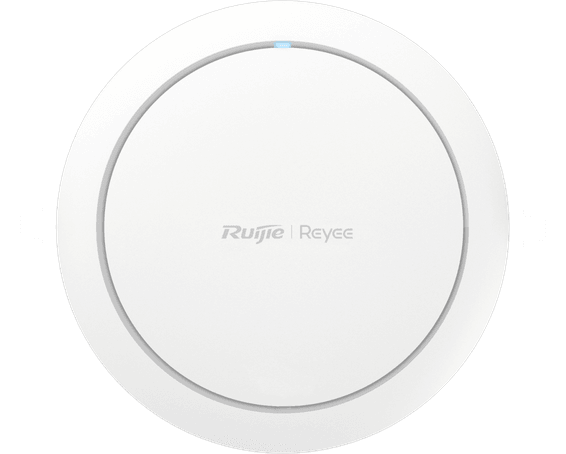
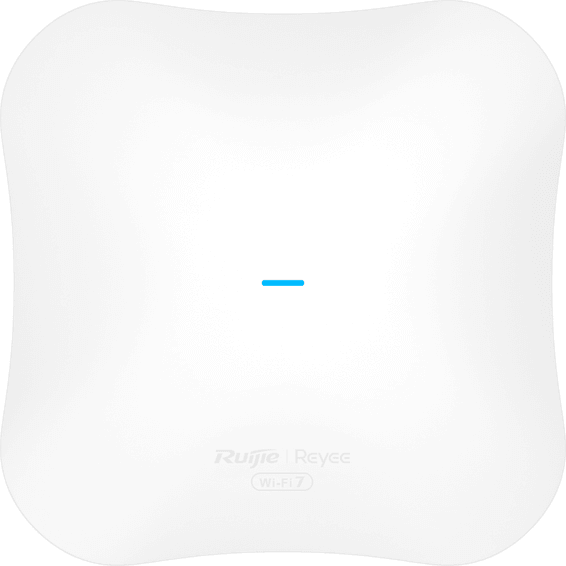
Round, discreet unit for ceiling or wall mounting: up to 3,570 Mbps combined, MLO and 4K-QAM, AI roaming between Reyee Mesh access points. Managed for free from Ruijie Cloud or the Reyee app, powered over PoE.
Built for busy venues: more than 200 devices served at the same time, up to 175 m of range and 1,300 Mbps available on the 5 GHz band. Fleet management is free, locally or in the cloud.
IP67 certified and rated from −30 °C to +60 °C, it reaches up to 300 m. A 2.5 Gbps SFP port links it to the network over fibre, and up to 256 devices are served at the same time.
450 Mbps on the 2.4 GHz band and 867 on 5 GHz, for more than 220 devices at the same time. The free Omada software controller drives around a hundred access points from a single interface, and the power adapter is included.
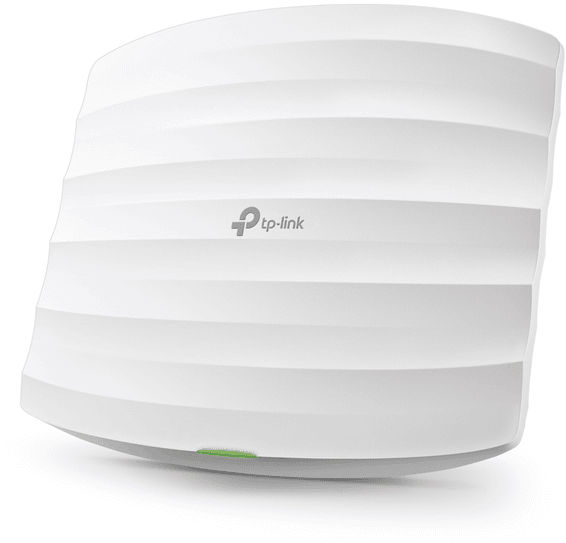
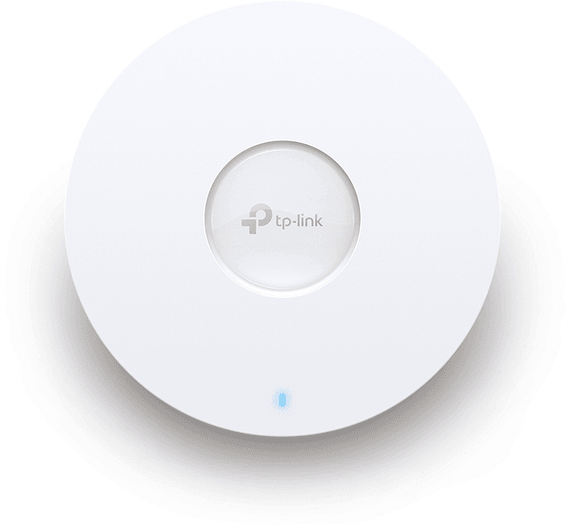
Installed by a simple twist, without tools, on the ceiling. Up to 2,402 Mbps on the 5 GHz band and 110 devices served at the same time, with a single network cable that powers and connects it.
•Up to 2,402 Mbps on 5 GHz and 574 Mbps on 2.4 GHz
Reyee RG-RAP72 Wi-Fi 7 BE3600 Ceiling Access Point 2.5 Gigabit
Round, discreet unit for ceiling or wall mounting: up to 3,570 Mbps combined, MLO and 4K-QAM, AI roaming between Reyee Mesh access points. Managed for free from Ruijie Cloud or the Reyee app, powered over PoE.
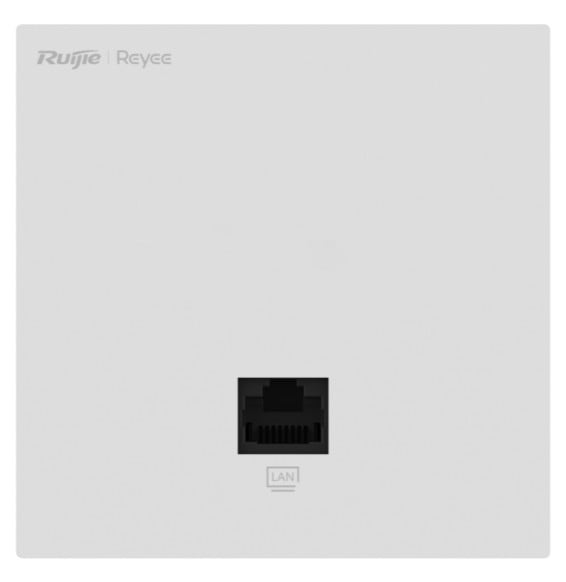
Fits on a junction box to deliver fast Wi-Fi in every hotel room or office, with two network sockets for a TV, PC or IP phone, all powered over PoE and managed from Ruijie Cloud.
Compact (180 mm across, 35 mm thick), it steers its own signal with smart antennas. Up to 2,880 Mbps on the 5 GHz band and a 2.5 Gbps port, all powered over the network cable.
•Up to 2,880 Mbps on 5 GHz and 689 Mbps on 2.4 GHz
•Built-in smart antennas that adjust the signal direction and strength on their own
•MU-MIMO and OFDMA to serve several devices at once
Up to 4,323 Mbps on the 5 GHz band and a 2.5 Gbps port so the wired side is not held back. MLO moves data over several links at once, for 8K streaming and video calls.
•Up to 4,323 Mbps on 5 GHz and 688 Mbps on 2.4 GHz
Wall, ceiling or rail mounting, as you prefer. 1.775 Gbps combined, MU-MIMO and OFDMA to hold many users at once, and a single network cable that powers it and connects it.
•Combined throughput up to 1.775 Gbps on 2.4 and 5 GHz
•2x2 MIMO on each band
•MU-MIMO and OFDMA to serve several devices at the same time
Extra-slim 33.6 mm profile to disappear into the ceiling, with 2,402 Mbps on the 5 GHz band and a 160 MHz channel that doubles throughput at peak times.
•Up to 2,402 Mbps on 5 GHz and 574 Mbps on 2.4 GHz
•160 MHz channel (HE160) to double throughput on a single stream
•MU-MIMO and OFDMA to serve several devices at once
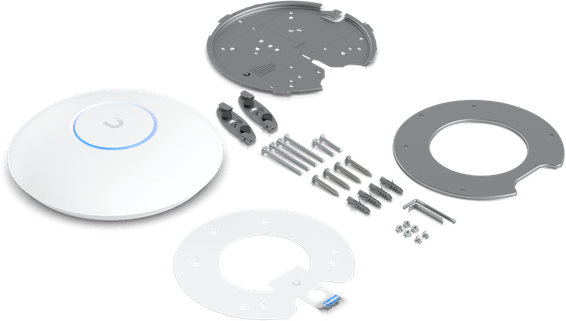
Covers 140 m² and more than 300 devices, with 5.8 Gbps on the 6 GHz band and a 2.5 Gbps port so the throughput is not held back. Ceiling and wall mount included in the box.
•Up to 5.8 Gbps on 6 GHz, 4.3 Gbps on 5 GHz and 688 Mbps on 2.4 GHz
•More than 300 devices connected simultaneously
•6 spatial streams, 2x2 MU-MIMO on each of the three bands
75 devices served at once per radio and 1.2 Gbps of combined throughput, with Instant On management from an app or a browser. The network cable is enough to power it.
•Combined throughput up to 1.2 Gbps across both bands
More than 250 devices connected at the same time, with 1,201 Mbps available on the 5 GHz band. The network cable alone powers it and the whole set is managed from the Omada cloud.
•Up to 1,201 Mbps on 5 GHz and 574 Mbps on 2.4 GHz
•More than 250 devices connected simultaneously
•OFDMA and MU-MIMO to serve several devices at once
Just 11 mm thick: it mounts on a standard junction box and goes unnoticed in a bedroom or an office. It takes more than 100 devices and is managed remotely with Omada.