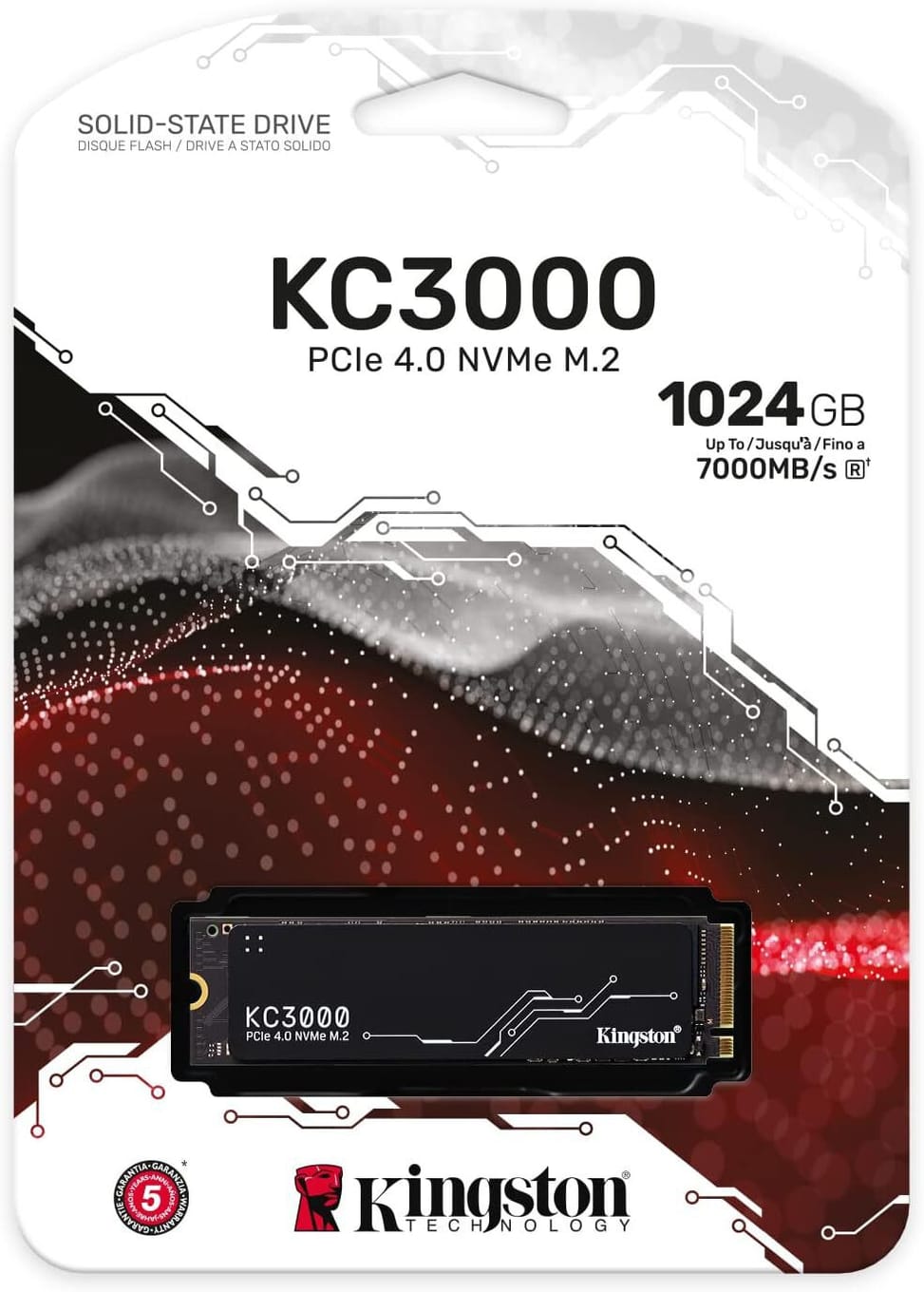
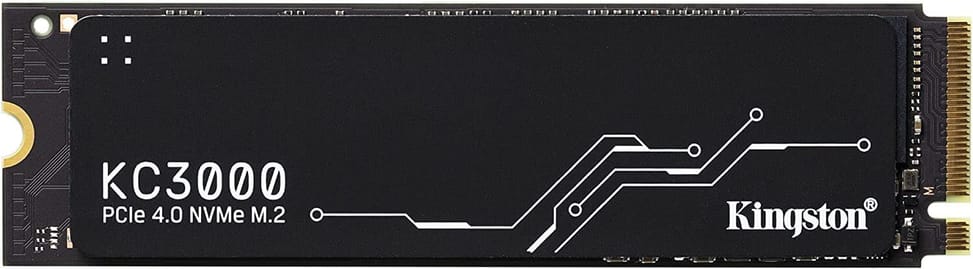
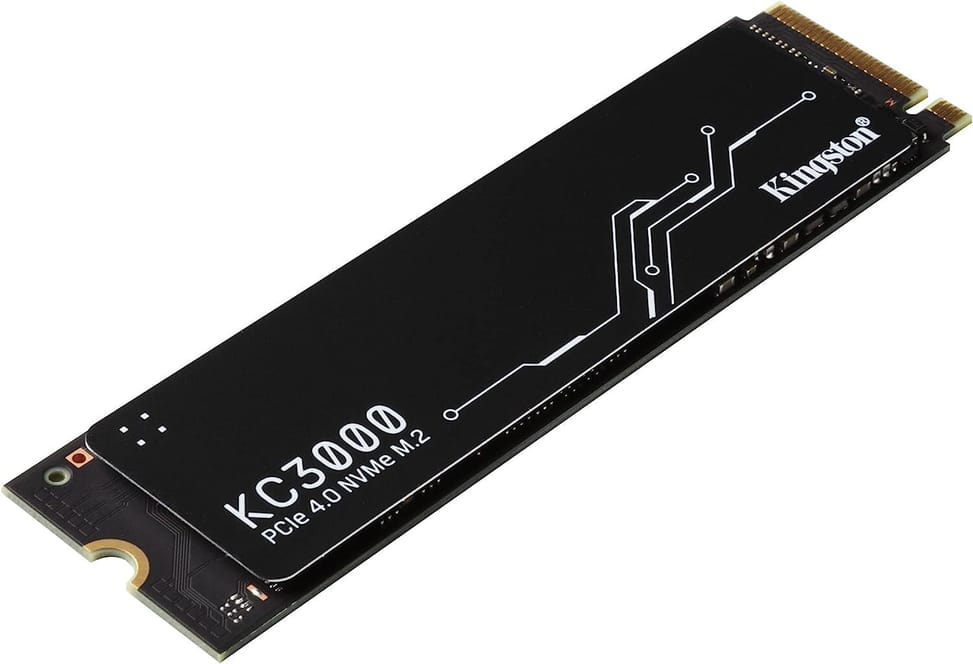
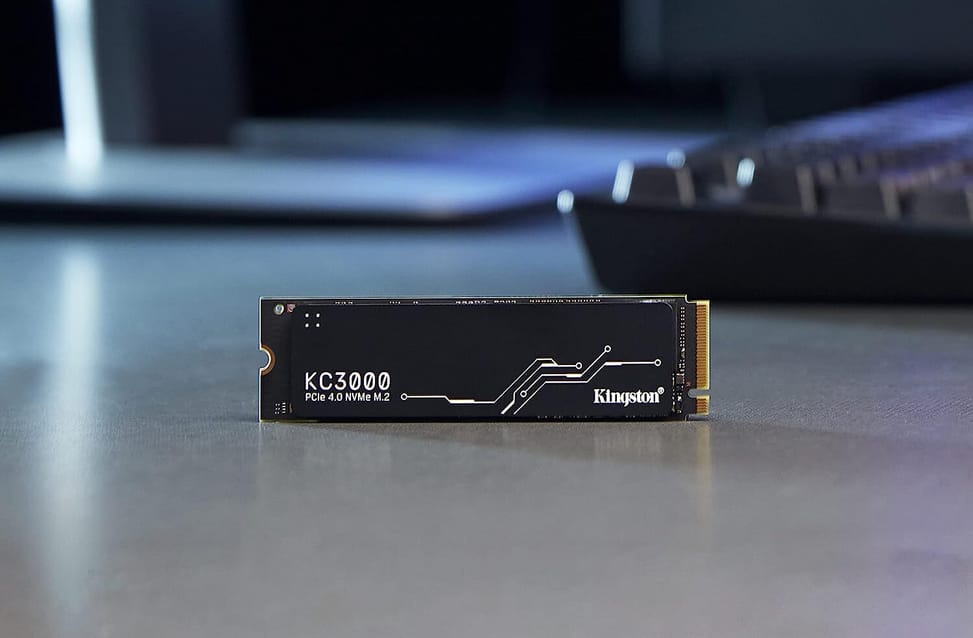
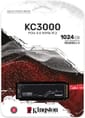
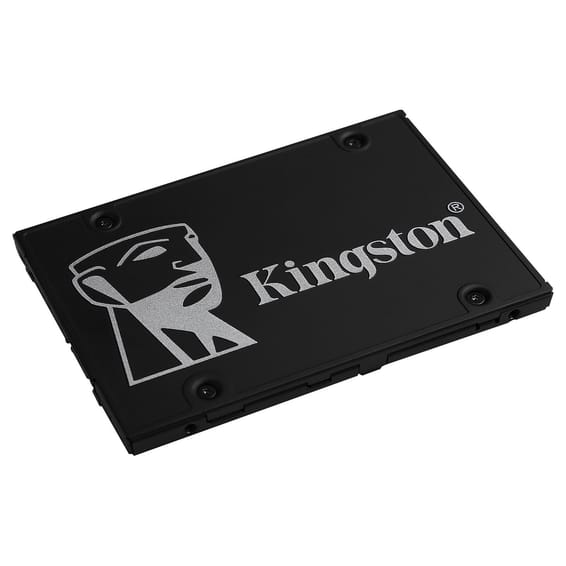
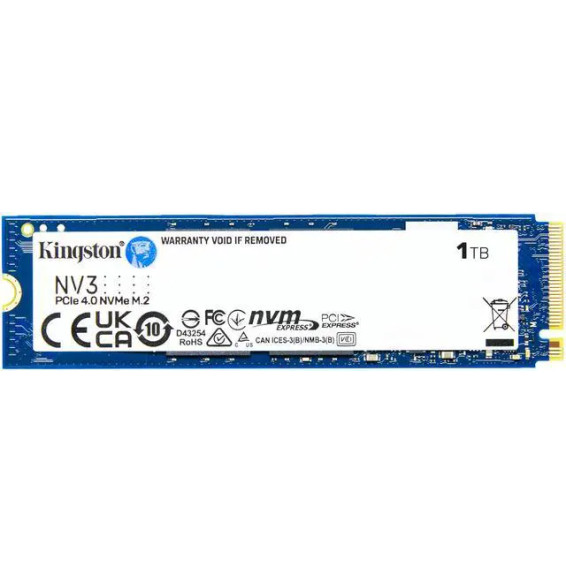
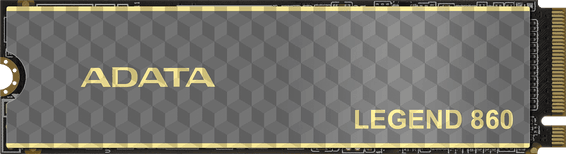
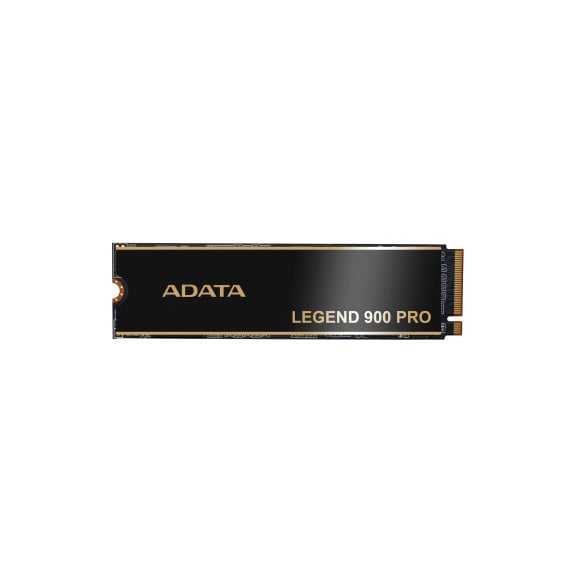
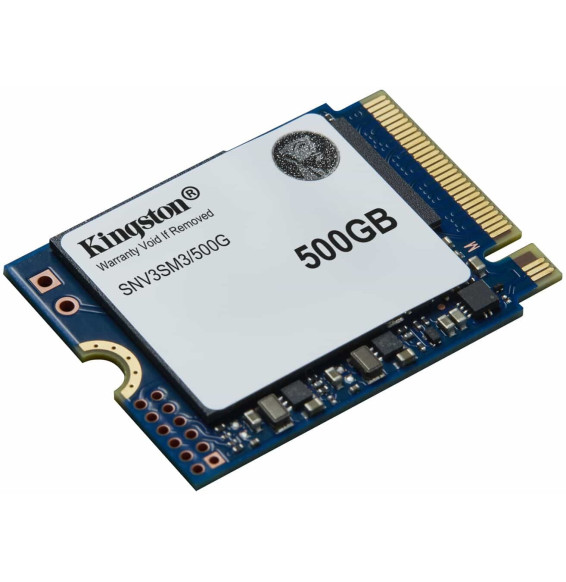
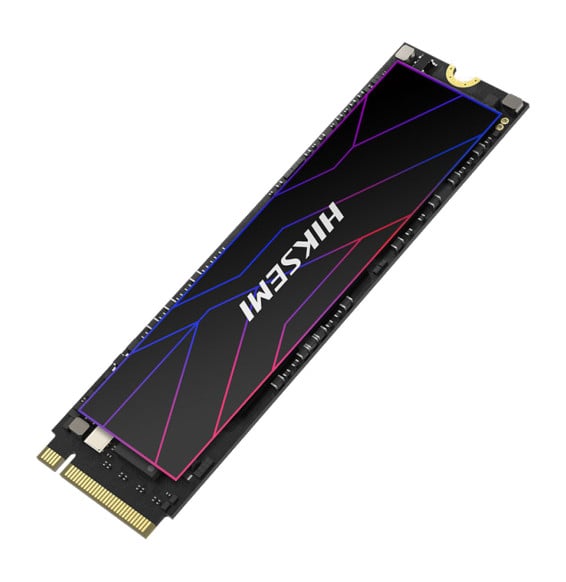
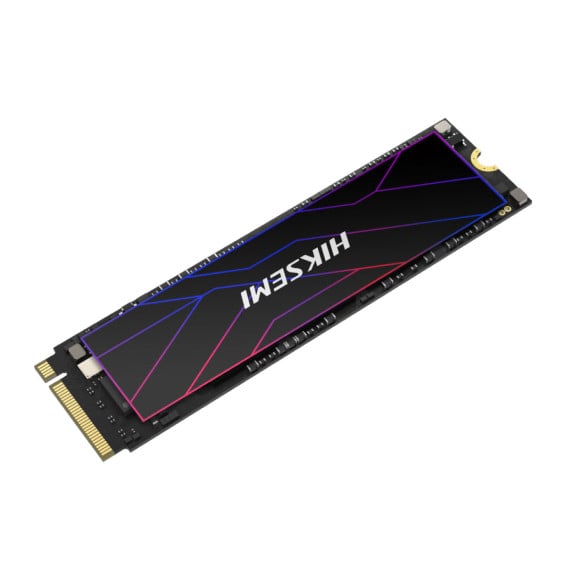
6,000 MB/s in write and 7,000 MB/s in read, with up to 1 million IOPS in random write: heavy workloads pass without slowing down. 800 TB of endurance for a workstation under daily demand.
Sequential read up to 7,000 MB/s
Sequential write up to 6,000 MB/s
Up to 900,000 IOPS in 4K random read and 1,000,000 in write
Endurance 800 TB written (TBW)
Phison E18 controller
3D TLC memory with DRAM cache
Low-profile aluminium-graphene heat spreader, 2.21 mm thick
Enjoy next-level performance thanks to the Gen 4x4 NVMe controller and 3D TLC NAND. Take on demanding workloads and enjoy an enhanced experience with read and write speeds of up to 7,000 MB/s. The compact M.2 2280 design delivers responsiveness and shorter load times. Aluminium-graphene heat dissipation sustains peak performance and helps the drive last. Master intensive applications and manage your storage flexibly with this high-performance PCIe 4.0 NVMe SSD.
Be the first to review this product and help other customers.
Write a review
Frequently asked questions about this product
Does the 1 TB KC3000 write as fast as it reads?
No. At this capacity, reads reach 7,000 MB/s and writes 6,000 MB/s. Perfectly symmetrical 7,000 MB/s in both directions only comes from 2 TB upwards; the 512 GB model tops out at 3,900 MB/s write. The 1 TB is therefore already very close to the top of the series.
How thick is this module with its heat spreader?
2.21 mm and 7 g, at 80 × 22 mm — including the low-profile aluminium-graphene heat spreader. That is noticeably flatter than the 2 TB and 4 TB versions of the same series, which reach 3.5 mm: this capacity therefore fits where the larger ones do not.
How much power does this SSD draw at peak?
6.3 W maximum when writing and 2.8 W when reading, with an average of 0.33 W. The write peak is what justifies the heat spreader: in a closed case or under a laptop's cover, the module needs to dissipate this energy to sustain its speeds.
How do its random IOPS perform in everyday use?
900,000 read and 1,000,000 write 4K random IOPS at this capacity. These small accesses are what make the system feel responsive: 3D rendering with thousands of files, 4K content creation, compiling, switching between heavy applications.
What is the write endurance of this 1 TB version?
800 TB, or 800 complete fills of the drive, calculated on the JEDEC client workload. This counter can be tracked as a percentage used in the Kingston SSD Manager application, which shows zero on a new drive.
Which controller does this SSD use, and why does it matter?
A Phison E18 combined with 3D TLC memory and a dedicated DRAM cache. It is this trio that sustains 7,000 MB/s read and nearly a million IOPS: on a drive of this calibre, the controller weighs as much in the end result as the memory itself.
Is this SSD suitable for a server?
No. Kingston states that the KC3000 is designed for desktop or laptop computers and is not designed for server environments. It is aimed at demanding workstations: 4K content creation, 3D rendering, work machines where loading times matter.
Is the drive new and under warranty?
It is new, and your invoice serves as the warranty document, with free technical support from the manufacturer. It carries the part number SKC3000S/1024G. The full datasheet details the four capacities in the series.
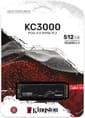
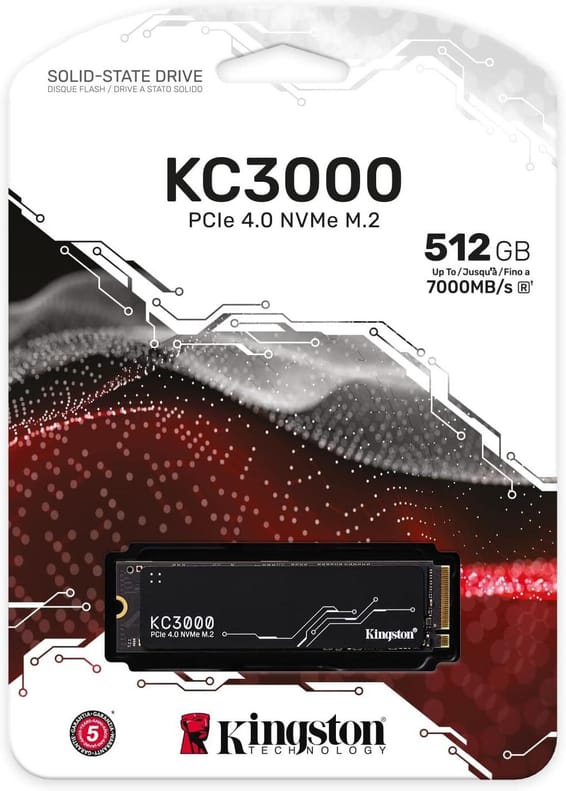
Built for 3D rendering and 4K editing: 7,000 MB/s read, 3,900 MB/s write, Phison E18 controller and DRAM cache. The low-profile aluminium-graphene heatsink prevents throughput dropping under sustained load.
•Sequential read up to 7,000 MB/s
•Sequential write up to 3,900 MB/s
•Up to 450,000 IOPS on 4K random read and 900,000 on write
2,500 MB/s read and 1,025 MB/s write, with no moving parts at all: the shock- and drop-resistant design protects the data. 3D NAND memory and TRIM command support to hold the speeds over time.
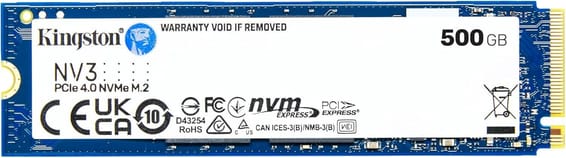
Simple upgrade for a laptop or a tower: 5,000 MB/s read and 3,000 MB/s write, host memory buffer and SLC cache. 160 TB written of endurance and PlayStation 5 compatibility.
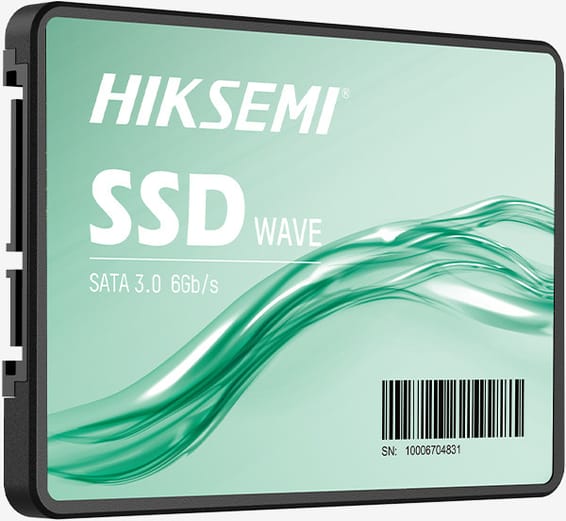
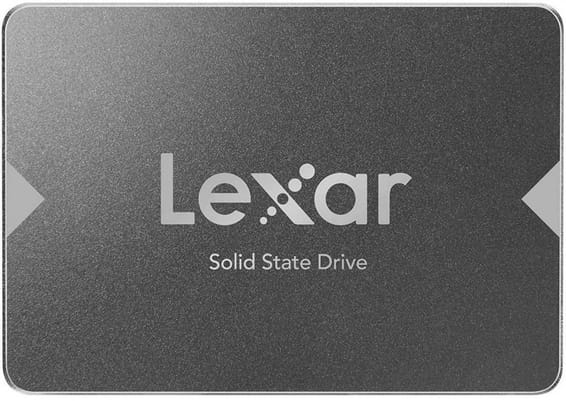
Write up to 450 MB/s and read up to 500 MB/s: file copies and installations are far brisker than with a spinning drive. Silent, frugal with power and unaffected by vibration, in a tower or a laptop.
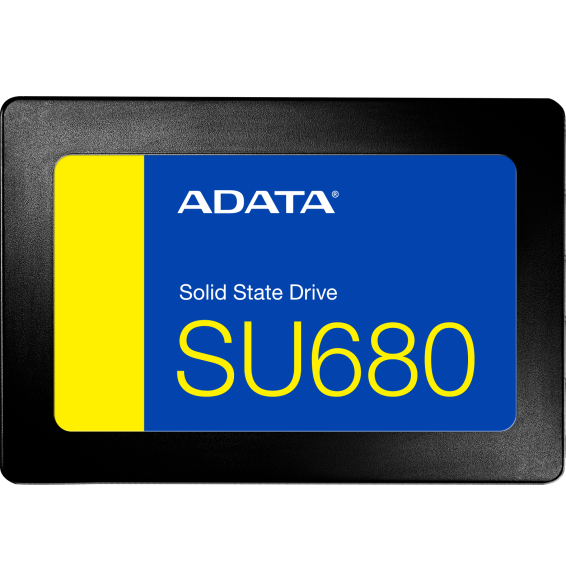
ADATA Ultimate SU680 2.5-inch SATA SSD with 3D NAND to give new life to a desktop or laptop PC: up to 520 MB/s read and 450 MB/s write, SLC cache, 240 GB to 1 TB depending on the version.
256-bit AES hardware encryption, TCG Opal and Microsoft eDrive: the data stays unreadable to anyone who gets hold of the machine. 550 MB/s read, 520 MB/s write over SATA 6 Gb/s.
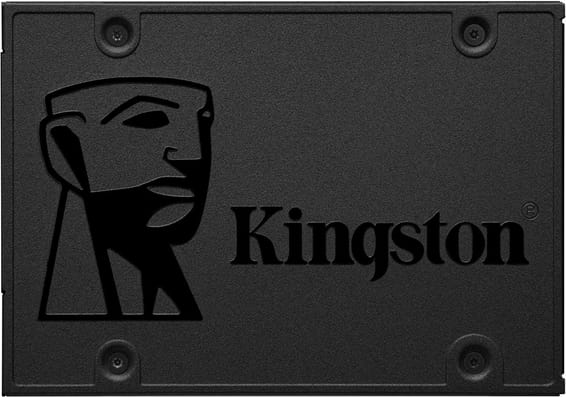
550 MB/s in sequential read, more than five times the speed of a spinning drive: noticeably quicker start-ups and application loading. No moving parts, so operation is silent and insensitive to knocks.
The finned aluminium heatsink lowers the temperature by 40% and holds the speed over time: 7,400 MB/s read, 6,000 MB/s write. It also fits inside a PS5.
Energy-efficient and cool-running, it reaches 6,000 MB/s read and 4,000 MB/s write. 320 TB written of endurance, 2,000,000 hours MTBF and Acronis cloning software included.
Built for animation and video editing, it reaches 6,000 MB/s read and 4,000 MB/s write. Host memory buffer and SLC cache, 320 TB written of endurance and PlayStation 5 compatibility as expanded storage.
Compatible with the PlayStation 5 as expanded storage, heatsink included. In 2 TB: 7,400 MB/s read, 6,500 MB/s write and 1,200 TB written endurance, with host memory buffer, SLC cache and LDPC error correction.
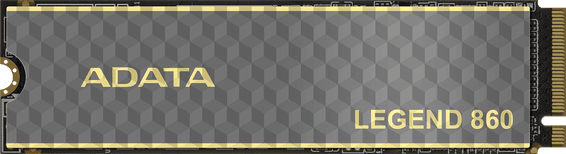
Short enough to fit an ultra-thin laptop or a handheld games console, and it weighs only 2.6 g. 5,000 MB/s read, 3,000 MB/s write, low power draw and 160 TB written of endurance.
7,000 MB/s read and 6,000 MB/s write: Windows boots and games load without waiting. PlayStation 5 compatible, it handles 750 TB of writes and draws only 4.9 W at most.
Built for 3D rendering and 4K editing: 7,000 MB/s read, 3,900 MB/s write, Phison E18 controller and DRAM cache. The low-profile aluminium-graphene heatsink prevents throughput dropping under sustained load.
•Sequential read up to 7,000 MB/s
•Sequential write up to 3,900 MB/s
•Up to 450,000 IOPS on 4K random read and 900,000 on write
An M.2 PCIe 4.0 SSD with 3D TLC memory: 7,050 MB/s read, 4,200 MB/s write and 900 TB of endurance. The ideal system drive for booting Windows and loading games without waiting, PS5 included.