Does the AP-615 broadcast on all three bands at the same time?
No: it is tri-band but dual-radio. Its two radios can be set to two of the three bands — 2.4, 5 or 6 GHz — and operate simultaneously. The choice is made through configuration, without changing hardware, depending on whether your devices are already 6 GHz compatible or not.
What does the 6 GHz band of this AP-615 actually bring?
Up to 1,200 MHz of additional capacity and seven 160 MHz channels, on a spectrum still little used by neighbouring networks. This is what serves demanding, latency-sensitive uses: high-definition video, augmented or virtual reality.
What happens if the AP-615 is powered from a class 3 PoE port?
By default, with IPM power monitoring disabled, the access point turns off its USB port — and nothing else. Enabling IPM lifts this restriction. Its power consumption reaches 14.7 W on PoE, or 20.9 W with a USB device connected.
Is the mounting kit supplied with the AP-615?
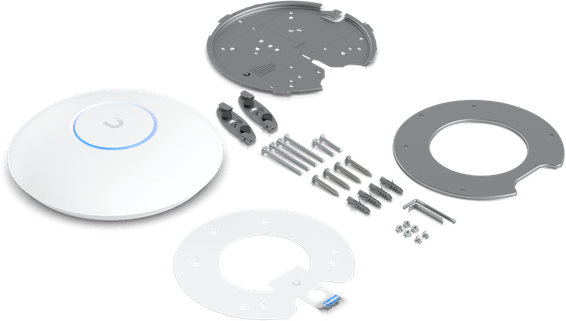
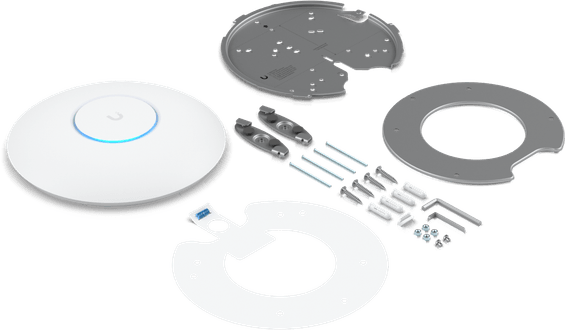
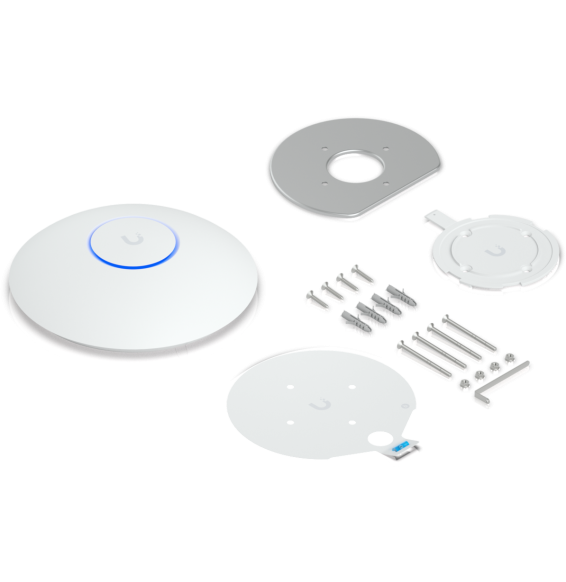
No. A bracket is pre-installed on the back of the access point, but it is used to attach it to a mounting kit sold separately — ceiling rail, wall or junction box. Remember to order it together with the access point.
Can the AP-615 locate a device inside a building?
Yes, it has a built-in GPS receiver and precise time-of-flight measurement, which make it possible to locate the access point and then the devices with good accuracy indoors. It is also Wi-Fi CERTIFIED Location certified.
Does the AP-615 support Bluetooth or Zigbee connected devices?
Yes, a Bluetooth 5 and 802.15.4 (Zigbee) radio is built in, backed by a USB 2.0 Type-A port for an external module. Sensors, asset-tracking tags and location services work without an additional gateway.
Can the AP-615 be installed in the plenum space of a suspended ceiling?
Yes, it carries UL 2043 plenum rating, required for equipment installed in the air-return space of a suspended ceiling. It also complies with the EN 60601-1-1 and EN 60601-1-2 standards for medical equipment.
What security protections does the AP-615 include?
WPA3 in Enterprise — with the CNSA option for the most demanding environments — and Personal (SAE) versions, as well as Enhanced Open (OWE), which encrypts an open guest network. The access point is Wi-Fi CERTIFIED 6E, WMM and Wi-Fi Agile Multiband certified.
How do you deploy the AP-615 at a remote site without sending a technician?
With Aruba Central and zero-touch provisioning: the access point is shipped, plugged in by a non-specialist, then configured remotely as soon as it checks in with the cloud platform. The same console then monitors campuses, branch offices and connected devices.
What connectors does the AP-615 have for day-to-day operation?
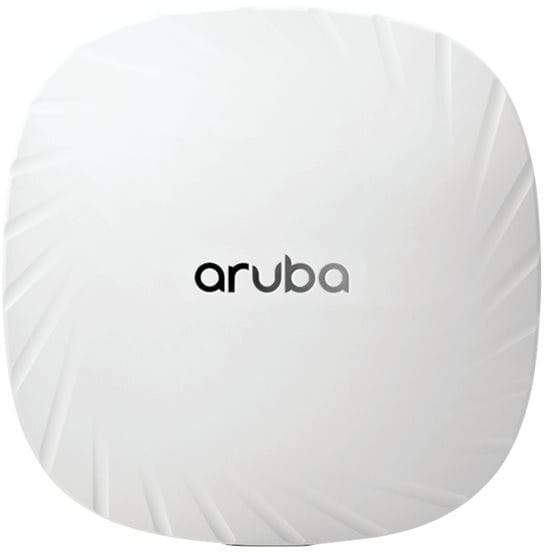
An RJ-45 Ethernet port, a 12 V DC input, a USB 2.0 port, a serial console on a micro-B connector, a reset button that also sets the LED mode, four multicolour LEDs and a Kensington lock against theft.
How much space does the AP-615 take up on the ceiling?
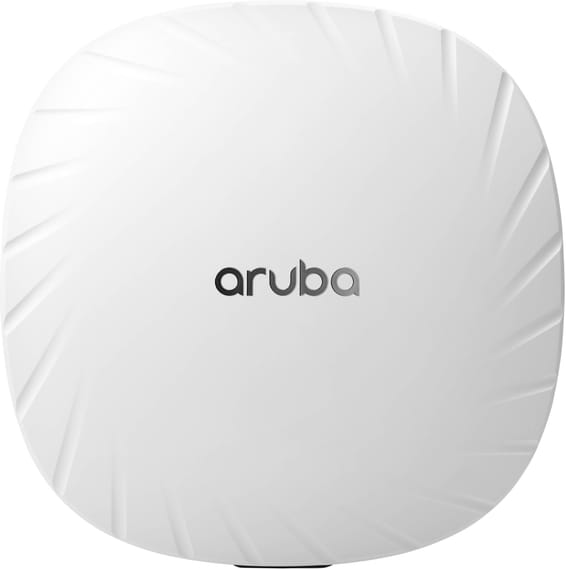
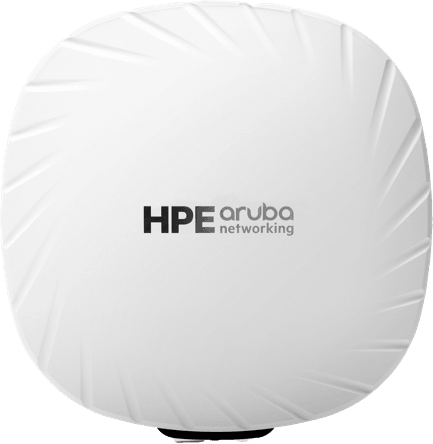
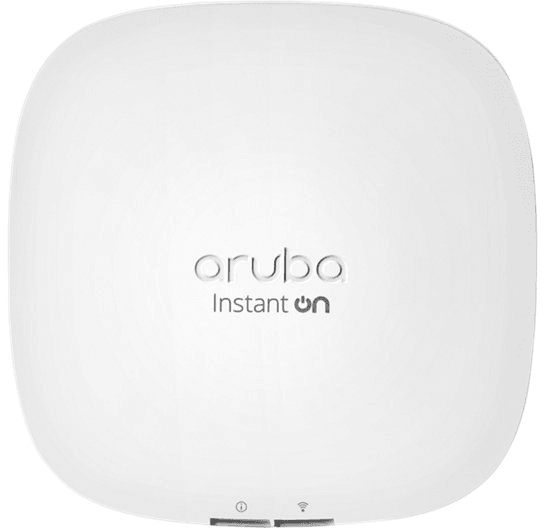
20.1 × 18.3 cm and 5.1 cm thick, weighing 720 g. Its antennas are built in and tilted downwards, with a gain of 2.8 dBi on 2.4 GHz and 4.5 dBi on the 5 and 6 GHz bands: nothing protrudes from the casing.
Does the AP-615 steer devices to the best access point on the network?
Yes, ClientMatch solves the problem of devices that stay stuck to a distant access point by redirecting them to the access point with the best signal. The effect is most noticeable on the move, between two rooms or in a corridor.
Is the equipment new and covered by a warranty?
Yes, new equipment, with the invoice serving as the warranty document. The manufacturer's detailed specifications are given in this document:
AP-615 (PDF).