

Ugreen
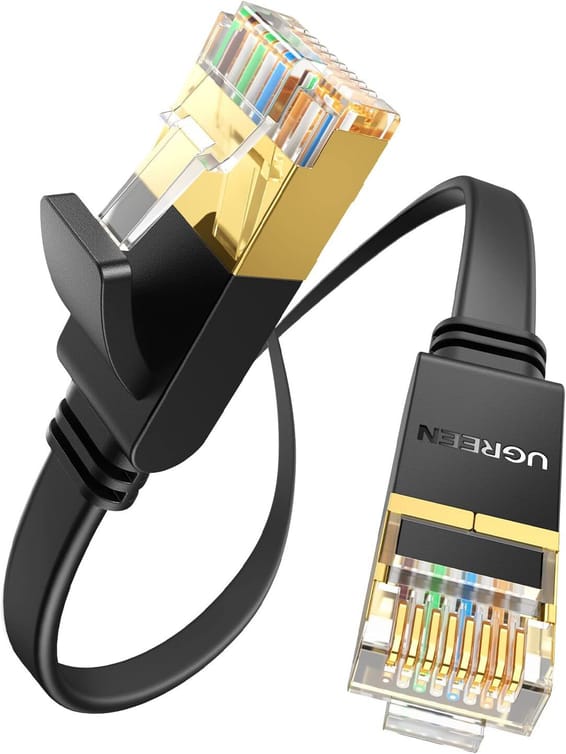
Ugreen Flat CAT7 U FTP RJ45 Ethernet Cable - 3 metres (11262)
In stock
85 DHincl. VAT85,00 DHincl. VAT
Delivery everywhereDelivered all over Morocco
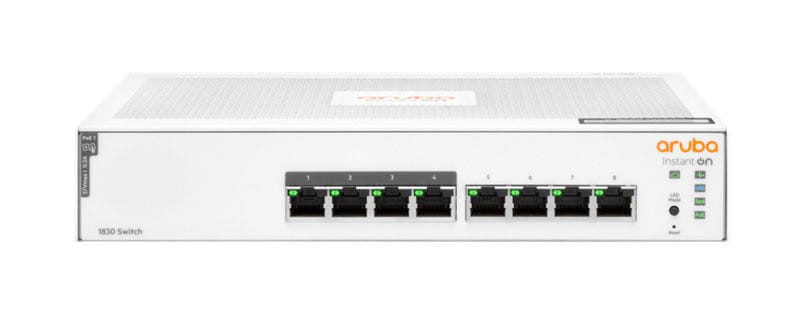
Layer 2 managed switch for a small office powering a few Wi-Fi or IP devices over Power over Ethernet, with monitoring and scheduling via the Instant On mobile app.
In stock
Earn 26 DH in loyalty credit with this purchaseHow does it work?Loyalty credit capped at 300 DH per order.
Delivery anywhere in Morocco
40 DH incl. VAT
Casablanca store
Free pickup
Témara pickup point
Free pickup
3 years warranty — free repair in Morocco if it breaks down during the warranty period
100% secure payment: Bank transfer · Bank card · Cash on delivery (deposit of 390 DH by card or bank transfer) · Certified cheque
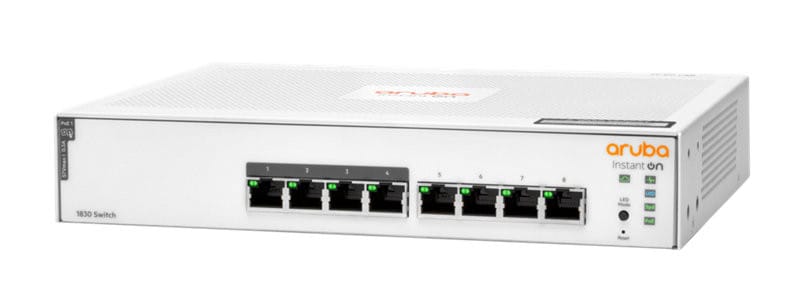
Aruba Instant On 1830 8-port managed switch with 4 PoE+ ports, for small offices powering a few wireless or IP devices in a quiet environment.
Connectivity: 8 10/100/1000BASE-T RJ45 ports, including 4 PoE+ ports (ports 1 to 4) — fanless design, completely silent.
PoE+: 65 W budget (IEEE 802.3af/at, Class 4), up to 30 W per port on the first 4 ports — for a Wi-Fi access point, IP phone or small camera.
Performance: 16 Gbit/s non-blocking switching capacity, 11.90 Mpps throughput, 8,000-entry MAC table.
L2 management: via the Aruba Instant On app and web portal — 802.1Q VLAN, QoS, port security, scheduled PoE power-off.
802.3ad LACP, STP/RSTP, IGMP snooping, 802.1X access control, RADIUS.
Compact desktop or 19" rack format; fanless, easy to set up with the mobile app.
| MAC table size | 8,000 entries |
|---|---|
| Internal memory | 512 MB SDRAM, 256 MB flash memory |
| Interfaces | 8 RJ-45 10/100/1000 ports including 4 Class 4 PoE |
| PoE ports | 4 Class 4 PoE ports, up to 30 W per port |
| Total PoE budget | 65 W |
| Network standards | IEEE 802.3u, 802.3z, 802.3ab, 802.3x, 802.1Q, 802.1p, 802.3ad, 802.1D, 802.1w, 802.3az, 802.1AB, 802.3ac, 802.3af, 802.3at |
| Switching capacity | 16 Gbps |
| Forwarding rate | 11.90 Mpps |
| Packet buffer | 1.5 MB |
| Management modes | Instant On cloud portal, mobile app, local web interface, SNMP manager |
| Cloud management platform | HPE Networking Instant On |
| Layer 2 features | Layer 2 Ethernet switching, Energy Efficient Ethernet 802.3az, PoE scheduling |
| IP routing | None |
| Stacking and expansion | Not stackable |
| Quality of service (QoS) | 802.1p and DSCP, 4 hardware queues |
| Power consumption | 86.07 W maximum (100-127 V), 8.3 W idle |
| Weight | 1.54 kg |
|---|---|
| Dimensions (W x D x H) | 245.1 x 195.1 x 43.9 mm |
| Processor | ARM Cortex-A9 at 800 MHz |
| Number of ports | 6 to 10 ports |
| Managed | Yes |
| Security features | VLAN, automatic denial-of-service protection, global storm control, TPM module |
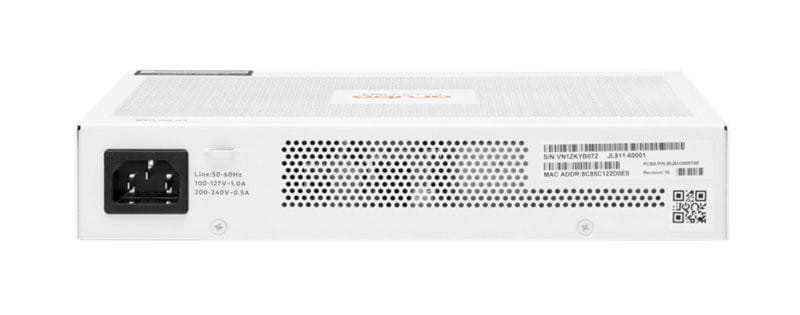
| Power supply | Internal 100-240 V AC power supply |
| Cooling system | Fanless |
| PoE power | Yes |
| Port speed | 1 Gbps (Gigabit) |
| Management level | Layer 2 |
| PoE standard | PoE+ (802.3at, up to 30 W/port) |
| PoE budget | Up to 65 W |
| Fibre slots (SFP) | No |
| Mounting | 19-inch rack-mountable |
| Warranty | 3 years |
No reviews yet
Be the first to review this product and help other customers.
Ugreen
In stock
Delivery everywhereDelivered all over Morocco
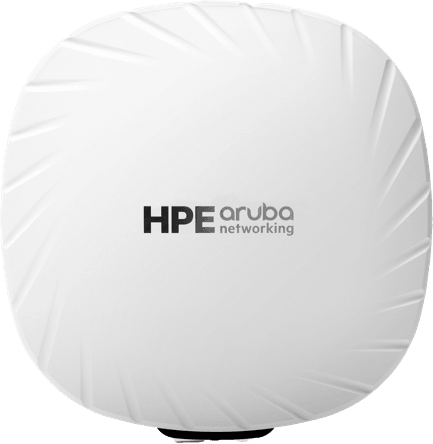
Aruba
In stock
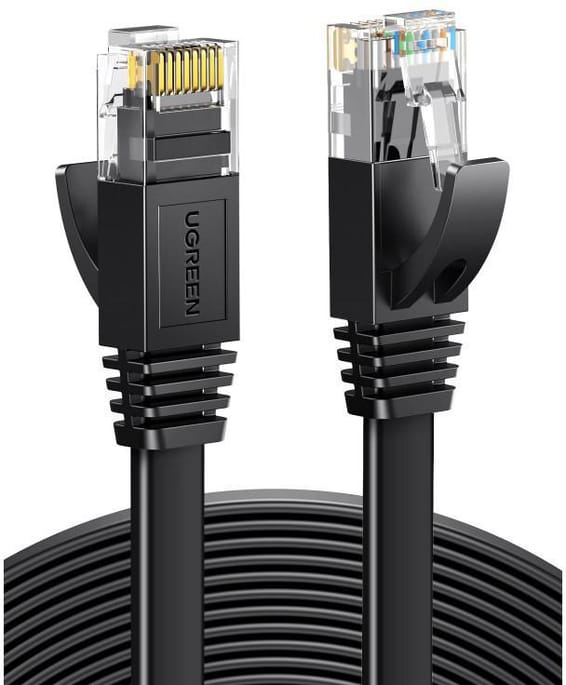
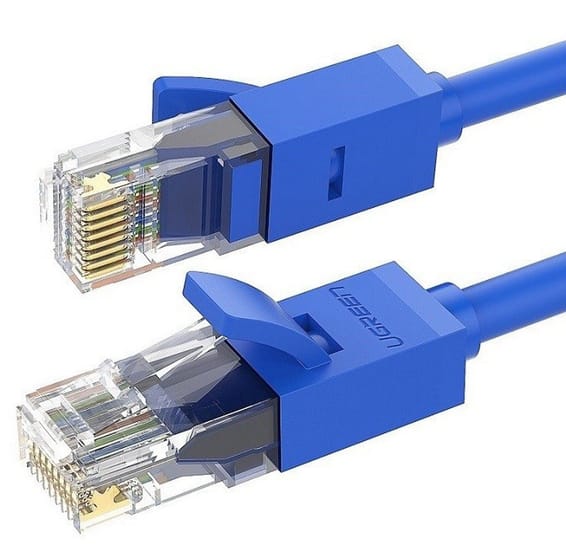
Ugreen
In stock

Eaton
In stock
Delivery everywhereDelivered all over Morocco
Delivery everywhereDelivered all over Morocco

Ruijie
Compact PoE+ access switch (802.3af/at standard) to power IP cameras, Wi-Fi access points or VoIP phones in small spaces. Gigabit/SFP combo uplink, managed through Ruijie Cloud.
In stock
Delivery everywhereDelivered all over Morocco

Aruba
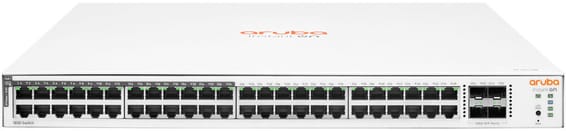
24 Gigabit ports, half of them PoE+ (ports 1 to 12) for medium-sized offices — simplified control from the Aruba Instant On app, with no subscription.

Grandstream
Each PoE+ port delivers up to 30 W, for a total budget of 120 W, rounded out by two fibre links. Managed from the GWN.Cloud platform or locally, with VLANs and advanced security.
HP
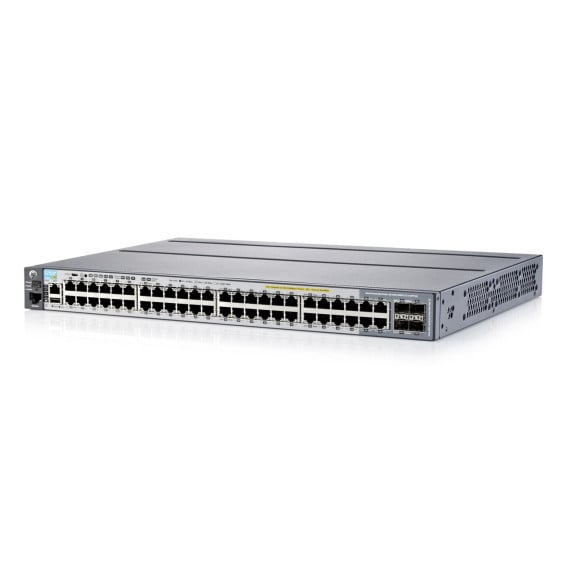
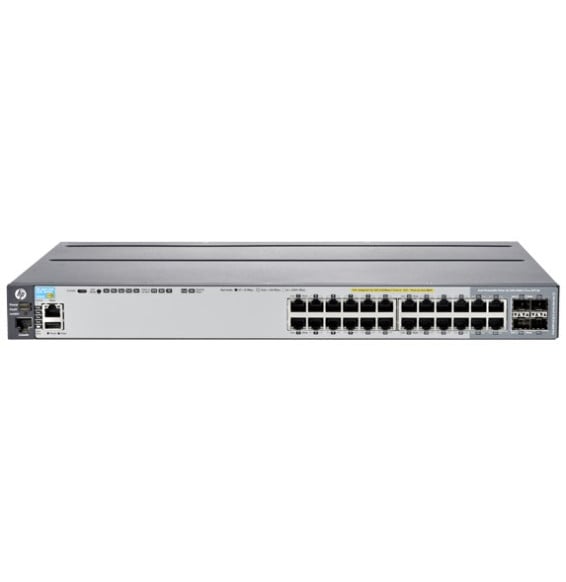
A managed enterprise switch that powers IP cameras, Wi-Fi access points and phones on every one of its ports, with no mains socket. Switching capacity 176 Gbps, stackable, upgradable to fibre.
HP
Layer 3 managed enterprise switch (static routing and RIP) that powers all its ports over the network cable, for cameras and Wi-Fi access points. Switching capacity 128 Gbps, upgradable to 10 Gbps fibre.
Aruba
48 Gigabit ports, half of them PoE+ (ports 1 to 24), for mixed SME or campus deployments — simplified control from the Aruba Instant On app, with no subscription.
Aruba
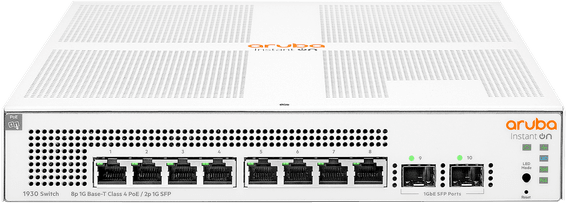
Silent power on every port: fanless design (zero decibels), suited to small offices, with simplified control from the Aruba Instant On app.
Aruba
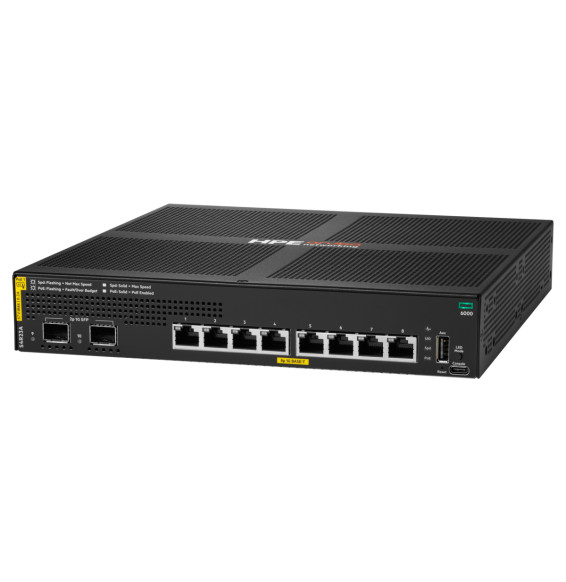
Eight PoE+ sockets to power Wi-Fi access points, cameras and IP phones, in a compact fanless unit you forget is in the office. Enterprise-grade AOS-CX system, managed from the cloud or the command line.

Ruijie
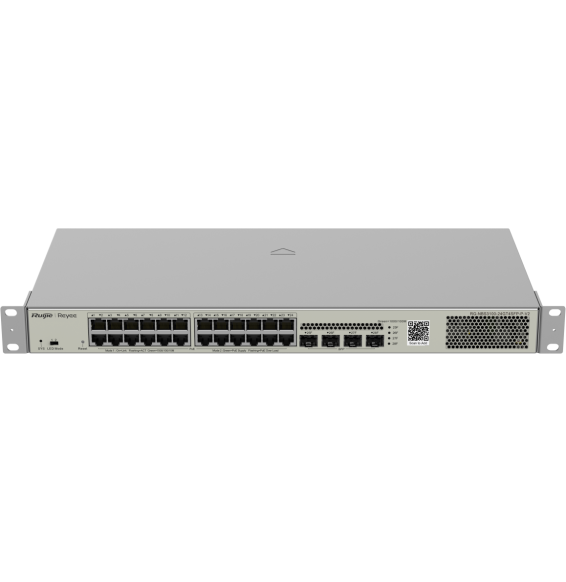
Designed for SMEs and video surveillance, in a 19″ rackable format: automatic IP camera recognition, PoE consumption alarm and remote port restart through Ruijie Cloud.
Ruijie
Designed for enterprise networks, with advanced security and automatic recognition of IP cameras. Lifetime management through Ruijie Cloud for monitoring and remote updates.
In stock
Delivery everywhereDelivered all over Morocco
In stock
Delivery everywhereDelivered all over Morocco
In stock
Delivery everywhereDelivered all over Morocco
In stock
Delivery everywhereDelivered all over Morocco
In stock
Delivery everywhereDelivered all over Morocco
In stock
Delivery everywhereDelivered all over Morocco
In stock
Delivery everywhereDelivered all over Morocco
In stock
Delivery everywhereDelivered all over Morocco
In stock
Delivery everywhereDelivered all over Morocco