Can the EAP650-Desktop power another device over PoE?
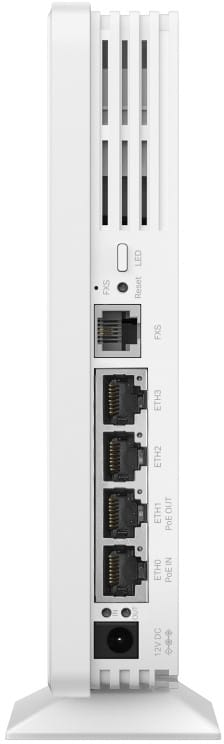
Yes, one of its Ethernet ports passes PoE through, but the power available depends on the input: when powered by 802.3bt, the access point outputs 802.3at or af; when powered by 802.3at, it outputs only 802.3af Class 2.
What is the RJ11 port on the EAP650-Desktop for?
It is an FXS phone port: it lets you connect an ordinary analogue telephone to the access point, in addition to the four Ethernet ports. Useful in a room or small office where a wired phone is still in use.
How many network ports does the EAP650-Desktop provide?
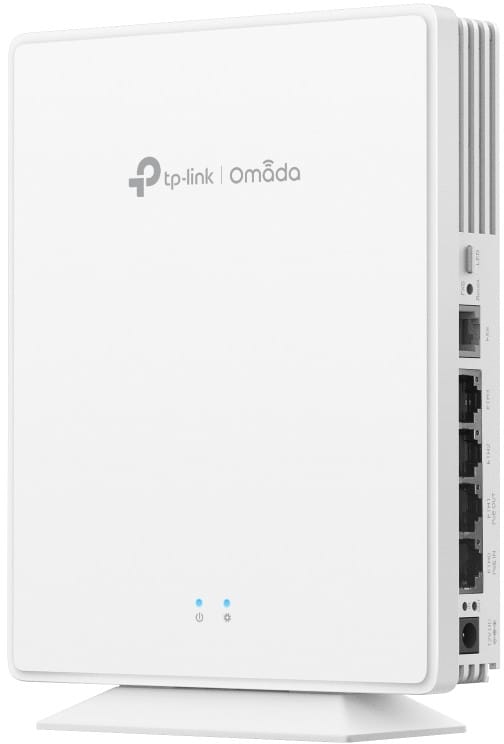
Four Gigabit ports, one of which passes PoE through and one of which receives power. Placed on a desk, the access point can therefore replace a small switch: a desktop computer, a printer and a phone connect straight to it.
What power supply does the EAP650-Desktop need?
PoE at 802.3af, at or bt, or a 12 V / 1.5 A DC supply. Its consumption reaches 17.3 W with PoE pass-through disabled, so an 802.3at port is what you should aim for; 802.3bt is only needed for PoE pass-through at full power.
Do I need to drill into a ceiling to install the EAP650-Desktop?
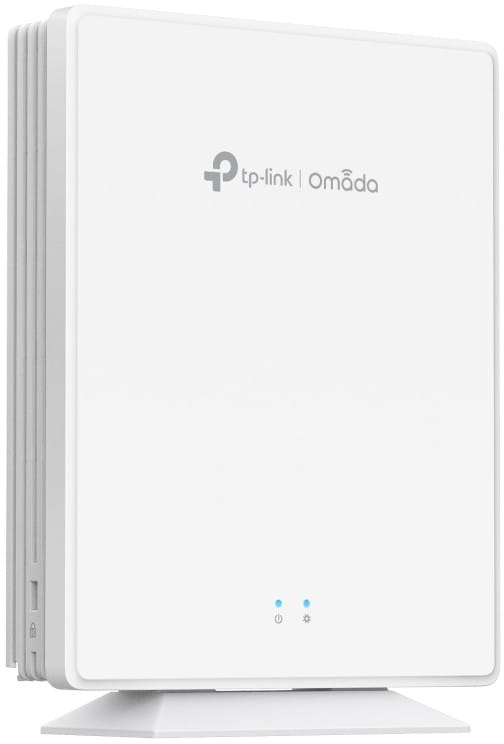
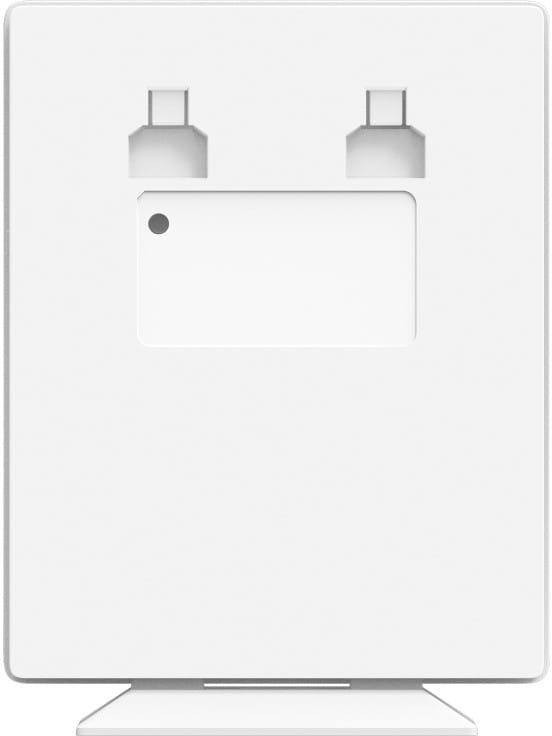
No, that is the whole point of this model: it sits on a desk or mounts on a wall with the mounting kit supplied. No overhead cabling is needed, which suits rented premises or a temporary installation.
How many devices can the EAP650-Desktop serve at the same time?
More than 250, over a stated coverage of 140 m², measured in the lab. Real-world capacity depends on the radio environment and the traffic, and in practice remains below the maximum number of connections.
Does the EAP650-Desktop's captive portal work without a controller?
No: seamless roaming and the captive portal require an Omada SDN controller — software, hardware or cloud. The access point broadcasts Wi-Fi perfectly well without one, but these two features only become available once the access point has been adopted.
Does the EAP650-Desktop support WPA3?
Yes, in both Personal and Enterprise versions, with a guest network, client isolation and rogue access point detection. Up to 16 Wi-Fi networks can coexist, each with its own rules.
What throughput does the EAP650-Desktop deliver?
2,402 Mbps on the 5 GHz band and 574 Mbps on 2.4 GHz, i.e. the AX3000 class of Wi-Fi 6. MU-MIMO only takes full effect, however, if the client device supports it too.
How much space does the EAP650-Desktop take up on a work surface?
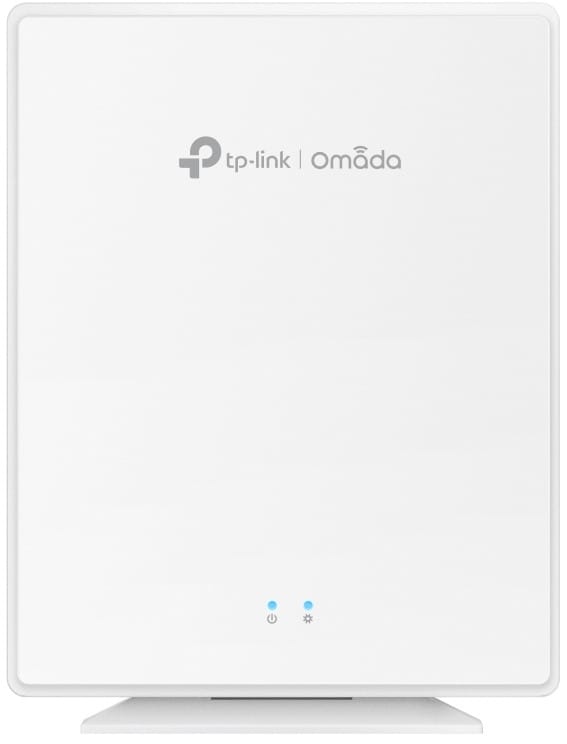
175 × 140 × 33 mm and 452 g excluding the mounting base: the footprint of a small network box. Its antennas are internal and omnidirectional — 2 × 5 dBi on 2.4 GHz and 3 × 4.7 dBi on 5 GHz.
Can I add an access point where no network cable reaches?
Yes, the EAP650-Desktop supports Omada mesh: the new access point connects to the network wirelessly rather than by cable. It must still be powered on site, via PoE or from the mains.
In what conditions does the EAP650-Desktop operate?
Indoors, between 0 and 40 °C, with 10 to 90 % non-condensing humidity. A dedicated button switches off the LEDs, which matters for an access point sitting in plain view on a desk.
Is the equipment new and under warranty?
Yes, new equipment, with the invoice serving as the warranty document for 1 year. The access point fits into the Omada ecosystem alongside the range's switches and gateways, all managed from the same interface.