nJoy Balder 6000 Online UPS - 6000 W / 6000 VA - Terminal block (PWUP-OL06KBA-AZ)
Online double-conversion UPS rated 6000 VA for 6000 W, with no internal battery: it runs on one to four external cabinets. With one 2U cabinet of 16 HR09122F batteries, it holds 17 min at half load and 5 min at full load.
6000 VA / 6000 W: output power factor 1.0
Online double conversion, zero transfer time
External batteries only: 2U or 3U cabinet, up to 4
1 x 2U cabinet (16 x HR09122F): 17 min at 50%, 5 min at 100%
An online UPS for servers and critical racks: 6000 VA / 6000 W, double conversion and a 2U rack format convertible to tower. Protection: power continuously regenerated, zero transfer time, pure sine wave regulated to ± 1%. Batteries: external only, in a 2U or 3U cabinet (up to 4), not included. Runtime: 17 min at 50% load with one 2U cabinet of 16 HR09122F batteries. Connection: terminal block on input and output, installed by an electrician. Management: USB, RS232, SNMP card slot, EPO and LCD screen. The power of a large online tower UPS in 2U of rack space, with the runtime you size.
An online double-conversion UPS whose output matches its apparent power: 6000 VA, 6000 W. It slides into a 19-inch rack or stands as a tower, and draws its energy from battery cabinets sized to the backup time you need.
6000 WPower factor 1.0
0 msTransfer to battery
2 URack height
4Battery cabinets at most
Runtime is built cabinet by cabinet
The Balder 6000 holds no battery: all its backup comes from outside. It connects to Balder cabinets, the 2U with 16 blocks of 12 V, the 3U with 20, and accepts up to four. Its charger is adjustable from 1 to 4 A and the charging voltage is set according to the number of blocks per string: the same unit covers a simple orderly server shutdown or a long outage.
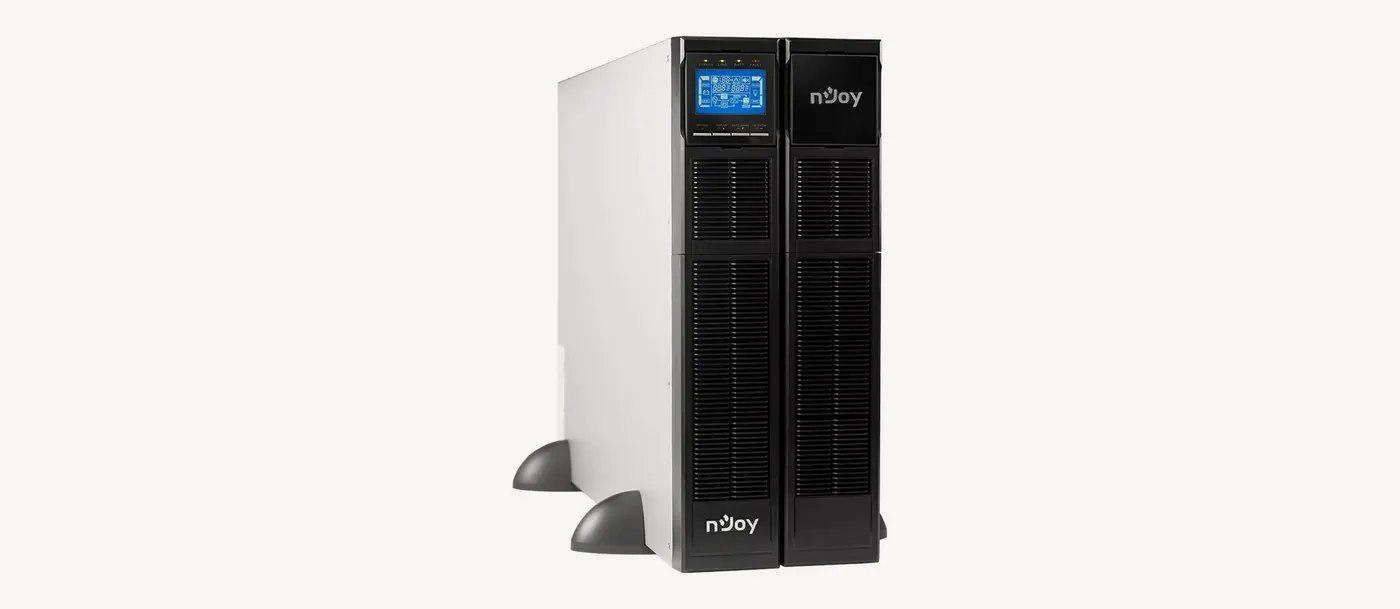
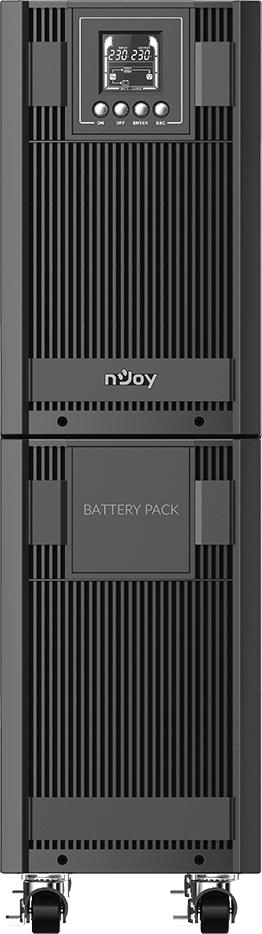
On the right, the 2U cabinet: sold separately, supplied without its 16 batteries.
With a single 2U cabinet filled with new HR09122F batteries, the stated times range from five minutes at full load to more than forty minutes at a light load.
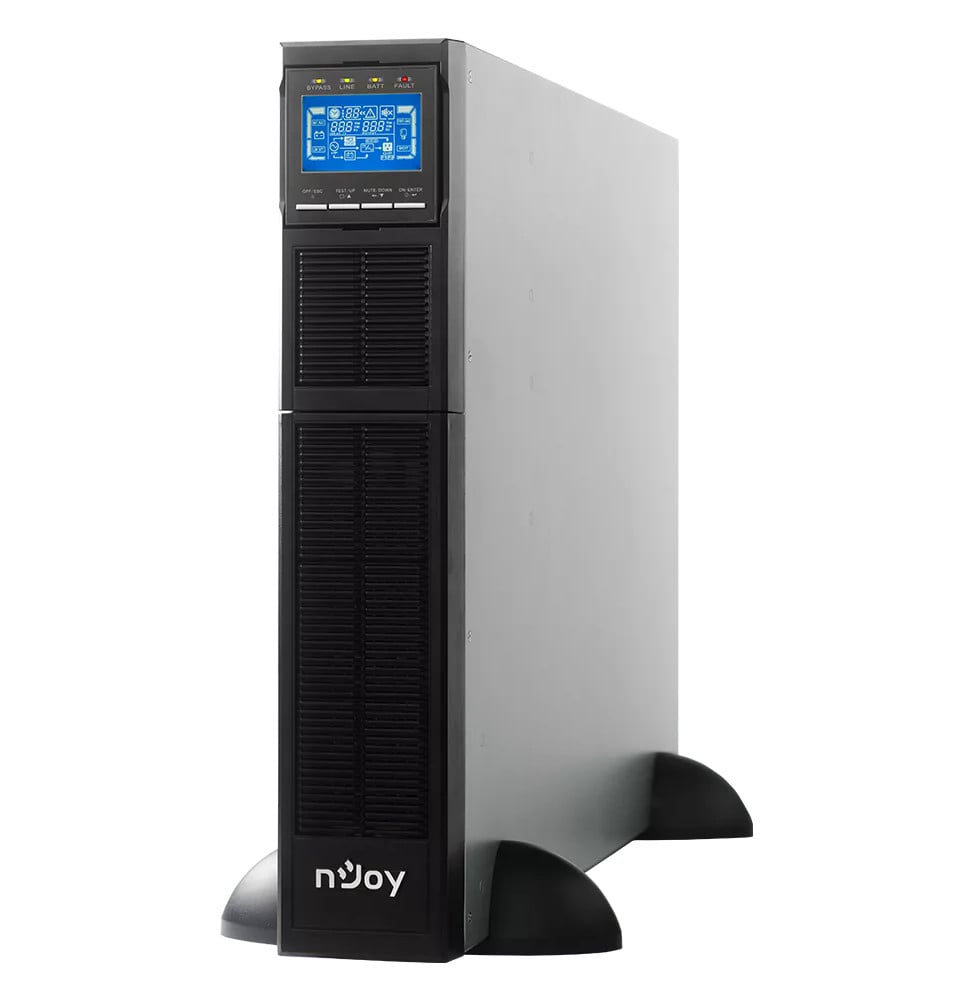
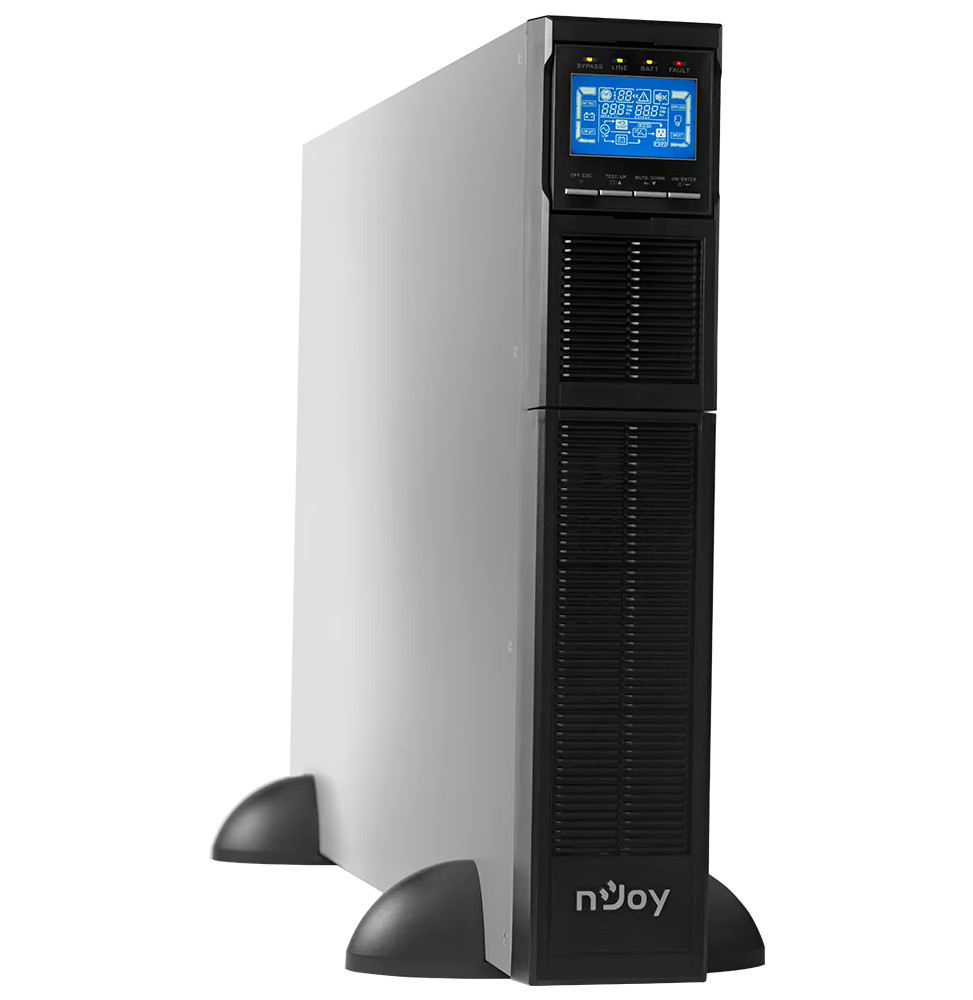
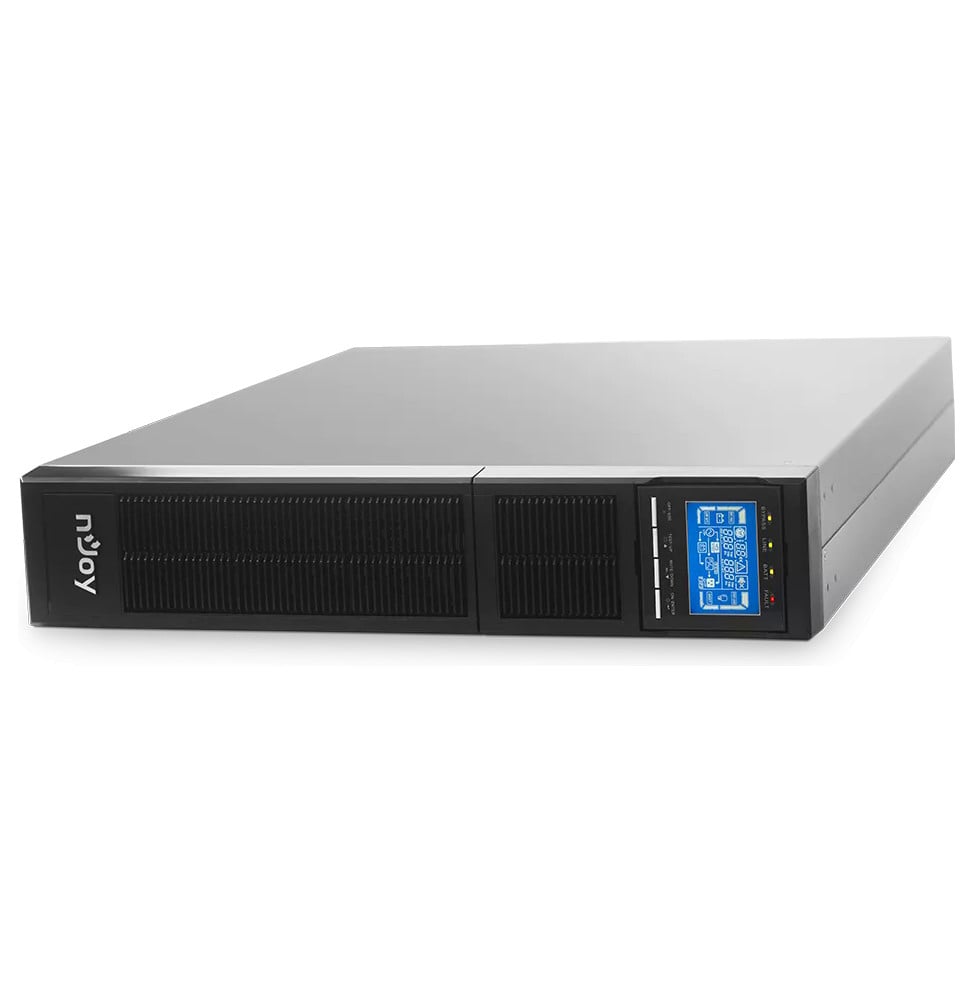
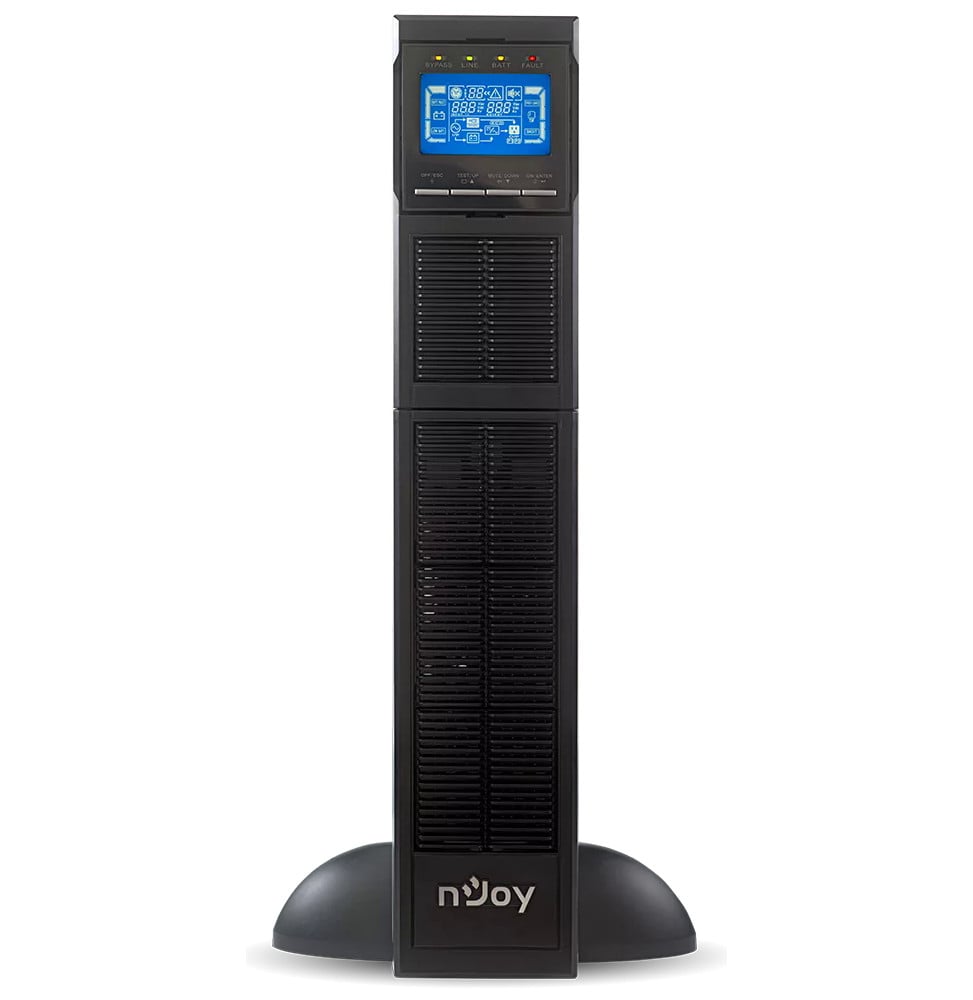
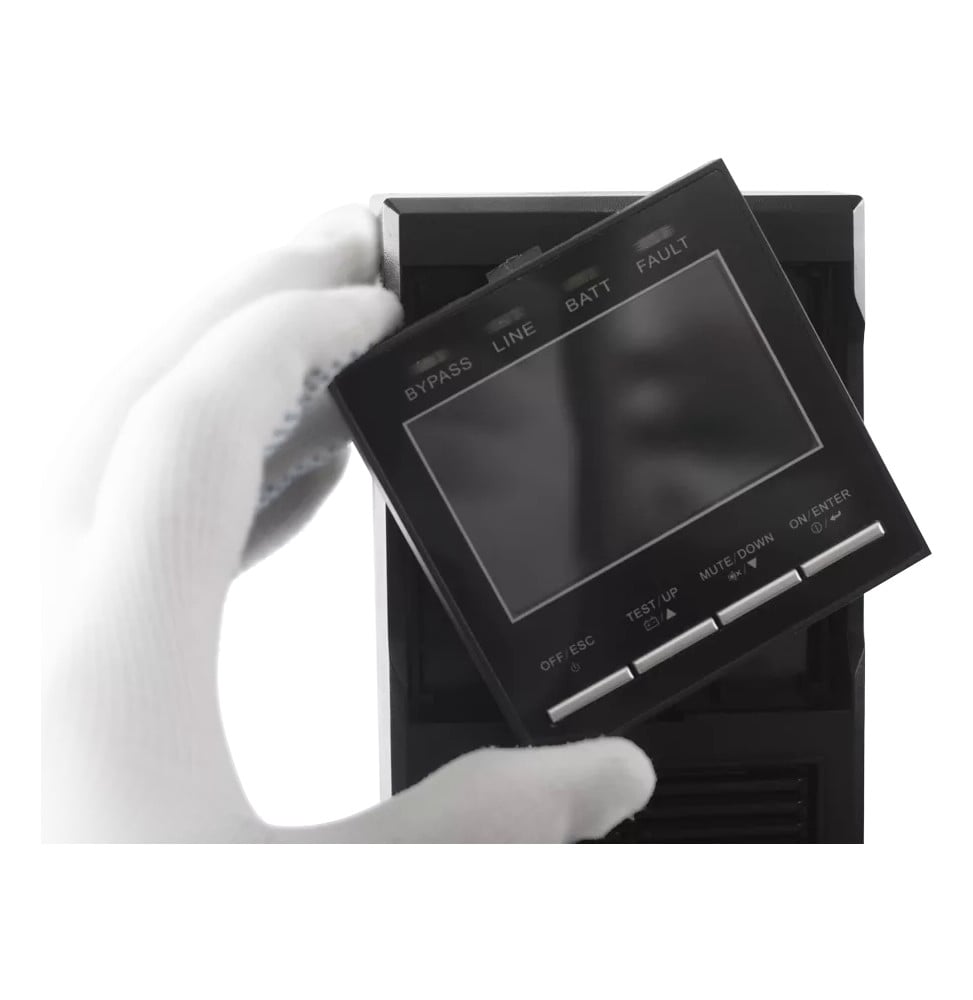
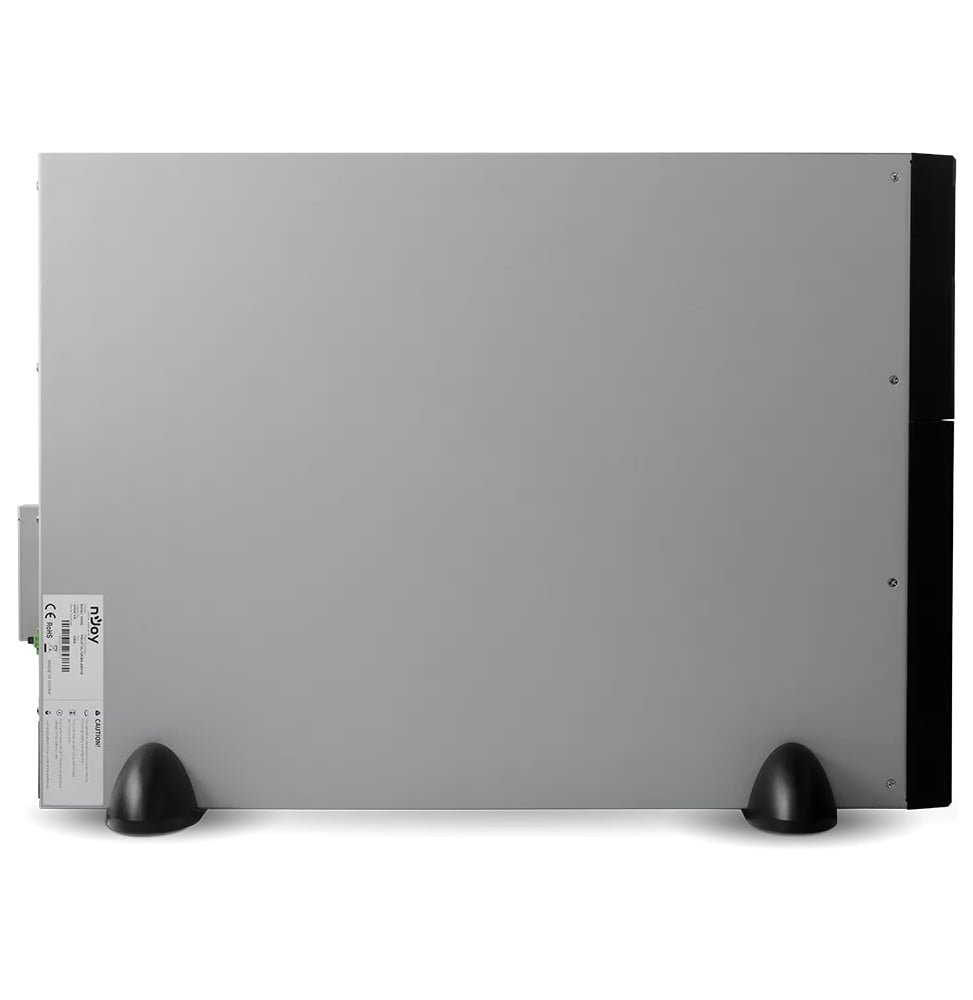
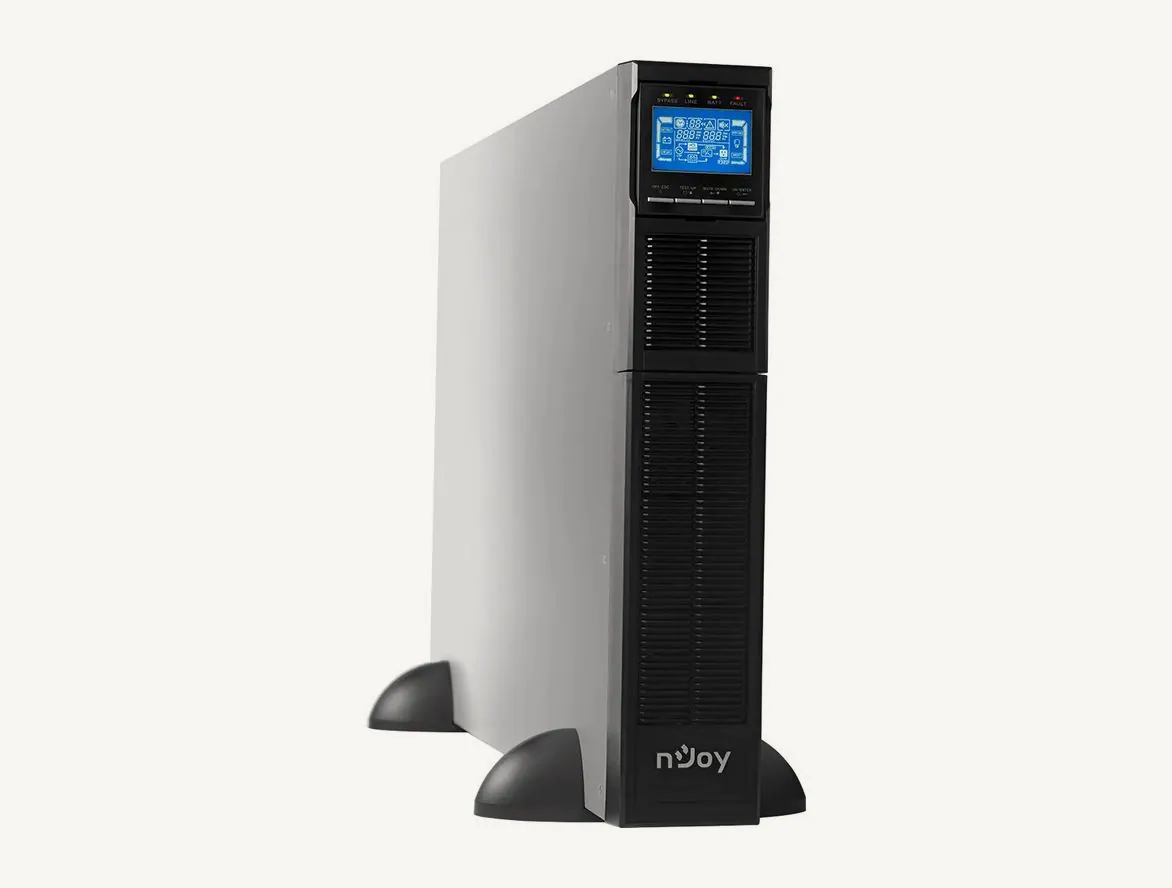
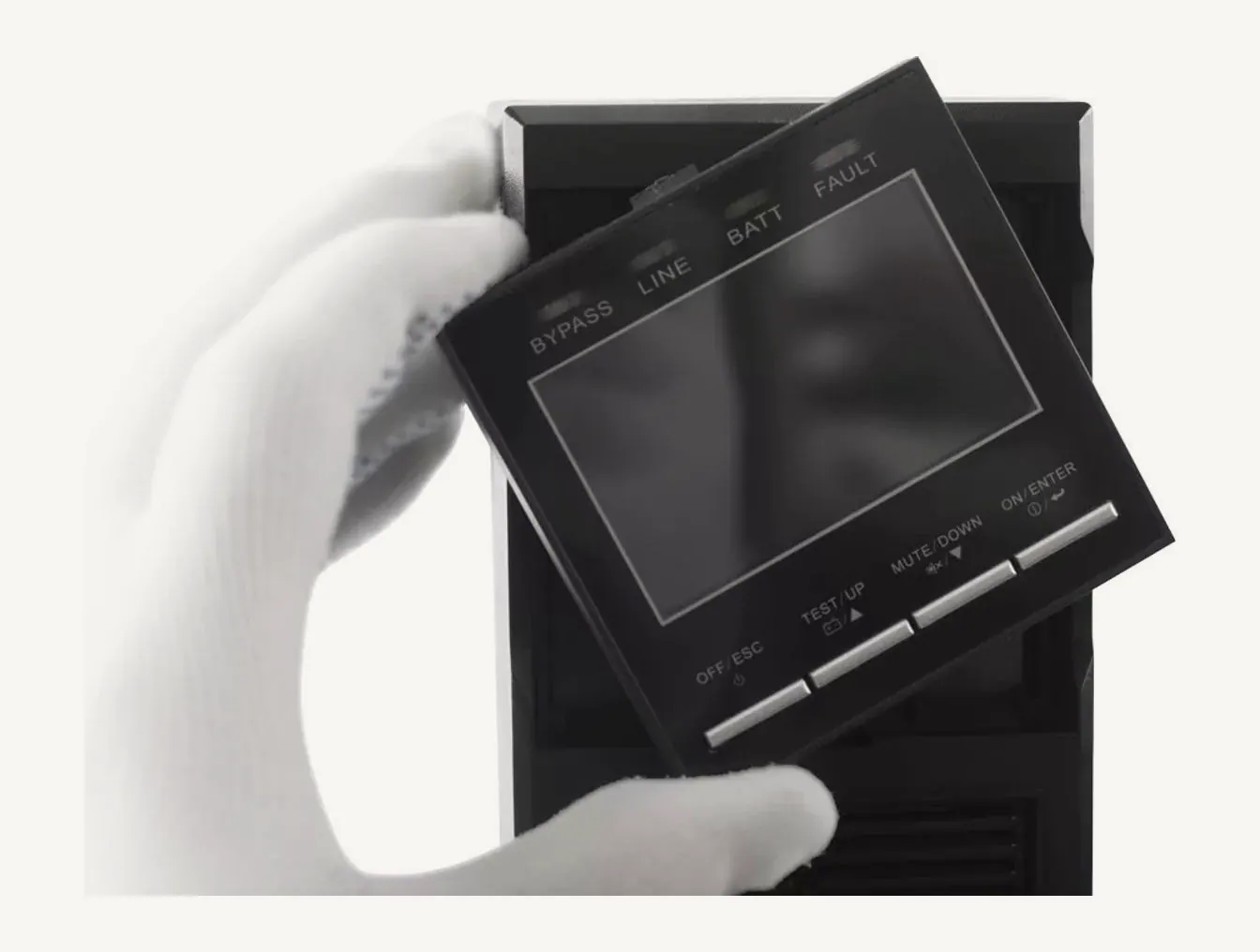
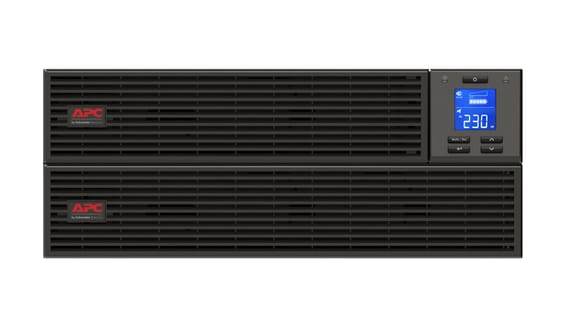
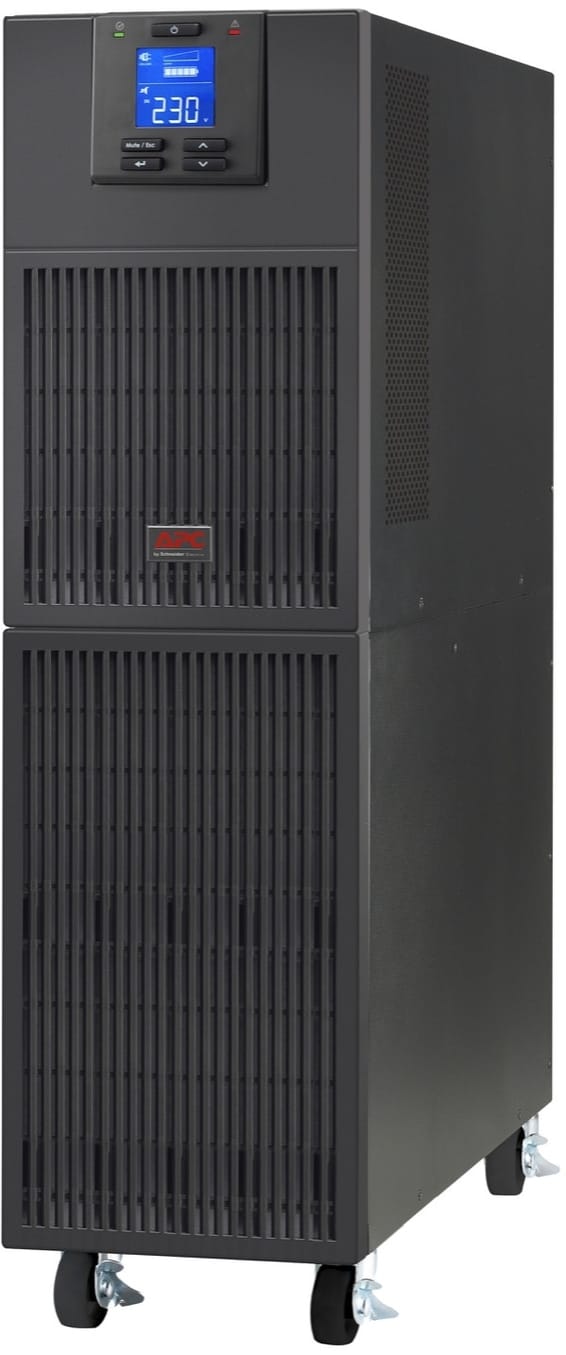
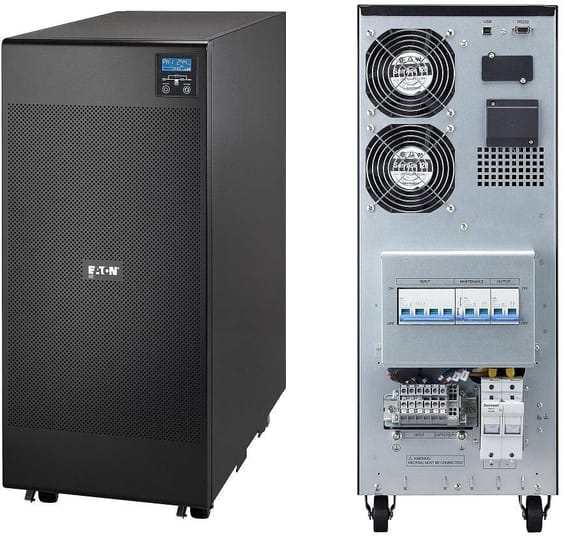
Standing on its feet, it takes a corner of a technical room; laid flat in a rack, it uses only two units. The display module comes out of the front panel to be refitted the right way up, so the screen stays readable in both positions.
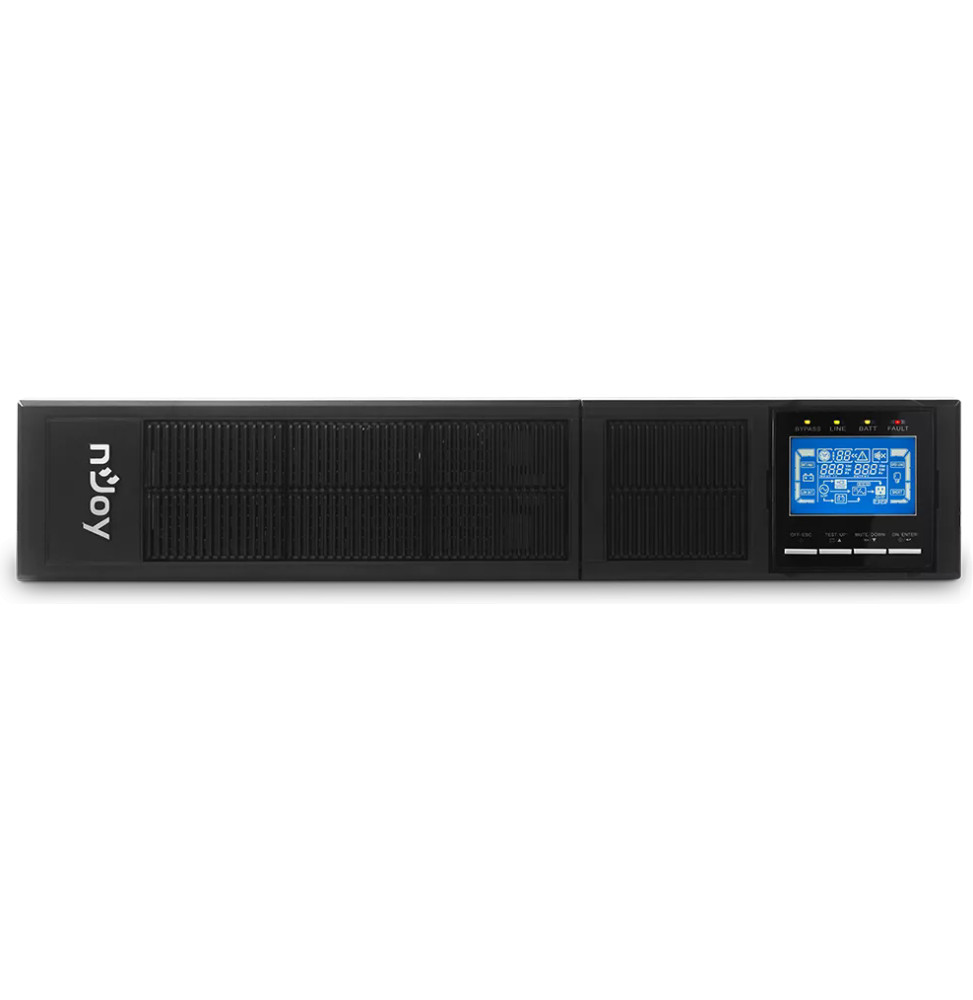
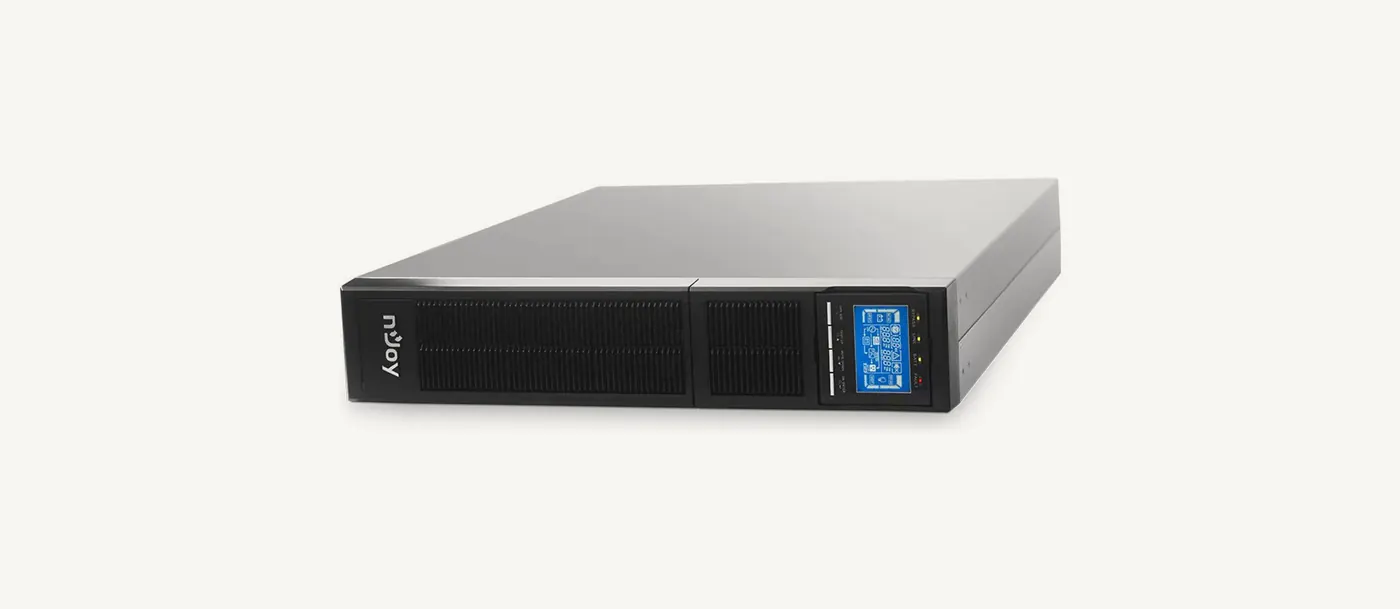
Laid flat in 2U: same front panel, display turned back to horizontal.
The screen shows the UPS status, load, battery level, input and output voltages and a discharge timer. Four LEDs, bypass, mains, battery and fault, can be read from a distance; four keys are enough to test, silence the alarm and navigate.
An unstable grid does not tip it over
Up to 60% load, it accepts an input of 110 to 300 V without drawing on its batteries, and it is generator compatible. On the grid side it stays discreet: a power factor of at least 0.99 at full load and a clean input current, with under 4% harmonic distortion at 100% load and under 6% at half load. At the output, the waveform is a pure sine wave and efficiency reaches 94% in double conversion, 96% in ECO mode.
Fixed wiring, open monitoring
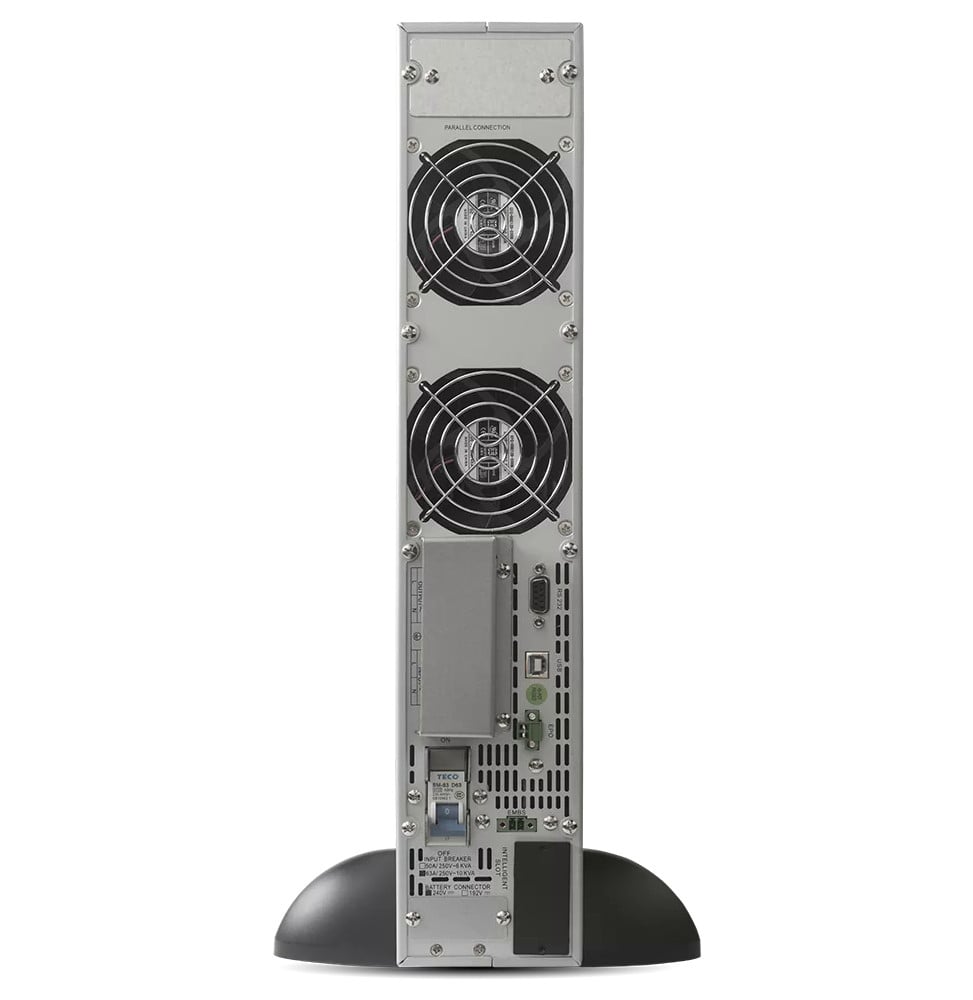
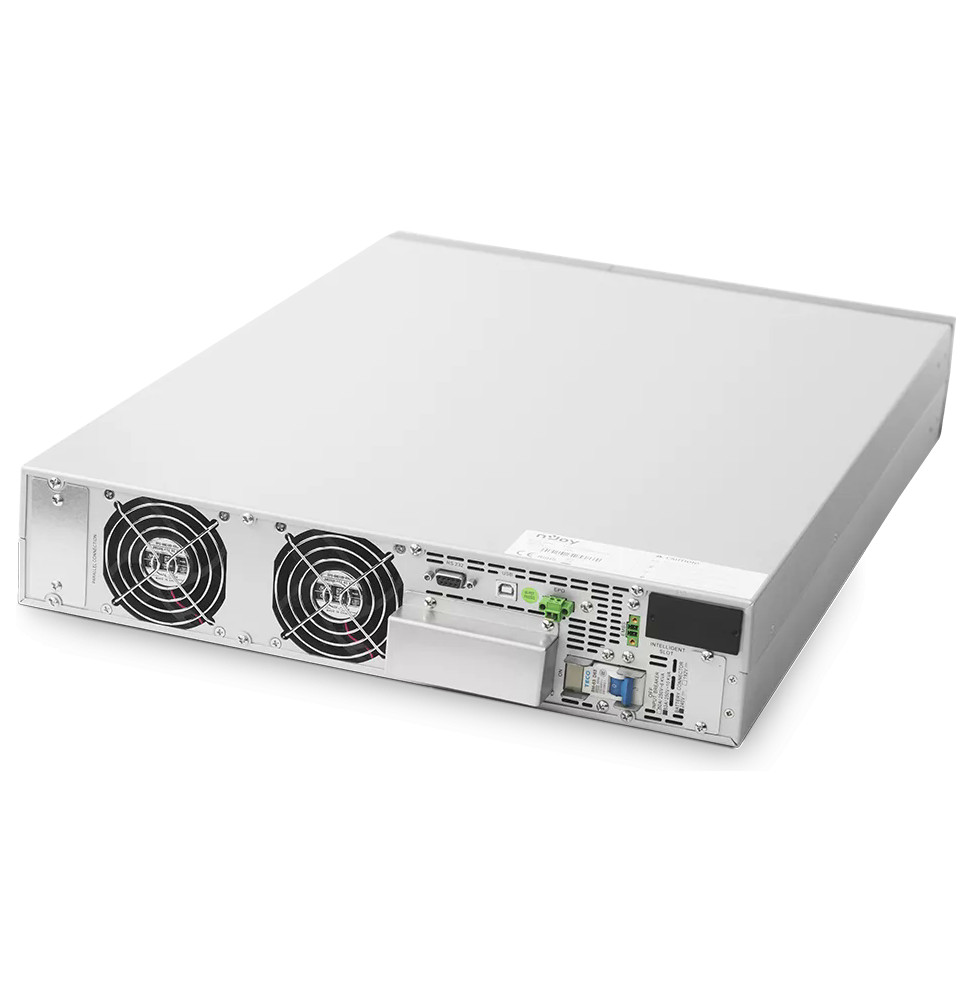
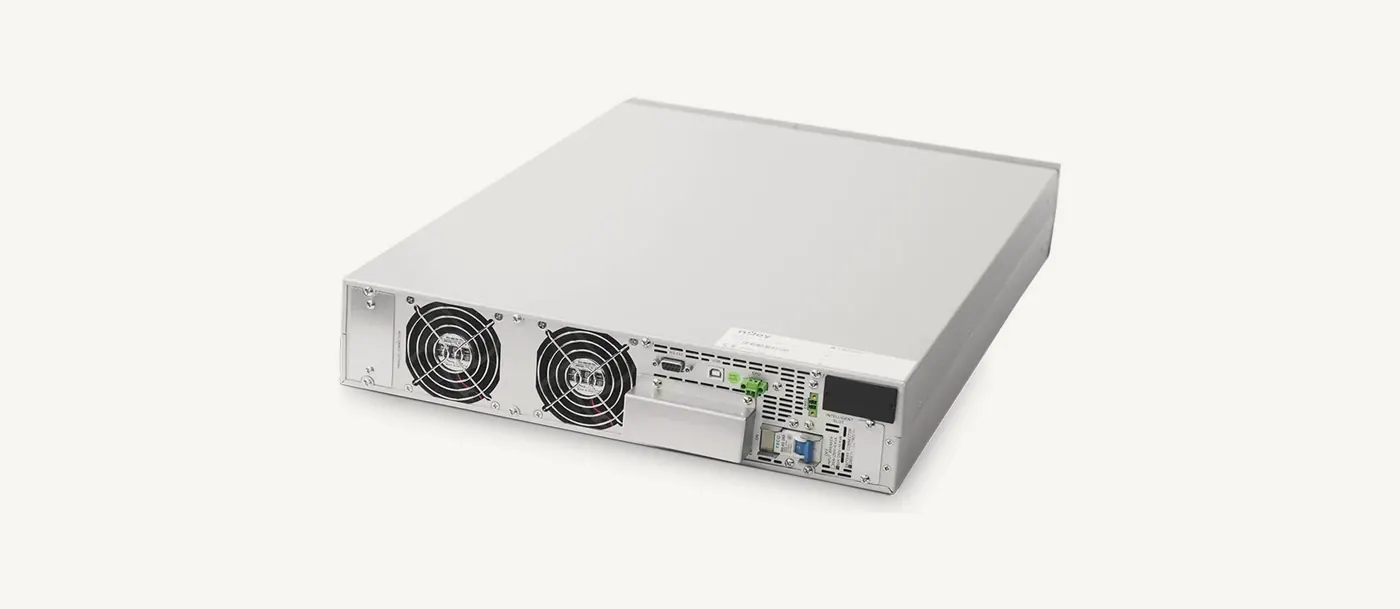
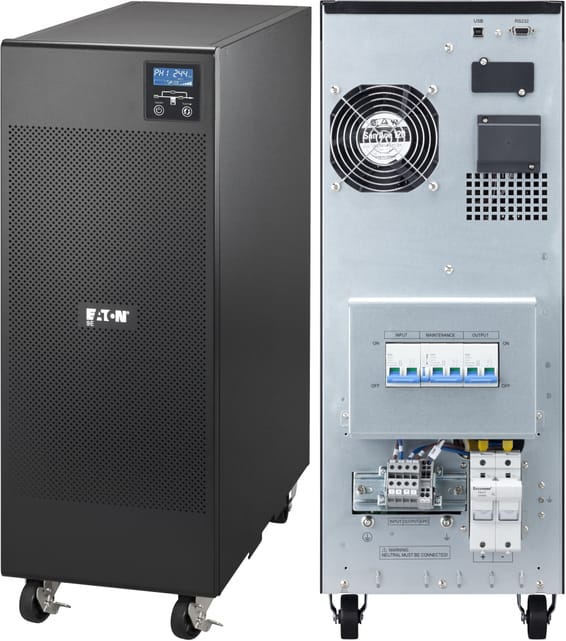
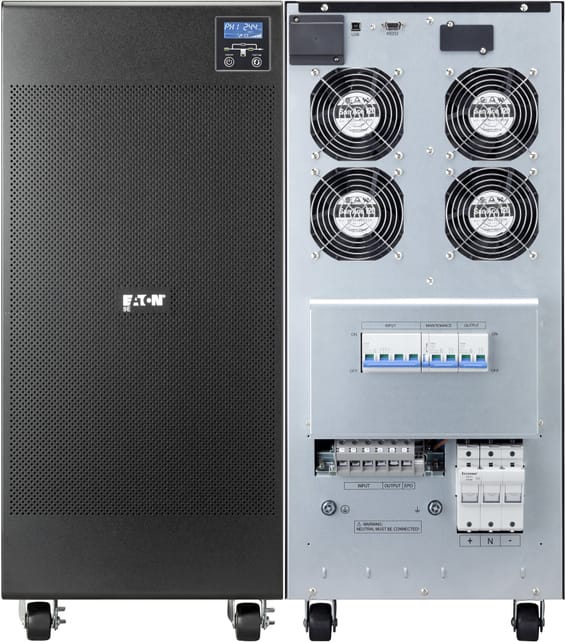
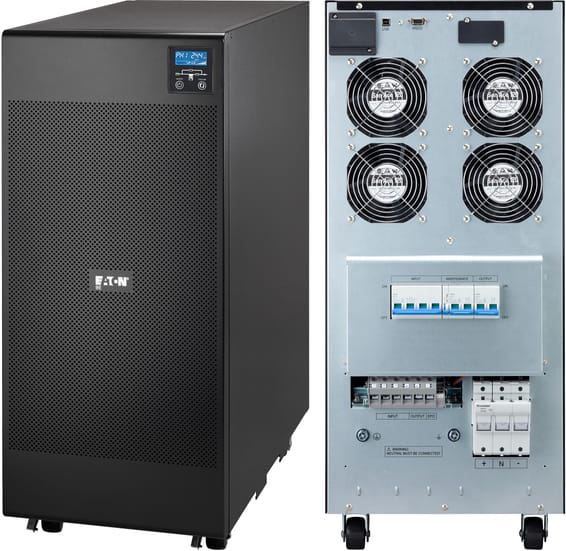
Input and output are wired on a terminal block by an electrician: there are no sockets at the back. For monitoring, the UPS offers USB and RS232 ports, an emergency power off (EPO) input and an intelligent slot that takes an SNMP card to follow it over the network. Two fans blow out through the rear panel: its place is in a technical room or a ventilated rack, not in an office.
Rear panel: the two fans and the connections.
Input distortion
< 4% at 100%, < 6% at 50%
Frequency converter
Power derated to 60%
Compatible cabinets
Balder 2U or 3U
Parallel operation
Up to 3 UPS units
Manufacturer model
PWUP-OL06KBA-AZ01B
Without a filled cabinet, the Balder 6000 provides no backup at all: order it with at least one Balder cabinet and its batteries, and plan an electrician for the terminal block connection.
Find the other models in the online UPS section and the whole range on the nJoy page.
Values taken from the nJoy Balder 6000 datasheet (PWUP-OL06KBA-AZ01B) and its official product page. Runtimes measured by the manufacturer on new, fully charged batteries.
Technical specifications
Technical specifications
Output voltage
208 / 220 / 230 / 240 V selectable, ± 1% on battery (power derated to 90% at 208 V)
Waveform type
Pure sine wave
Output harmonic distortion
≤ 1% with linear load, ≤ 4% with non-linear load
Output connections
Terminal block
Input voltage
230 V
Input frequency
50 Hz / 60 Hz (auto-sensing), range 46 - 54 Hz
Input connections
Terminal block
Voltage range
110 - 300 V up to 60% load; 140 - 300 V from 60 to 80%; 176 - 300 V from 80 to 100%
Battery type
12 V lead-acid, 16 to 20 blocks per string, in an external cabinet — not included
Battery management
Charging current adjustable from 1 to 4 A; charging voltage 13.65 V per battery (218 V for 16 batteries)
Interface port
USB, RS232, intelligent slot for SNMP card (optional), emergency power off (EPO)
User interface
LCD screen (status, load, battery level, input and output voltages, discharge timer, faults) and bypass, mains, battery and fault LEDs
Audible alarm
Battery mode, low battery, overload, fault
Power management software
ViewPower (ViewPower Pro with the SNMP card)
Weight (kg)
14.5 kg without batteries (17 kg packaged)
Dimensions (W x D x H) (mm)
438 x 600 x 88 mm (2U)
IP protection rating
IP20
Technology
On-line
Power (VA)
6,000 VA
Voltage stabiliser
Yes
Preinstalled batteries
0 (internal batteries not supported: external cabinet required)
Replacement battery
HR09122F (ref. BTVACIUOCTD2FBT01B) for the stated runtime
Communication card slot
Yes: intelligent slot for SNMP card, optional
Rack height
2U
Technical specifications (continued)
Surge protection and filtering
600-joule surge protector
Transfer/switching time
0 ms (mains to battery and inverter to bypass)
Bypass
Automatic bypass, uninterrupted transfer
Emergency power-off switch
Yes (EPO)
Audible noise
< 55 dB at 1 m
Certifications
Directive 2011/65/EU (RoHS)
Operating temperature
0 to 40 °C
Operating humidity
0 to 95% non-condensing
Storage temperature
-15 to 45 °C
Power factor (ratio)
1.0
Crest factor
3:1
Input power factor
≥ 0.99 at full load
Output frequency
Synchronised with the mains (46 - 54 Hz); 50 Hz ± 0.1 Hz on battery
Phase (output/input)
Single-phase / Single-phase (with earth)
Eco mode efficiency
≥ 96%
Overload capacity
Mains: 100-110% for 10 min, 110-130% for 1 min, above that 1 s; battery: 100-110% for 30 s, 110-130% for 10 s, above that 1 s
Double-conversion efficiency
≥ 94% in mains mode, ≥ 91% on battery
Output type
Terminal block
Power (W)
6,000 W
Runtime
With one 2U cabinet of 16 HR09122F batteries: 42 min at 25% load; 17 min at 50%; 9 min at 75%; 5 min at 100%
External battery packs
Up to 4 cabinets: Balder Battery Pack 2U (16 batteries) or 3U (20 batteries), sold separately
Be the first to review this product and help other customers.
Write a review
Frequently asked questions about this product
Are batteries included with the Balder 6000?
No. The Balder 6000 accepts no internal battery: it connects to an external battery cabinet, the Balder Battery Pack 2U (16 batteries) or 3U (20 batteries), sold separately and itself supplied empty. For a complete installation, plan for the UPS, at least one cabinet and its 12 V batteries of 7 or 9 Ah.
What runtime do you get with a 2U cabinet?
With a 2U cabinet filled with 16 HR09122F batteries, new and fully charged: 42 min at 25% load, 17 min at 50%, 9 min at 75% and 5 min at full load. These times vary with battery age, temperature and the nature of the load: start from the measured consumption of your equipment to choose the number of cabinets.
Can the runtime be extended by adding cabinets?
Yes: the UPS accepts up to 4 external battery cabinets, 2U or 3U. Its charger is adjustable from 1 to 4 A to recharge a larger battery bank, and the charging voltage is set according to the number of batteries per string, from 16 to 20. Each added cabinet increases the energy reserve available at the same load.
How many usable watts does 6000 VA give?
6000 W: the output power factor is 1.0, so all the apparent power is available in watts. Only setting the output to 208 V derates the power to 90%. Add up the actual consumption of your servers, storage arrays and network equipment, keeping a margin below these 6000 W.
How is the Balder 6000 connected and installed?
On a terminal block, for both input and output: there are no sockets, the wiring is fixed and must be done by an electrician. The unit mounts in a 19-inch rack over 2U or stands as a tower. Input and output are single-phase, 230 V nominal, and the output voltage can be set to 208, 220, 230 or 240 V.
What does online double conversion offer compared with a line-interactive UPS?
The output power is continuously regenerated: the equipment never depends directly on the mains and the transfer time is zero, to the battery as well as to the bypass. The waveform is a pure sine wave, regulated to ± 1% on battery, with distortion of at most 1% on a linear load: exactly what server power supplies expect.
Does it work on an unstable grid or behind a generator?
Yes: it is generator compatible and accepts an input of 110 to 300 V up to 60% load, 140 to 300 V up to 80% and 176 to 300 V beyond, over a 46 to 54 Hz range. It therefore stays in mains mode despite large voltage swings, without drawing on the batteries at every dip.
Can the UPS be monitored remotely?
Yes: it has USB and RS232 ports and an intelligent slot that takes an optional SNMP card, for monitoring over the local network or the Internet with the ViewPower Pro software. On site, the LCD screen shows status, load, battery level, voltages and faults; an EPO input allows emergency shutdown.
Can several Balder 6000 units be installed in parallel?
Yes, up to 3 Balder 6000 units can operate in parallel. It is the way to secure a critical load through redundancy or to get more power than a single unit delivers. Like the rest of the installation, the parallel connection is made on the terminal block.
Where should the Balder 6000 be installed, and is it noisy?
It emits less than 55 dB at 1 m: its place is in a rack or a technical room rather than in an occupied office. It operates between 0 and 40 °C, up to 95% humidity without condensation, measures 438 × 600 × 88 mm and weighs 14.5 kg without batteries.
How does it react to an overload?
In mains mode, it withstands 10 min between 100 and 110% load, 1 min between 110 and 130% and 1 s beyond; on battery, these times drop to 30 s, 10 s and then 1 s. A 600-joule surge protector and overload, low-battery and fault alarms complete the protection of the equipment.
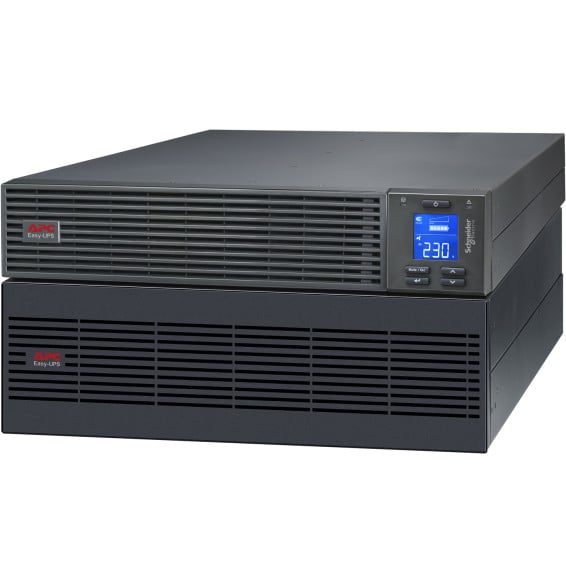
A 6000 VA / 6000 W double-conversion online UPS delivered complete: 2U power module, 3U SRV240RLBP-9A external battery pack and rail kit. Terminal-block connection, pure sine wave output, 94 % efficiency and runtime expandable up to four packs.
Three reinforced 16 A outlets for power-hungry hardware, eight server outlets, and batteries that are changed without cutting the power. Under 40 dB at one metre, in a rack as in a tower.
•8 C13 outlets: the format of computer and server power cords
Four U in a rack and a battery recharged in 3 hours: it is ready to go again quickly after a cut. Around 11 minutes of runtime at half load (3000 W) and 7 minutes at 70%.
Floor-standing, 68.5 cm high and 54 kg: the tower version, for when there is no rack. Around 11 minutes of runtime at half load (3000 W) and 94% efficiency at full load.
Nineteen minutes of runtime at half load, extended to fifty with an additional battery cabinet. The 16 12 V batteries are chosen and ordered separately.
Twenty minutes of runtime at half load (2 400 W), extended to several hours with up to four external battery cabinets. The standard maintenance bypass allows the unit to be swapped without shutting down the equipment.
•Around 20 minutes of runtime at half load (2 400 W)
A maintenance bypass supplied as standard allows the UPS to be replaced without shutting down the equipment it powers. Around 15 minutes of runtime at half load (4 000 W), extendable with four battery cabinets.
•Around 15 minutes of runtime at half load (4 000 W)
16 kW genuinely available and around 14 minutes of runtime at half load, extendable with up to four battery cabinets. Terminal block input and output, for hard-wired infrastructure.
•16 kW usable output
•Around 14 minutes of runtime at half load
•Runtime extendable with one to four external battery cabinets
A free-standing tower on castors, with an LCD screen showing the load, the battery status and the voltages. Around 16 minutes of runtime at half load, extendable with up to four battery cabinets.
For a whole infrastructure: 9 minutes of runtime at half load (5000 W) and 5 minutes at 70%, the time it takes to switch over to a generator. 94% efficiency at full load and internal bypass.